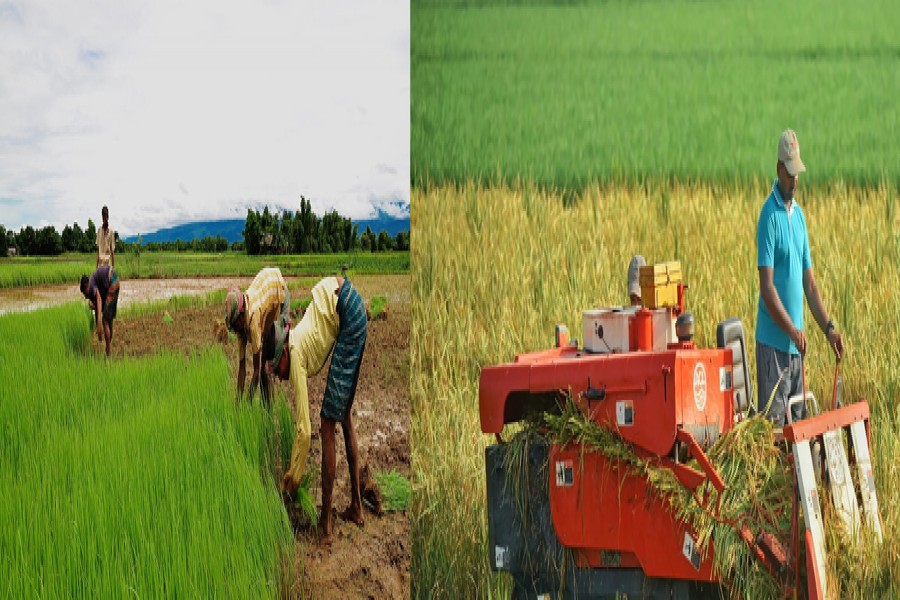
In rural Bangladesh, the challenges facing agriculture are many and varied. Among these, the marketability of perishable products like potatoes presents a persistent problem. This is compounded by a lack of adequate transportation infrastructure that does not allow farmers to carry their produce directly to nearby wholesale or retail hubs. In the absence of such facilities, intermediaries step in to fill the logistical void -- often manipulating prices to their advantage and to the detriment of farmers. Despite frequent pledges by policymakers to reduce the undue influence of these middlemen, the reality is that farmers -- especially during the post-harvest glut -- are left with few alternatives but to accept the terms dictated by intermediaries.
In such circumstances, farmers are compelled to sell their produce at throwaway prices, unable to wait for better market conditions due to lack of storage facilities or transport. This exploitative cycle could be significantly mitigated if the government were to provide subsidised or cooperative-based transportation solutions, as is being practised successfully in some neighbouring countries. This would enable growers to access more competitive markets and sell their produce directly, thus reducing their dependence on exploitative intermediaries.
However, focusing solely on the low returns from agriculture without assessing the broader context may lead to an overly simplistic and potentially misleading interpretation of rural livelihoods. A common complaint is that farm-based activities yield less income than non-farm occupations. While factually true in many instances, this observation requires a more nuanced understanding. Why do non-farm activities tend to be more rewarding, and what can be done to address this disparity without undermining either of the sectors?
One key reason behind the increasing attraction of non-farm employment lies in the ongoing transformation of rural economies. Over the past few decades, the urban-rural divide has been narrowing due to the penetration of modern technologies, improved connectivity and better access to education and information. This has given rise to substantial economic diversification in rural areas, opening up a myriad of income-generating opportunities that were once unavailable or unthinkable in a purely agrarian setting.
The inflow of overseas remittances has played a significant role in reshaping rural economic landscapes. These remittances not only enhance household incomes but also reduce the economic reliance on agriculture. Many rural families, benefitting from remittance flows, now engage in a variety of non-agricultural ventures -- ranging from small retail businesses and service enterprises to transport and construction work. As a result, the younger generation is increasingly getting disinterested in traditional farming, preferring instead the higher and relatively steadier returns from non-farm activities.
It would be erroneous, therefore, to view the growing appeal of non-farm work as detrimental or less desirable. On the contrary, non-farm activities more entrepreneurial in nature bring their own value to rural development. They promote innovation, self-employment, and resilience, especially when agricultural incomes are hit by climate shocks or market volatility. The real challenge lies in creating a balanced approach that strengthens both sectors, allowing them to complement and reinforce each other.
This calls for a reorientation of rural development strategies. While continued support for agriculture remains essential -- through better pricing mechanisms, access to credit, improved storage and transport infrastructure and modern farming techniques -- it is equally important to encourage the growth of rural non-farm enterprises. This could involve skill development programmes, micro-financing schemes, and support for small and medium-sized enterprises (SMEs) operating in rural regions.
Moreover, promoting stronger linkages between farm and non-farm activities can create a virtuous cycle of rural growth. For example, agro-processing units, packaging businesses, transport services, and agricultural input suppliers all represent non-farm sectors that are intrinsically linked to agriculture. Encouraging such interconnected enterprises not only adds value to agricultural outputs but also generates employment opportunities. This kind of synergy helps rural economies become more diversified and resilient to shocks.
Institutional reforms are vital for facilitating this transformation. Many of the institutions responsible for rural development remain fragmented or ill-equipped to respond to changing economic realities. Strengthening their capacity, improving coordination among them, and making them more accountable and responsive to the needs of rural populations are crucial steps. At the same time, policy focus must shift from isolated sectoral interventions to more integrated and inclusive rural development frameworks.
Investment in rural infrastructure -- such as roads, electricity, internet connectivity, and market facilities -- can further stimulate both farm and non-farm growth. In particular, digital technologies hold immense potential to connect farmers directly with buyers, access market information and benefit from e-commerce platforms. Likewise, non-farm entrepreneurs can leverage digital tools for marketing, financial transactions and expanding customer bases.
Education and vocational training also have a major role to play. By equipping rural youth with skills aligned to both farm and non-farm employment opportunities, the government can address rural underemployment and reduce the migration pressure on urban centres. Special attention should be paid to women and marginalised groups, ensuring that they have equal access to training, resources and market chains.
Rural Bangladesh stands at a crossroads. While the agricultural sector remains the backbone of the rural economy, non-farm activities are fast emerging as key drivers of income and employment. Rather than viewing the two as competing or exclusive, policymakers must adopt a holistic perspective that fosters complementarities. Bridging the gap between farm and non-farm sectors through institutional reform, infrastructural investment and supportive policies will be essential for unlocking the full potential of rural development.
wasiahmed.bd@gmail.com
© 2026 - All Rights with The Financial Express

