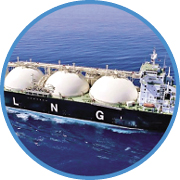
 By all indications, the country is heading for the point of no return as the energy mix becomes squarely focused on the import of expensive, imported liquefied natural gas (LNG). A report published in this newspaper points, quoting sources in the energy sector, to the fact that LNG imports are "projected to triple in three years with domestic gas exploration hobbling in slow lane." This is reinforced by statements made recently at the high level of government where the advisor for energy stated that there is no plan to extract domestic coal. This is merely a reiteration of a government decision taken more than a decade ago when the proven and probable reserves of coal were set aside for "posterity".
Today the government finds itself on the back foot since no concerted effort was made over the last decade to expedite exploration of onshore gas. The BAPEX-only policy yielded no big finds and with an equally "go-slow" policy that prevailed over the last decade on offshore exploration, the share of imported primary fossil-fuels is set to become the dominant factor. That could have been mitigated had the economy been doing well. But when energy experts in the country had pointed out the risk factors involved in an import-driven energy policy, they were scoffed at. Geopolitical considerations were not taken into account and measures were not taken to improve the capacity of national agencies to store greater quantities of resources.
A case in point is the Bangladesh's decision not to increase its capacity to refine liquid fuel beyond the 1.8 million tonnes per year since independence. Whereas neighbouring India has a refining capacity of 250 million tonnes per annum. Hence when the Russo-Ukraine war broke out, India snapped up millions of tonnes of crude oil at cut-prices from Russian oil companies, whereas Bangladesh could simply look on helplessly. Similarly, the failure to look at the big picture when extraction of thousands of tonnes of coal was envisaged, energy planners came to the conclusion that millions of tons of coal would automatically be available as and when needed by Bangladesh. That is how the international supply chain for primary fuels work. For over a decade, China and India have been in a race to conclude long-term contracts with major coal-producing countries like Indonesia. Not only that, both these countries have had their coal-handling infrastructure in place whereas Bangladesh is still coming to grips with how to get coal to its coal-fired power plants because necessary infrastructure isn't in place to handle the millions of tons of coal that will be needed to keep these recently inaugurated power plants in operation.
In the midst of all these upsets, the fact that proven gas fields that have got the economy rolling on till now are beginning to show signs of lower output could not come at a worse time. Of course, energy experts had been warning of such a scenario, but warnings were not paid heed to. Rather today, we stand at the crossroads where the economy is now squarely dependent on imported fuels. As stated in the media, the stage is now set whereby the government has no choice but to increase imports of LNG from long-term suppliers, including Qatargas, OQ Trading (of Oman), Malaysia's Perintis Akal Sdn Bhd, local Summit Oil and Shipping Company Ltd, etc. and also from the spot market.
The news from Europe is not encouraging. The war shows no sign of coming to an end and there is speculation that countries in Europe will be needing to restock their supply of LNG before the next winter. What will happen to Bangladesh if the price of LNG skyrockets again and if its long-term suppliers decide to stop supplying LNG to Bangladesh if better prices are offered elsewhere? More importantly, can Bangladesh afford to pay for LNG at such large volumes? It has already taken a US$1.4 billion hard loan (this fiscal) to pay off fuel imported from the international market. One can only speculate about the volume of foreign exchange that will be required when demand for LNG doubles, or triples for that matter.
Although delayed by nearly a decade, the bidding in offshore blocks has finally commenced. But the multi-client survey hasn't yet been completed, which in a way is affecting government decision to go for negotiations with international oil & gas companies. The survey is partially completed and the rest is set to be done in November next. Given the situation Bangladesh faces today, there shouldn't be any more delays in concluding deals based on what information is available today. Secondly, energy experts have pointed out that out of the 9.0 trillion cubic feet (TCF) remaining, 8.0 TCF is under the control of Petrobangla companies. This means we have yet to build up the technical expertise to explore these reserves. So, there are ample opportunities for extracting domestic gas and engaging third parties to do this job for Bangladesh. This must be done immediately, if the country doesn't wish to go bankrupt by importing fuels from the international market.
mansur.thefinancialexpress@gmail.com
© 2026 - All Rights with The Financial Express

