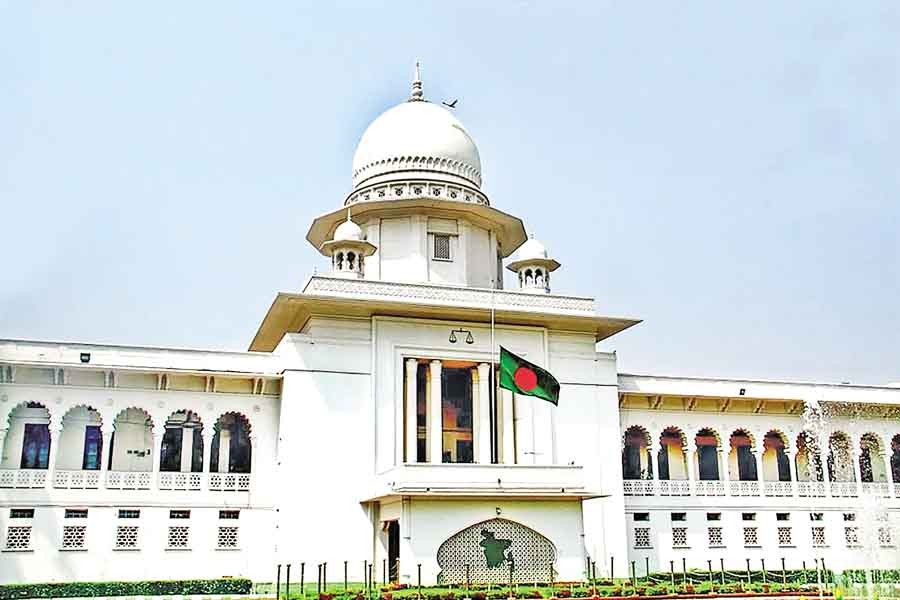
One of the fundamental strengths of a country's democracy is the trust its people have in their courts. For democracy to function, citizens must believe that the judges who interpret the law and deliver judgments on disputes are free from pressure by the government or any other influence. This faith forms the bedrock upon which the pillars of rights, liberties and the rule of law are built. Chief Justice Dr. Syed Refaat Ahmed has recently reminded us of this basic truth. In a speech he said if the judiciary is not independent, no reform can hold its ground. This is a powerful idea that deserves our full attention. How many grand buildings a country has or how powerful its leaders are is no metric to determine the strength of a democracy, but the independence of judiciary is.
Across the globe, the autonomy of judicial administration, including the appointment, transfer, and promotion of judges, is seen as essential to a free judiciary. This extends not only to apex courts but also to the administrative mechanisms that govern subordinate courts as well. In Bangladesh, however, this autonomy is undermined by the absence of a fully functional secretariat for subordinate courts under the Supreme Court. Evidently, this gap is not the result of scarce resources but rather a deliberate preservation of executive dominance. Over the years, successive governments have quietly retained control by centralising administrative power in the Law Ministry, even though constitutional safeguards that vest those powers with the judiciary remain only on paper.
However, a major step towards redressing these problems was taken on September 2, 2025. On that day, the High Court gave a landmark ruling ordering the creation of a separate administrative body, or secretariat, for the lower courts, to be run by the Supreme Court itself. It also restored the original wording of Article 116, which stated that "the control and discipline of persons employed in the judicial service and magistrates exercising judicial functions shall vest in the Supreme Court". This move takes away the government's long-held power to appoint, transfer, promote and discipline lower court judges, and gives it back to the Supreme Court, where it was meant to be from the start. It is a major breakthrough, a chance to finally remove decades of harmful executive control over the judiciary. To understand the magnitude of this decision, one must face the difficult history of how such control was imposed and protected. The 1972 Constitution, born from a liberation struggle, was wise to this peril. It explicitly placed the administration of subordinate courts under the Supreme Court, a direct lesson learnt from the painful experience of the Pakistan era when executive-controlled magistracies were used to harass political opponents.
That is why this verdict of creating separate administrative body is the culmination of decades-long efforts rooted in our constitutional history. The original 1972 Constitution vested authority over subordinate courts in the Supreme Court via Article 116. But the Fourth Amendment in 1975, a product of its authoritarian time, brazenly transferred this power to the President, effectively handing the reins of the judiciary to the executive branch, where they have remained lodged in the Law Ministry for fifty years. The government only had to pretend to consult the Supreme Court, while really holding all the power. Later amendments, including the Fifth and Fifteenth, spoke of consultation but in reality kept the system where the Prime Minister's office, through the ministry, had the final say. It is not hard to see how this could be a problem. If a government official can decide whether a judge gets a promotion or is moved to a remote district, that judge might feel pressured to rule in a way that pleases the government. This undermines the very idea of fair justice. In 1999, in the Masdar Hossain case, the highest court saw this danger and ordered the government to fix it. They gave twelve directions, including setting up a separate secretariat. But for over two decades, successive governments simply ignored these orders. They liked having this power too much to let it go.
The new High Court ruling tries to break this long-standing cycle. It declares that the changes which gave the government this power were against the constitution's basic principles. By declaring the alterations to Article 116 unconstitutional and striking down the 2017 Disciplinary Rules which further entrenched executive influence, the court has done more than just interpret the law. It has reaffirmed a constitutional morality that places the judiciary beyond the grasping reach of the government of the day.
So, what would this separate secretariat actually do? Think of it as the judiciary's own human resources and management department. Right now, all those decisions are made by government employees in the Law Ministry. A new secretariat, run by the judiciary for the judiciary, would hopefully hire staff, manage budgets, and handle the promotions and transfers of judges based on merit, not political connections. This would create a vital buffer. It would allow judges to focus on the evidence and the law, without worrying that a ruling against a powerful person might damage their career.
There are, of course, challenges. The government could appeal the ruling, delaying it for years. Following the appeal, a review can also be sought. There may be a lack of political will to finally give up this control. Even if the secretariat is created, it must be done right, with clear rules to ensure appointments are based on merit.
The High Court has handed the nation a key. It is a chance to finally fulfil the promise of justice that was made when this country was founded. It is a chance to ensure that in every courtroom, the only thing that matters is the law. The government must now show that it believes in democracy and the rule of law by accepting this ruling without delay. The people deserve a justice system they can believe in.
showaib434@gmail.com
© 2026 - All Rights with The Financial Express

