Many graduates consider entering the development sector after graduation. However, they lack a lot of information, resulting in a poor understanding of the sector and ultimately failing to enter this sector, which has decent potential. If someone is considering a career in this field, there are several things they need to know.
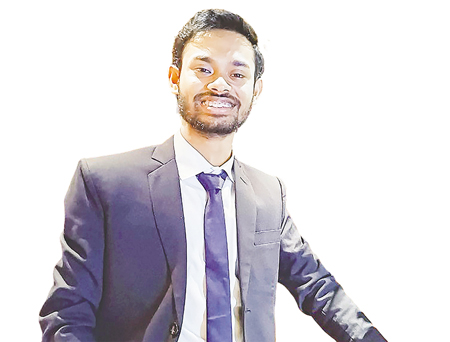
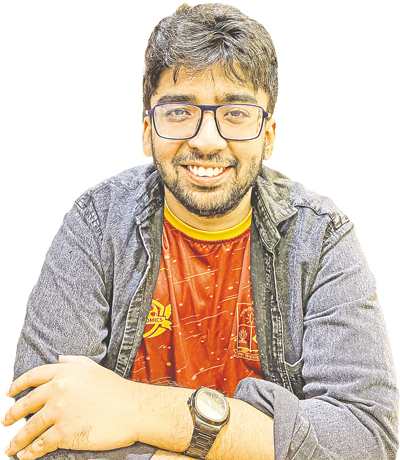
Here, Rassiq Aziz Kabir and Abrar A Bhuiyan share their insights into how they started their careers in research and development even before completing their university education.
Rassiq Aziz Kabir is a soon-to-be master's graduate at the Department of Economics at the University of Dhaka and currently works as a research associate at Research and Policy Integration for Development (RAPID), on the other hand, Abrar A Bhuiyan has just completed his undergraduate degree in the same major and same institution as Rassiq and is currently working as a program associate at Centre for Policy Dialogue (CPD).
"Despite having opportunities to get into engineering such as EEE in IUT and so on, I was always curious about economic issues. In my freshman year, I participated in various seminars about economic and development issues," Rassiq shared, recounting his motivation to become a part of the research and development sector and make a change in the future. Abrar found a natural transition from academics to the workforce, stating, "The field of research appealed to me because it allowed me to stay among like-minded peers who understand complex topics more profoundly than laymen."
"My first research-related position was at RAPID, which I secured after a rigorous application process," Rassiq elaborated, detailing his professional journey. "But I was not only limited by that, I also worked as a program associate at the Centre for Policy Dialogue (CPD) after applying for its circular. The most effective step of securing my research-related position was to keep my eyes open and constantly look for job circulars posted by relevant organisations," he added. Abrar started his research journey at ARCED Foundation and emphasised the significance of letting mentors know his career aspirations and building a strong portfolio.
Rassiq initially struggled with complex topics related to economics, "If I don't get a good grasp of it, I find it hard to advance to the next stage of my professional career," he admitted. He overcame this by networking and closely communicating with his faculties. Moreover, his experience of writing for the print media has helped him secure a job in at a research position as well, "Writing for The Financial Express helped me because it focuses on economic and policy issues, which I also wrote about. Besides that, I have written for many newspapers, so I was already well-equipped with the necessary writing skills for this sector, and I didn't face any problems."
Abrar stressed the importance of technical skills: "To get into the research and development sector beforehand, a student must learn essential skills including statistical software like Stata or R, and a good command of MS Office and Google Suite."
"A typical day involves writing research proposals, data analysis, and drafting policy papers," Rassiq described his role at RAPID. "Although not all tasks are daily, they contribute to the completion of research studies," he added. Despite the hectic nature of these tasks, Rassiq enjoys them. Abrar's responsibilities vary, involving desk research, handling financial documents, and conducting interviews with government officials.
Both Rassiq and Abrar acknowledged the advantages of starting their career early. "Since my undergraduate days, I've had a diverse career experience, including working as a feature intern writer for The Financial Express Bangladesh, volunteering at Alokito Shishu, and entering the pure research sector at the end of my degree. Three internships, including at Bangladesh Bank, shaped my mission and vision for working in the research and development sector as part of my professional career even before my graduation," Rassiq noted.
In 2018, Rassiq Aziz Kabir was named 'The Emerging Young Leader' by the South Asia Society Nepal for his contributions to discussions on good governance. He led a session on Good Governance at Madan Bhandari Memorial College, showing his proactive approach to shaping developmental policies and practices even before being admitted to a university.
In the case of starting career early, Abrar didn't find himself in a disadvantageous position working as one of the youngest employees in various research organisations, "I always sought new and interesting experiences, so I never felt disadvantaged as a junior." His challenge was working with organisations without a degree, but he took opportunities to complement his studies.
Abrar continues, "Starting a career early boosts energy and enthusiasm, and seniors are considerate of mistakes. A gradual learning curve is necessary, and upgrading communication skills is essential. Seniors guide in every role, and upgrading communication skills is necessary."
Throughout Abrar's undergraduate studies, he interacted with the International Labour Organisation (ILO) and the Centre for Policy Dialogue (CPD), enhancing his understanding of economic systems through various events and the CPD's energy lecture series. His internship with the ARCED Foundation and subsequent employment as a training assistant enabled him to travel around Bangladesh, significantly enriching his experience. He advises students to concentrate on their academics while also developing a varied portfolio of extracurricular activities, which are essential for entering the research sector.
In 2024, Abrar made significant contributions to the field: presenting papers at four conferences, organising a summit and a conference, writing a journal paper, redesigning and organising a lecture series for CPD, and contributing to two study reports, to which Rassiq also contributed during his tenure in CPD.
"To undergraduates considering this career path, start preparing early," Rassiq advises, "I would tell them to prepare from the first or second year of undergraduate studies. Network as much as possible, and be involved in extracurricular activities that are relevant to the nature of research and development as much as possible. But one thing they should keep in mind is never compromise their actual study while doing all these. Completing your undergraduate degree with decent performance should be your first priority, as most research organisations do not recruit a graduate who graduated with a poor CGPA."
Abrar recommended building credibility and content in work: "Build a network with seniors, build your portfolio, build credibility, show enthusiasm, but there has to be content in your works and networking. Randomly interacting with seniors with weak causes cannot make a good professional relationship."
Looking ahead, Rassiq aims to leverage his skills to influence economic policies effectively. Abrar has broader ambitions, "My ultimate goal is to secure a position from where I can implement efficient solutions and drive change."
According to the experiences of Rassiq Aziz Kabir and Abrar A Bhuiyan, the key to entering the professional field of research is early preparation since university days, effective networking, and a constant desire for knowledge. Their journeys offer invaluable lessons for any economics
student aspiring to make a mark in the challenging yet rewarding field of research and development.
contact.iftekhar.tne@gmail.com
© 2026 - All Rights with The Financial Express

