When we were actively doing student politics during the mid-1960s, the movement for self-autonomy started taking its shape. Its intensity began to grow gradually. At that time the smell of gun powder was always pervading the air and the streets were rocked by the marching resentful people. The self-autonomy movement was moving in the direction of a freedom struggle at a faster pace. Most of the speeches we used to deliver then were against the repression meted out to the people by the then-West Pakistan rulers. When we were telling the people that the West Pakistani rulers were building their part as a paradise with the proceeds from sale of the golden fibre produced by the people of then-East Pakistan, they used to listen to it with rapt attention and boil over. When we used to deliver our speeches against the West Pakistani rulers, particularly against the Punjabi civil and military bureaucrats, the issues like exploitation and plunder of East Pakistan wealth by only twenty-two families came up. The name of Adamjee was on the top of the list. Ispahani was in the second position and the names like Daud, Saigal and Bawani were also there. We used to identify or term them as exploiters.
In continuation of student politics I underwent military training at Tandua Military Academy of Deradoon in India and I participated in the Great Liberation War of the country. Even in independent Bangladesh we used to mention whenever it was necessary the exploitation and looting by the twenty-two families of Pakistan. After the killing of Bangabandhu in one of the most hated and hair-raising massacres in contemporary history, I was sent to the port city of Chittagong like a man in exile from my workplace Bangladesh Sangbad Sangstha (BSS) in Dhaka city in a bid to make the organisation Baksal-free. I had to cover different events as a reporter from the Chittagong Bureau of the BSS. One day I got an assignment to cover an event of the Chittagong Chamber of Commerce and Industry (CCCI). The event was a meeting between a visiting delegation of Pakistan Chamber of Commerce and Industry and the CCCI. The leaders of the Federation of Bangladesh Chambers of Commerce and Industry (FBCCI) were also present at the meeting.
When this high-level business delegation of Pakistan came here on a visit to Bangladesh just after the killing of the Father of the Nation, a section of people of then-Bangladesh government and some Pakistani-minded and over-enthusiastic industrialists and businessmen were hobnobbing with them in a mean way. It irked every patriotic Bangladeshi who believed in the Liberation War and was imbued with the ideals of Bangabandhu. Against this background, the leader of the Pakistani delegation at one stage of his speech at the event of the Chittagong Chamber said: "Pakistan does not need tea from Bangladesh. Bangladesh's tea is of very low quality. But, to help Bangladesh, to revive the export from Bangladesh, we would like to import some tea from Bangladesh." This assertion came as a bolt from the blue. A tall grey-haired man from the first row stood up and said in a thunderous voice, "Sorry to interrupt." Then what he resentfully said in a nutshell was: "I am MM Ispahani; I was president of Pakistan Tea Association for a long time. Pakistan needs tea; none is here who knows more than I do about export-import of tea. For the information of Pakistani industrialists and businessmen I want to say that over the last three-four years, Bangladesh has completely captured the international tea market. Bangladesh tea is being considered the most attractive commodity in the main global tea markets, including the United Kingdom. For, Bangladesh produces very good quality tea. Today, Bangladesh does not have any need to export tea to Pakistan. Nevertheless, if Pakistani businessmen want to take some tea from Bangladesh, of course, we give them, but that is not from the perspective of trade or profit but from the viewpoint of brotherhood and friendship." This caused a pin-drop silence in the meeting room. The atmosphere the Pakistani friends had been enjoying over a few days with their Bangladeshi counterparts at different functions over taking chicken roasts and other rich foods, apples from Kashmir and Maree just evaporated like camphor after the speech of Ispahani. I had stopped taking notes. Again and again the thunderous voice of Ispahani was resonating into my ear. At that moment it seemed to me that he was the greatest patriot in the Bangabandhu-less Bangladesh. It came to my mind that on numerous occasions I had made speeches in a full-throated voice putting the names Adamji, Ispahani, Bawani, Daud, Saigal in the same bracket as exploiters and plunderers. After that event in Chittagong, I had tried to know thoroughly about MM Ispahani. I have learnt from an impartial source that only the Ispahani among the then-twenty-two families’ businesses was concerned about the welfare of the Bengali people from the beginning to the end of the Pakistani regime, and for this, other Pakistani oppressors could not accept them easily. Furthermore, we have learnt that for this reason Bangabandhu held Ispahani in high esteem. Bangabandhu favoured and honoured MM Ispahani as a dignified person. Mirza Ali Behrouze Ispahani was special among the sons of MM Ispahani. Fortunately, I have some good memories of him that remind me that the blood of great patriot MM Ispahani was really flowing through the veins of Behrouze. At that time I was the president of the Chittagong Union of Journalists (CUJ). I went to the Agrabad office of Ispahani for collecting advertisements for our souvenir on our yearly conference. The ad official informed us that Mr Behrouze was very much in office. If we met him, an advertisement involving a good amount could be available. We entered his chamber and he humbly told us to sit down. By the way of conversation, I had said a few words about his revered father MM Ispahani. He intently listened to our talks in a good mood and directed his concerned staff to give us a full-page advertisement and at the same time earnestly requested us to join a dinner with him. According to the programme, we went to the hilltop house of Mr Ispahani on the Sarson Road along with CUJ general secretary Swapan Mohajan and organising secretary Anjon Sen. This residence of theirs was surrounded by big hills. On reaching there we saw Mr Behrouze Ispahani along with one of his brothers (probably Salman Ispahani or Sadiq Ispahani) was standing at the main gate to receive us. Their residence was at a good distance from this main gate. Still then they came down and were waiting for the people like us, which not only surprised us but also made us grateful and indebted to them. They entertained us with an array of delicious foods and fruits. Their sense of decency and manner made us more attracted towards them. They saw we went to their residence on foot as our Press Club was situated on the Jamal Khan Road near their Sarson Road. We also did not have any transport with us. And the same thing happened again on the way back. Both the brothers came out of their house. They requested us to get into a royal car and humbly said 'good bye.' It seemed the driver was given necessary instructions earlier. So, he dropped us up at our respective residences and then went back to the Sarson Road.
Again I happened to meet him on another occasion. This time it was quite different. We went to New York with the Honorable Prime Minister to join the United Nations General Assembly. On the sidelines of this event, a seminar on pro-active investment policy and the business atmosphere in Bangladesh was also arranged at Hotel Hayat. A big business delegation from Bangladesh joined that seminar. Mirza Ali Behrouze Ispahani was the main delegate of that team. After the conclusion of the conference we were coming back home. A business class ticket was reserved for Mr Behrouze. But he did not go there. He spent the whole time with us in the economy class. CUJ president Akhter-un-Nabi was with me. He was a member of the Prime Minister's entourage from the Chittagong quota. By the way, he said to Mr Behrouze, "I think a big car would come to Dhaka Airport to take you back. But you know I do not have any car or any other transport. Would you please drop me at the residence of one of my relatives at Iskaton?" In a good mood, Mr Behrouze asked, "Nabi Bhai, when and how would you go to Chittagong?" Nabi replied, "By bus or by train or whatever is available." Mr Behrouze said, "Okay, I am looking into it." Later, when we reached Dhaka Airport, to our surprise we saw a big, expensive and luxurious car was ready for Mr Nabi. Mr Behrouze said, "Nabi Bhai, this car will directly take you to your residence at Chittagong. And arrangements are made so that you do not face any trouble on your way back home. Later Akhter-un-Nabi, who was my grandfather-in-law, said to me, "After leaving the Dhaka Airport the car went to a big hotel when I had to have my breakfast and then it (car) started for Chittagong and on the way there was an arrangement for me for a very good lunch. And I reached my home in Chittagong safe and sound."
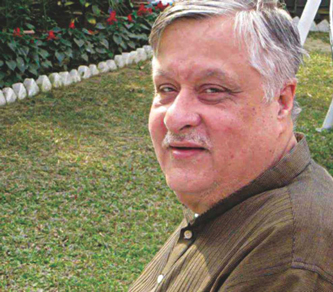
On another occasion Behrouze Ispahani went to Beijing as a member of the entourage of the Prime Minister. In the lobby of a five-star hotel he was going through a magazine. At that time a journalist of an organisation in Dhaka, who was also a member of the PM's entourage, appeared. He walked up to Mr Behrouze and said, "Hi, gentleman, what are you doing here alone? You are a millionaire. Go here and there, make merriment-there are many things in this hotel to enjoy." With baffled eyes Mr. Behrouze looked up to the ugly face of the man and said, "Look, I am not your friend." Then Mr Behrouze again started reading the magazine. Coming back to Dhaka this journalist had shared it with me in details. It was clear to me that this meritless, rustic journalist could not understand that the words "I am not your friend" were a slap on his face. This is the way a perfect gentleman reacts in such a situation. No single adjective is enough to understand who he was. In the real sense, he was "out and out a gentleman to the core." I pray for eternal peace of his departed soul and pay my deep respect to this man who was larger than life.
The writer is the Editor of Bangladesh News and former Managing Director and Chief Editor of BSS
© 2026 - All Rights with The Financial Express

