In Kurigram's char areas, where hardship is a daily reality with loss of lives, even the family's main and lone earning member leaving the household for unknown, Mosammat Lal Banu Begum has carved out a path of survival by building resilience through empowerment.
After losing her father and only brother within a few years, Lal Banu turned her personal tragedy into strength. Overcoming grief, she took a break from her studies to build her capacity through training and hands-on learning. Within a short span of time she was able to establish an identity in her own surroundings.
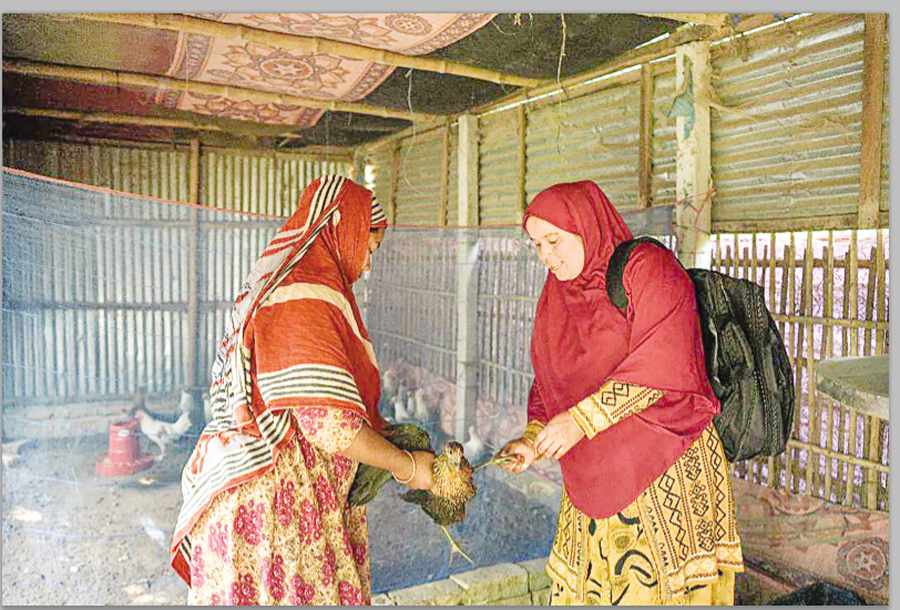
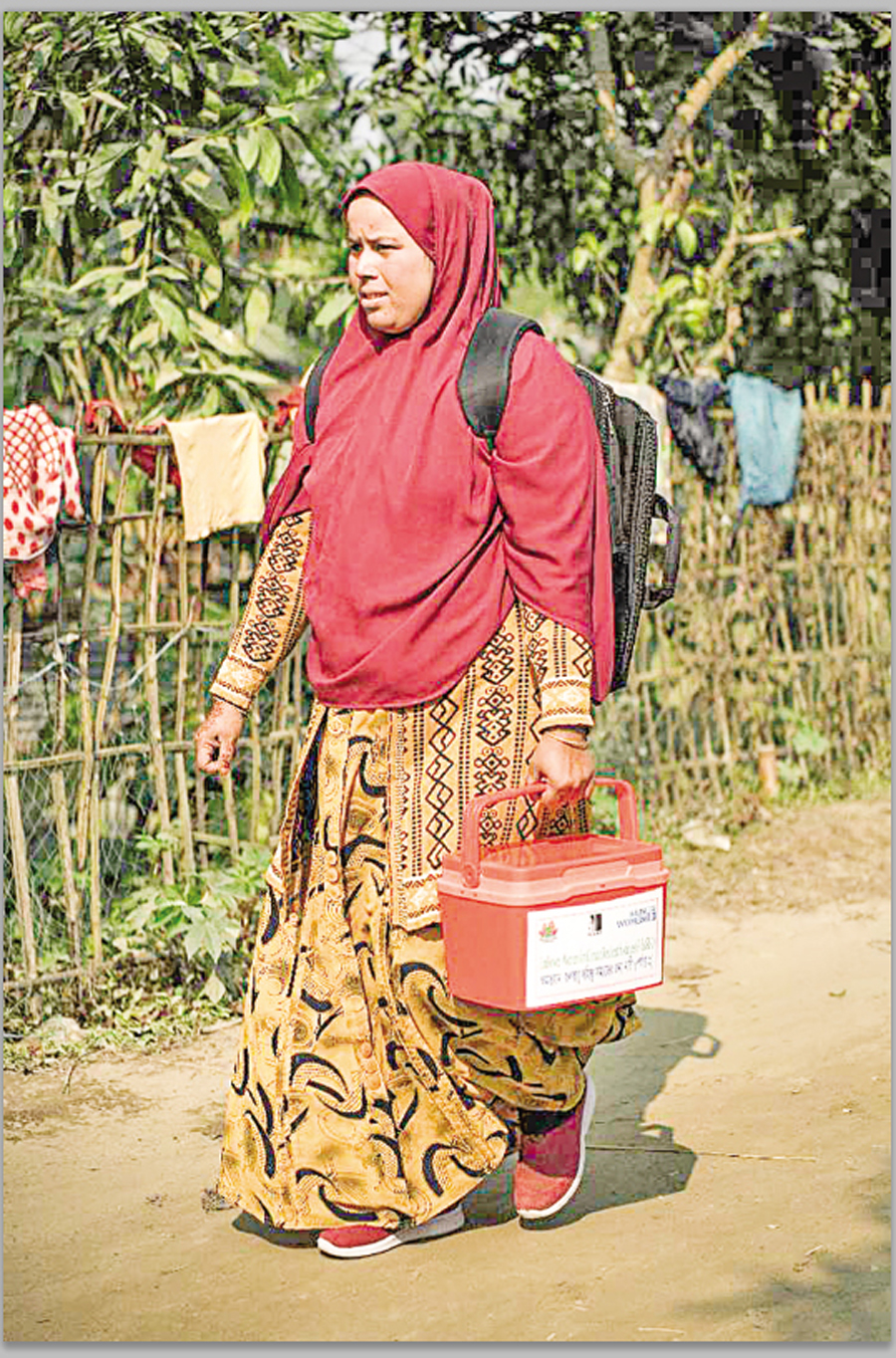
Mosammat Lal Banu is now widely known as a "Palli Doctor"-a village livestock practitioner-in Jorgach Notun Bazar under Chilmari upazila of Kurigram, a recognition she earned through a series of trainings.
Beyond supporting her family, she has emerged as a key figure in serving her community, which is frequently hit by flash floods and other climate-driven impacts including livestock diseases.
"People used to call me 'Pusti Apa' when I started working alongside government and NGO staff to learn how to handle animal diseases and care," Lal Banu recalled.
She is also known as "Gorur Dactar," literally meaning "a doctor of cattle," reflecting the growing trust people place in her despite her lack of formal medical training.
Villagers in Chilmari upazila, near the Indian border, have traditionally shown limited interest in livestock due to recurring flash floods. The impacts of climate change have further discouraged farming, as frequent losses during disease outbreaks erode returns. Limited access to veterinary services, coupled with the spread of diseases such as Peste des Petits Ruminants (PPR) and Lumpy Skin Disease (LSD), continues to threaten rural livelihoods in these remote areas.
Now, villagers give Lal Banu the credit of helping them reduce such risks through timely vaccination and providing basic treatment. She refers complex cases to veterinary experts and maintain regular contact with professionals to ensure proper care-skills she developed through a series of trainings offered by local NGOs and government agencies, both residential and non-residential.
Nari Sangathan identified Lal Banu through its network and engaged her as a member of a civil society organisation (CSO), linking her with need-based training opportunities through Jubo Sangathan, the Department of Youth, and the Directorate of Women and Children Affairs. The Women's Climate Action Network (WCAN), under UN Women's Empower programme, has further strengthened women's agency by building leadership, facilitating peer learning, and improving access to resources, finance, and climate information.
The initiative also enables women to engage with local government and contribute to planning and policy discussions.
Sharing the experiences of WCAN activities over the last eight years, Dilruba Haider said UN Women works on women's empowerment and leadership from the belief that small initiatives can transform narratives of hardship into stories of resilience and empowerment.
Dilruba Haider, Programme Specialist, Climate Change, DRR & Humanitarian Action, UN Women Bangladesh, also said many women in rural and remote climate-vulnerable areas have been able to survive and rebuild their lives through strengthened leadership and empowerment opportunities.
This correspondent also found some women along the embankment of Chilmari's Jorgach area to run shops, cultivate vegetables in sack bags and in fields after flood water receded. They also sell dry food items with support from these organisations and thus, they lead their lives.
Lal Banu now earns a steady income by vaccinating and treating poultry and livestock-including chickens, ducks, goats, and cattle-particularly during emergencies in nearby areas such as Roumari, Noarhat and Asutamir Char.
"Villagers are now aware of vaccination schedules and their importance as they understand that vaccines are ineffective after a disease outbreak," she said.
Her dedication is translating into income as each vaccine unit costs Tk 10. Lal Banu earns Tk 700-1,000 during a scheduled vaccination campaign day. She also receives a consultancy fee of Tk 100 or more by providing suggestions at her doorstep.
These small but consistent earnings have brought stability to her household, supporting her sisters' education and marriages, and enabling her to complete her graduation after a long break.
Now, she is entering a new phase of life, having chosen her life partner, while continuing to pursue her ambitions.
Lal Banu dreams of becoming an entrepreneur by establishing her own livestock farm and expanding her services.
"I now earn with dignity. This is not just a profession for me-it is a way to serve people," she said, expressing her aspiration to grow further with additional training opportunities to have her own farm and training centre for other villagers.
smunima@yahoo.com
© 2026 - All Rights with The Financial Express

