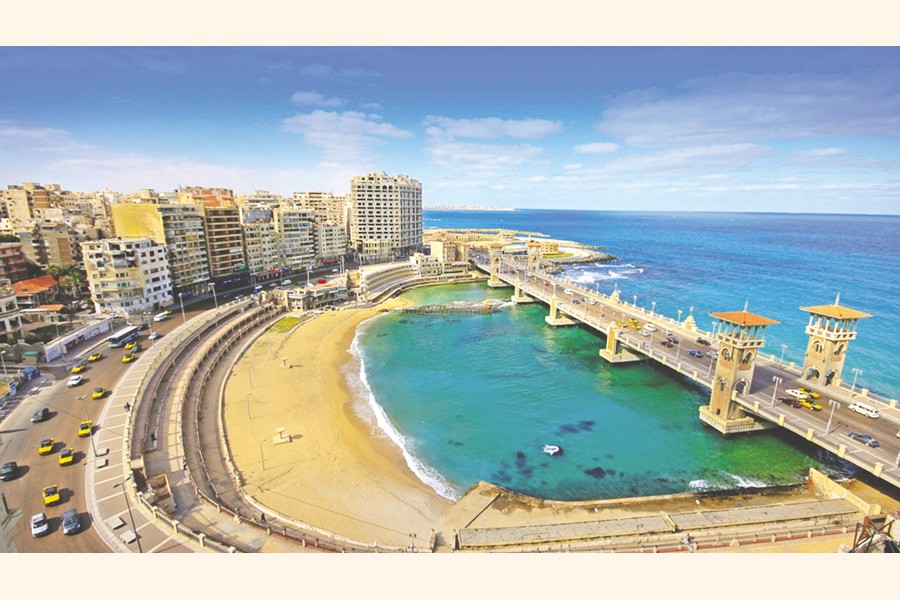
 A partial view of Alexandria
  It was a casual meeting at the office of Head of Department of English. I was a fresh student at the university, in another department. I was there with my uncle, who was a faculty, on way to the Registrar's office. The Head talked with me about my interest. Knowing that I was a Bond fan he asked me the name of Bond's boss. I could not. I had not seen any of the films yet, but read the book avidly. That was unsettling. In the words of Sherlock Homes that was reading without understanding. When asked about the number of stairs he climbed to the upper floor of the building where he lived, Watson could not answer. He had observed but not seen as per Mr Holmes.
Soon I forgot the whole incident and continued with life in the new environment. That was initially unsettling as the care and control of college days were absent. It was the same chore though, get up from bed, have breakfast, rush to the college, and come back after the classes. The teachers were helpful but indifferent. Afterall, I was an adult now having crossed the threshold of voting age.
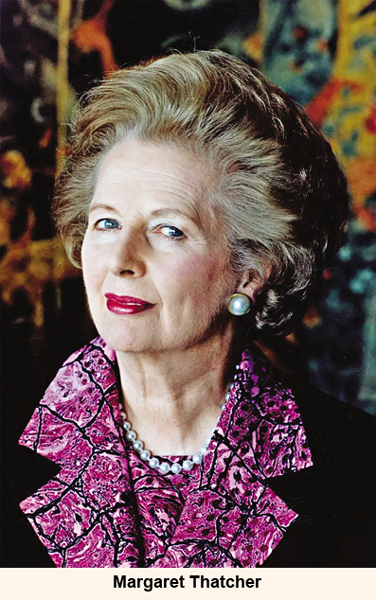
It was almost five years before I passed. Normally that should have been four but for delays in the processes in between the two degrees, Honours, and Masters. The delay in this process was 'session jam' as it was termed. After a brief stint at university teaching the next step was journey across the seven seas to the UK. That was the normal progression for that aspired teaching. I was required to have another Master's degree before being allowed to proceed with Doctoral work. In between the Master's and the PhD programs I had a contract teaching job at a school in Birmingham. Margaret Thatcher was education minister at the time. Being tough as she was, one of her decisions at the time was to discontinue the free milk given to students at schools. She earned the nickname Milk Snatcher for that decision. Despite some unpopularity at the time, she went on to become the best prime minister of the century alongside Sir Winston Churchill. There were much economic reforms besides winning the war in Falkland Island to her credit.
My area of studies was Operational Research (OR), popularly known as Management Science. It was a new subject area developed by the war scientists. The success of allied forces in the great war owes much credit to these scientists. The role of Enigma that broke the code of the axis forces in their use of submarines is well-known. The axis submarines were helpless targets of the allied forces as the secret code of their deployment was deciphered. These were elements of research leading to the development of machine intelligence or Artificial Intelligence. As the war ended, these scientists found alternative employment in business that was growing. This is how the subject area, OR, was born. The period coincided with the initial glory days of computer as they were getting better and cheaper by the day. The academia was enriched.
My initial work in the doctoral research took me to a place called Building Research Station at Watford, not far from London. This is the place where research on the bouncing bomb used in destroying the very fortified Mohna dam in the war was developed. The bouncing bomb was a bomb that would bounce on the water as it was dropped, to cover a distance before reaching the target area and then explode. The war over, the place was engaged in the design of better methods for construction of buildings. My work was related to preparing the least cost schedule in the making of concrete panels used in building precast houses. Fairly an innovative idea at the time.
Interestingly, when I moved back to Dhaka in the eighties, I was engaged in a similar research project on finding the least cost schedule for land development in the country. The agricultural land in the country was grouped in categories in terms of flood proneness. The task was to make the land area less vulnerable to flood. The cost of development would be equated against return from the increase in yield as a result of development. This was a typical OR problem requiring sifting through alternatives that ran into thousands at the least. The volume of data and accompanying search requirement were enormous. The problem would normally require the use of a mainframe computer. Use of a PC would make life easier in terms of visits to the computer centres and the accompanying cost. But the challenge was to accommodate the problem size within the limitations of the PC that were very new at the time. This is how my life at the university began that later took me to different places from war-torn Kabul to gentle shorelines of Alexandria as I consulted for multinational agencies.
chowdhury.igc@gmail.com
© 2026 - All Rights with The Financial Express

