In this dynamic era of industrialisation, the relationship between workers and employers is not merely a legal or administrative matter -- it is one of the key pillars of a nation's economic stability, productivity, and social harmony. The better the working environment, the greater the satisfaction of workers, and that satisfaction is the driving force behind industrial progress. Yet the reality is not always this positive. In many cases, misunderstandings, weak communication, and mutual distrust give rise to worker dissatisfaction. Even a small complaint can sometimes escalate into major industrial unrest, affecting the lives of workers, the production of owners, and ultimately the route of the national economy.
In this context, the Bangladesh Labour Act, 2006 and its subsequent amendments -- particularly the 2025 reform introducing Alternative Dispute Resolution (ADR) -- have opened a new horizon for resolving labour-related issues. By moving beyond lengthy court procedures, case backlogs, and administrative difficulties, this mechanism offers a faster, more humane, and more effective means of addressing worker-employer disputes.
As a result, respectful dialogue, mutual trust, transparent investigation, and prompt decision-making in labour dispute resolution will now be easier and more realistic than ever. For both workers and employers, this approach is not only time- and cost-efficient but also a sustainable foundation for fostering a peaceful working environment within industrial establishments.
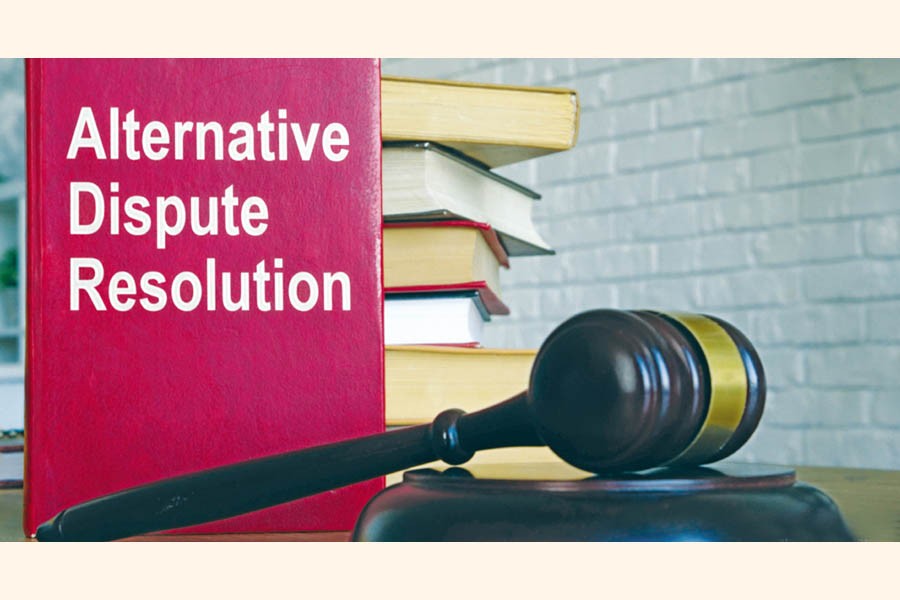
Alternative Dispute Resolution (ADR) is a humane and progressive process through which disputes are resolved peacefully outside the court, based on mutual dialogue, discussion, and understanding. It is not a "win-lose competition"; rather, it is a method where the primary goal is the satisfaction and mutual agreement of both parties. Without the formalities and delays of the judicial process, ADR opens the door to a friendly resolution. As a result, the parties involved not only avoid legal complications but also build a trust-based relationship for the future.
In Bangladesh's labour sector, the purpose of using ADR is very clear -- to bring workers and employers onto a platform of dialogue where solutions become possible on the basis of mutual respect, trust, and transparency. The benefits of this process are multidimensional: it reduces both time and cost, prevents loss of working hours for workers, avoids disruption of production, and, most importantly, builds a continuous bridge of trust between the two parties. Consequently, understanding -- not conflict -- emerges as the new culture of industrial relations.
Alternative Dispute Resolution (ADR) has emerged as a globally recognized mechanism for the quick and peaceful settlement of worker-employer disputes. In the United States, the Federal Mediation and Conciliation Service (FMCS); in the United Kingdom, the Advisory, Conciliation and Arbitration Service (ACAS); Australia's Fair Work Commission; and Canada's various Labour Relations Boards have long been providing effective solutions to labour disputes through mediation, conciliation, and arbitration. Singapore's Tripartite Alliance for Dispute Management (TADM), Germany's Works Council model, Japan's Labour Relations Commissions, and South Africa's CCMA are considered exemplary frameworks in global labour relations management. In these countries, regular dialogue, institutional mediation, and the neutral role of third parties have significantly strengthened trust and cooperation between workers and management.
Across the world, ADR is used in various forms to resolve labour disputes, among which conciliation, mediation, arbitration, and negotiation are recognized as the most effective. In many countries, a Grievance Handling Mechanism has been made mandatory to ensure quick resolution at the enterprise level. Collective bargaining, tripartite dialogue, and joint consultative committees help establish stable and cooperative industrial relations. In modern times, Online Dispute Resolution (ODR) has added a new dimension to the settlement of labour disputes -- especially due to its speed, transparency, and lower cost. Consequently, ADR has now become an essential method for ensuring sustainable and trust-based labour relations globally.
In Bangladesh's labour sector, Alternative Dispute Resolution (ADR) has now been firmly established as a fast, humane, and effective settlement process. The Ministry of Labour, BEPZA, BGMEA, BKMEA, Labour Courts, ILO, BILS, and various national trade union federations have been emphasizing mediation and conciliation for resolving worker-employer disputes. Particularly within the EPZs, BEPZA's regular inspections, field-level dialogue, grievance hearings, and prompt resolutions have strengthened the practice of ADR. As a result, hundreds of disputes are being resolved quickly without going to court, contributing significantly to maintaining industrial peace, productivity, and the stability of export flows.
The ADR methods most commonly used for labour dispute resolution in Bangladesh include conciliation, mediation, arbitration, bipartite negotiation, tripartite dialogue, and grievance handling mechanisms. Within the EPZs, the Workers' Welfare Association (WWA), Workers Participation Committee (WPC), and the Grievance Management System (GMS) serve as effective platforms for improving labour-management relations and for resolving disputes peacefully at the initial stage. Additionally, through the efforts of the Industrial Police, the Department of Inspection for Factories and Establishments (DIFE), and the Ministry of Labour, enterprise-level dialogue-based solutions are being encouraged. In this way, ADR in Bangladesh has become more than a legal mechanism -- it has evolved into a new culture of industrial peace, trust, and improved working conditions.
A lack of mutual trust between workers and employers obstructs the path to problem-solving. Moreover, the absence of effective dialogue creates communication gaps, which often lead to misunderstandings and conflict. Insufficient training -- stemming from limited knowledge of labour laws and workers' rights among both management and workers -- also poses a significant challenge. When institutions do not have a structured grievance-handling mechanism, workers remain dissatisfied, and the lengthy procedures of labour courts and administrative processes hinder timely resolution. At times, external political and institutional influences further complicate labour disputes. In addition, weak monitoring systems in enforcing labour laws function as obstacles to maintaining industrial peace.
All these factors gradually create prevention and dissatisfaction among workers, which often escalate into large-scale industrial unrest. Consequently, not only workers and employers are affected -- production, exports, and even the overall dynamics of the national economy are impacted.
In various industrial zones of Bangladesh, nearly 90 per cent of labour disputes can be resolved successfully through ADR. One notable example among the numerous successes of the ADR system is that when unrest arose in a garment factory over overdue overtime payments, BEPZA promptly arranged a tripartite meeting. After carefully listening to both workers and management, the workers calmly returned to work once the employer committed to settling the dues within an agreed timeframe. Similarly, in a Gazipur factory, dissatisfaction over weekly holidays and duty schedules was addressed through ADR with the involvement of Industrial Police, worker representatives, and management. Based on the dialogue, weekly holidays were rescheduled and a roster system was introduced to reduce pressure, enabling peaceful resolution of the dispute without protests, road blockades, or disruption of production.
Both parties were provided with an environment where they could express their views freely and confidently. The presence of an experienced and neutral mediator -- who guides the dialogue based on reason rather than emotion -- is essential for the success of ADR. Timely intervention before a problem escalates, along with proper documentation of decisions and follow-up on their implementation, ensures sustainable and effective resolution.
Although the ADR mechanism is effective in establishing industrial peace, several limitations remain in its practical implementation. Many enterprises are still not aware of this process, some labour unions question the neutrality of mediators, and many management bodies have yet to abandon the traditional "command-and-control culture." As a result, despite having the opportunity for swift dispute resolution, certain issues become unnecessarily complex.
To make ADR more effective in resolving labour disputes quickly and peacefully, several measures must be taken immediately. First, training and awareness programmes for both workers and employers should be expanded so that they clearly understand the importance of dialogue and reconciliation. Second, the legal provision mandating dialogue under the labour law must be strictly enforced. Especially, the Alternative Dispute Resolution Authority proposed under the newly added Section 348(g) of the Labour Act Amendment-2025 must be established and operationalised without delay. It is crucial to ensure that this authority can play an active role in the field before disputes escalate. Additionally, requiring both parties to complete a prescribed form and participate in ADR before approaching the court would greatly facilitate the maintenance of industrial peace.
Weakness in internal grievance-handling mechanisms is also a major cause of labour dissatisfaction. Although many institutions have complaint boxes, helplines, or designated officers, these systems are often ineffective -- leading grievances to accumulate and eventually turn into frustration and instability. To address this situation, the Alternative Dispute Resolution Authority must be empowered in such a way that workers can directly lodge complaints with them. The authority should then coordinate with the Industrial Police, the Department of Inspection for Factories and Establishments (DIFE), the Department of Labour (DOL), BEPZA, and the local administration to initiate rapid solutions. Strengthening ADR as a mandatory, accessible, and reliable alternative is the most effective way to avoid the cost and delay of judicial proceedings and ensure stability in industrial zones.
Dialogue is not a tactic -- it is a culture. A culture built on respect, empathy, and responsibility is what leads to sustainable industrial peace. ADR has already demonstrated that real and lasting solutions to labour disputes come not from court judgments but from sincere conversations.
If this humane and pragmatic method can be enforced more robustly across the country, then "My Factory -- My Home" will become not just a slogan but a reality in industrial areas. Peaceful labour relations are not merely a legal obligation; they are a human responsibility -- and a dialogue-based ADR mechanism is the most successful and sustainable way to fulfil that responsibility.
Dr. Sohel Miah is a Labour Relations Specialist, Columnist, and Researcher
© 2026 - All Rights with The Financial Express

