Lighting is an essential part of the physical environment in modern poultry husbandry. Light plays a vital role in chickens' health, reproduction and production performance. The action of light is physiological. Light enters the bird's eye and then nerve impulses are sent to the brain. The brain then coordinates the stimulus to stimulate the pituitary gland to secrete the necessary hormones for ovulation. Light is also an important factor in management in the poultry house, when it comes to the visual perception and behavioural process of the birds. Therefore, artificial light treatments, including differing light spectra, light duration, light quality and light intensity, have turned out to be major factors in the modern poultry management system. Nevertheless, a well-designed lighting system with efficient lighting levels can improve bird performance at lower energy costs in the commercial poultry houses. Proper lighting also may enhance the immune response of birds and play a vital role in alleviating the stress response in chickens which in turn will improve production performance of the birds.
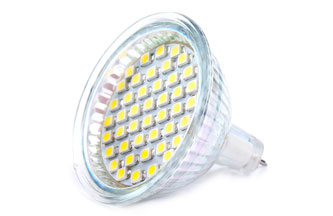
Lighting systems (Conventional vs light emitting diode, LED): Several types of lighting systems, such as incandescent, fluorescent, compact fluorescent, fluorescent tube lighting, high intensity discharge lighting and light emitting diode (LED) have been used at commercial poultry farms over the last few decades. Recently a monochromatic light developed from LED lamps has been of growing interest in the poultry operations because of high energy efficiency, long operating life, availability in different peak wavelengths, low electricity consumption, and low rearing cost. Thus, the monochromatic light's effects on production performance and quality of the products of different poultry species have been investigated. Studies with Japanese quails and turkeys reveal that red illumination produced more eggs compared to birds reared under green or blue light. Pyrzak reported that total egg production from a laying hen increased under red light, but it declined under blue light. They also indicate that light colour sources had an effect on the laying period of the hens in relation to egg production and egg quality. On the contrary, a previous study by Pyrzak had found no difference in maturity of pullets or egg production in force-moulted hens reared under blue or red monochromatic light compared with conventional incandescent light. Similarly, Lewis indicated that the use of green light during rearing had no effect on feed intake and egg production of egg type pullets in the laying phase.
A recent study on caged laying hens indicates that egg weight decreases in red light compared to blue and incandescent light. Likewise, Pyrzak reported that hens laying under blue lights consistently lay larger eggs than those under red light. Turkey hens kept under red light produced heavier eggs than those in other light treatments. By contrast, studies with Japanese quail and chickens say that light colour did not affect the average egg weight during the laying period. Given that there are such conflicting results regarding the effect of monochromatic light on production performance, pullet maturity and egg quality of hens in the layer industry stimulated this study. Therefore, the effect of monochromatic light on sexual maturity, production performance and egg quality of laying hens was investigated in South Korea.
Effect of LED lighting in egg production and egg quality of laying hens: Our experiment results show that pullets under red light (RL) sexually matured earlier than those in the all other light treatments. Harrison found that pullets reared under blue or green light attained sexual maturity four to five days earlier than birds under red or white light. Similarly, Lewis reported that pullets reared in the green light matured significantly earlier than those in the white light with a difference of one day. Therefore, these results are not consistent with our results, maybe, due to the sources of light, because the monochromatic light produced by LED lamps was used in the current study, not in the previous studies. However, Pyrzak reported that the light source had no effect on average days of first egg of initiating the egg production. The authors concluded that light quality was not a factor in the initiation of egg production, but renewal of egg laying after moulting was influenced by the wavelength of light in the domestic hen. Pyrzak found no difference in the rate of maturation in pullets or force-moulted hens illuminated with blue, green, or red monochromatic light compared to commercial incandescent light. These data were consistent with our data for ovary weight measured at the age of 20 weeks, but not consistent with our data for ovaries at 16 weeks, as it was measured at the very early stage of pullet age.
Pyrzak reported that the total egg production was influenced by the light colour with the highest eggs produced in red light and the lowest in blue light. In quail, birds kept under red illumination produced more eggs compared to birds reared under green or blue light. Similarly, turkeys reared under white or red light spectra produced more eggs rather than blue. Therefore, our data are consistent with all of these results mentioned above suggesting that egg production was affected by the light spectrum, and red light illumination had a positive effect on egg production of laying hens. The reason of these results could be attributed to the variation of wavelength of light where long wavelengths of light penetrate the skin and skull more efficiently than short wavelengths leading to improved reproductive performance of birds. Generally, red light illumination efficiently stimulates egg production of birds, whereas green or blue light has little influence on it. Furthermore, red light sources have been shown to reduce aggression and cannibalism when layers reared in free range conditions. In the commercial layers, egg production was significantly influenced by the light colour during the laying phase where hens were more sensitive to light colour during the second phase compared to first phase. Moreover, the monochromatic light sources and the sexual maturity of birds are correlated with the egg production rate which also consistent with our results, where birds reared under white light (WL) and RL matured earlier subsequently produced more eggs in their production cycle.
Although egg weight of laying hens in the present study was not affected by the light colour throughout the experimental period, other reports suggested that egg weight was affected by the light treatment. By contrast, Lewis found that egg weight was not affected by light treatment, which is consistent with our data except for 41-50 weeks of age. In the current study, higher egg weight was observed under blue light compared to white and red light only during the period of 41-50 weeks which is inexplicable at this time. However, Harrison concluded that difference in egg weight was a consequence of the rate of egg production rather than the light treatment.
Our results for the effects of light on feed intake were not in agreement with Rozenboim, who reported that using monochromatic light with low intensity sharply decreased feed intake of birds compared to incandescent light. The authors suggested that the reduction in feed intake and energy costs in the laying house using monochromatic light with low intensity will increase net profit by 20-30 per cent depending on feed costs. Although the same light intensity was used in the current study, no difference was observed when birds were reared under RL and incandescent light (IL) at 18-60 weeks. Charles reported that light intensity did not affect feed intake of laying hens. On the other hand, the FCR data of the present study indicates that layers under RL were less efficient in feed conversion compared to other light treatments. However, Lewis and Morris (1998) reported no significant difference in FCR of laying hens reared under different light sources. By contrast, Rozenboim reported that the use of LED lighting systems was cost- effective compared to a conventional lighting device, as feed intake reduced sharply when birds were reared under LED.
Er found that eggshell strength was significantly higher when hens were reared under red and green light compared to blue and incandescent light measured at 21-45 weeks. The authors also found that egg shell thickness was not affected by the blue and red monochromatic light as well as by the commercial incandescent light. On the other hand, Pyrzak indicated that shell quality, as indicated by shell weight was significantly better in green light than blue or red light in the first laying phase, but in the second phase shell quality and per cent of the shell were not affected by the light treatments of laying hens. Therefore, these inconsistent results and our results may be due to different light sources used in the experiments and the variation of measurement time during the experimental periods. However, several factors are involved with the egg shell quality of laying hens, including light sources and intensity, photoperiod, measurement range, method of determination, and breed and strain of birds.
In fine, from our experiment, it was concluded that monochromatic light had an influence on sexual maturity, production performance and egg shell quality of laying hens. Birds reared under RL matured earlier, increased egg production and egg shell thickness, but the FCR was not better under RL. However, LED lighting is a new technology which is being used in many developed countries for increasing egg production from laying hens. Our poultry industry is rising day by day and they may use this technology for increasing quality egg production in Bangladesh. However, more research is needed on cost-effective production with use of LED light in commercial poultry.
Hossan Md.Salim, PhD, serves at the Livestock Economics Section under the Department of Livestock Services, Krishikhamar Sarak, Dhaka-1215
Email: hmsalim@gmail.com
© 2026 - All Rights with The Financial Express

