Prof. Sarwar Md. Saifullah Khaled | January 14, 2017 00:00:00
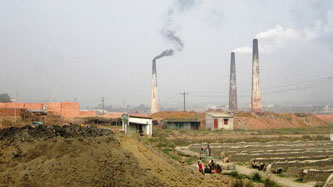
It has been observed after six months of the deadline set by the government that nearly 90 per cent of the brick-makers have not updated their production process in keeping with new environmental regulations on fuel, location and use of brick kilns. The Bangladesh Environment Ministry says that a total of 6,637 traditional and modern brickfields are currently in operation in the country. A report by the Bangladesh Centre for Advanced Studies (BCAS) says that only 735 of these brickfields follow the new regulations. The brick business owners say that the remaining traditional kilns will gradually be phased out.
Many of the country's brickfield owners have also begun questioning the regulations. The brick business owners say that though older kilns are being converted, they are not given permission to run business because they cannot follow every regulation. Brickfield owners warned that one million workers might be out of work, if the regulations are followed strictly. The BCAS Executive Director said that the brick-makers were given until Jun 30, 2016 to replace the traditional kilns with modern ones. He said: "Our research says 88.65 per cent of brickfields have not obeyed the law". It is illegal for children to work in the brickfields, but there are child labourers who are earning their living by working at brick kilns.
As per BCAS statistics, 1,745 of the brickfields in Bangladesh started operations before obtaining any licence. Though the government has regulated the use of modern kilns to combat air and environmental pollution, brick-makers have been reluctant to phase out the older kilns because of profit concerns. According to BCAS statistics, 17.12 billion bricks are manufactured every year in Bangladesh. The amount of earth required for it stands at about 58.38 billion tonnes. Wood or coal is used to fuel the traditional brick kilns. The permanent chimneys are, at best, 120 feet high. Bricks are made during six months in a year - November to April. The smoke released from these chimneys damages the ozone layer and pollutes the surrounding areas of the brickfields.
The government instituted the Brick Making and Brickfield Establishment (Control) Act 2013 as demanded by environment activists, banning permanent chimney brickfields. At a "Green Brick Convention" arranged by businesses, the country's Finance Minister encouraged the brick-makers to take the advantage of their duty-free facility and convert older brick kilns to modern ones. On the other hand, the owners complained that simply replacing the traditional kilns was not enough to satisfy regulators. The regulation concerning the position of kilns would deny them permissions, even if those were converted, the owners said.
Many are refusing to abandon traditional kilns because of the less availability of brick making raw materials. A partner of Messrs Atik Bricks said that brickfields in Khulna, Noakhali, Lakshmipur and many other areas were yet to shun traditional kilns. He said the permanent chimneys were especially being used in areas where wood was widely available. But the senior secretary of the Bangladesh Brick Manufacturing Owners Association says he doubts the numbers reported by the BCAS are correct. "I believe the report based on faulty sources presents the figure 88 per cent. Most brickfields in Comilla, Chandpur and Narayanganj have already been converted". The association's Vice President also expressed his dismay at the strictness of the new regulations. He said it is impossible to follow the regulations on transportation and location and run a successful brick business ground. He said, "Why 88 per cent? I thought 99 per cent of brickfields would be illegal".
The proprietor of the ARB Enterprise Brickfield in Dhamrai says legal restrictions have prevented him from taking the advantage of the available protection. He said, "We have taken steps to build zigzag kilns for six years, but because of new regulations from the environment ministry, we have not been granted protection. This has created a production slowdown," he said. He also expressed his concern about the public loans granted for construction of modern kilns. "In order to pay the interest on the Tk. 550 million loans, Rangpur Naz Auto Bricks would have to produce 120,000 bricks a day. Do you think more than 100,000 bricks can be sold in an area like Rangpur?" he asked.
The owners say the demand for bricks is increasing because of the growing construction work in Bangladesh. Bricks worth nearly Tk 25 billion have to be imported a year. The owners say that Bangladesh could meet the demand itself, if 'restrictions' were relaxed. The director general of the environment ministry questioned the BCAS report that said 90 per cent of the brickfields were non-compliant. He said, "I do not know what sources environment activists are using for their report, but it is incorrect. According to the environment ministry's calculation, almost 63 per cent of factories have already adopted modern methods". Legal action would be taken against those who were yet to comply with, he said. "Recently seven brickfields have been demolished in the Khulna area. Environmental mobile courts are operating in Barisal and Patuakhali," he added.
Currently 700 other brickfields are continuing operation after challenging the government order at the High Court. The environment department says there is nothing to do with those fields "for the time being" - so they continue to run in their own fashion.
The writer is a retired Professor of Economics, BCS General Education Cadre. Email: sarwarmdskhaled@gmail.com
© 2026 - All Rights with The Financial Express

