Traditionally, weddings are a form of celebration where family, friends enjoy food and music, following the custom while two people get married. Nonetheless, within the recent past, the nature of wedding ceremonies within South Asia has been changing from being mere cultural events to, basically, conspicuous consumption, which has major macroeconomic implications. A wedding is a social establishment that is deep-rooted in culture, shared meals and happiness, celebration, music. Although, the weddings that happened all around South Asia recently have evolved into a financial showcase. It has turned into a display of social ranking, financial power and over-consumption.
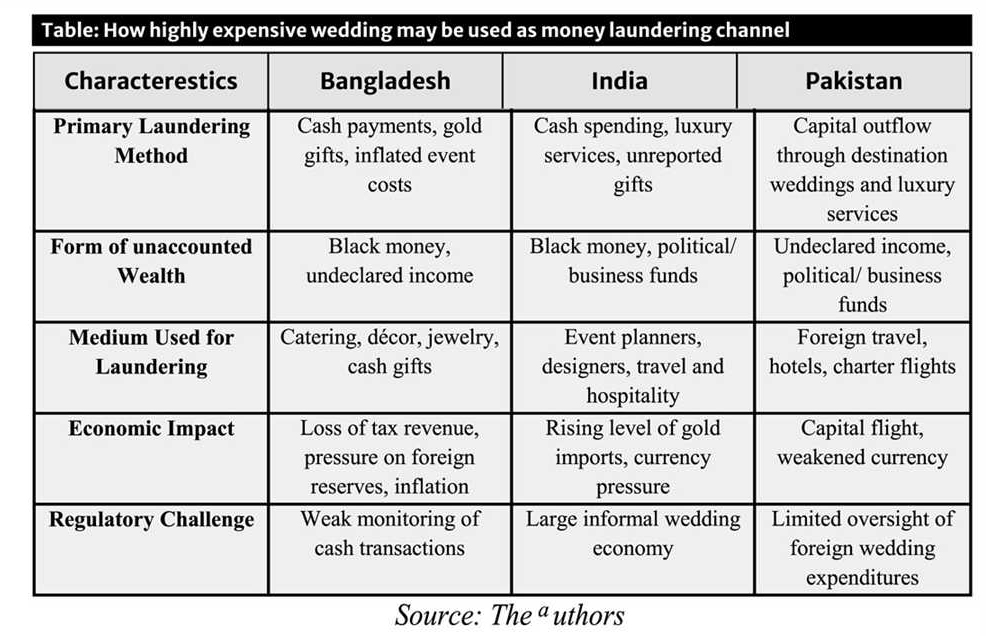
In South Asia (especially, Bangladesh, India and Pakistan), aristocratic weddings mean foreign decorations, destination wedding venue, variety segments of celebrations throughout several days before the wedding cost millions where the country faces problems like balance-of-payment and inflation. In Bangladesh, lavish weddings like this include lavish cars, cinematic staging, gold accessories weigh kilograms, shopping for wedding outside the country which approximate costs over 10 million BDT. These incidents raise an obvious and unavoidable question: what is the source of this money? Can they really afford it?
From a macroeconomic perspective, spending this extravagantly most likely has layered undertones. Moreover, lavish weddings create new job opportunities like caterers, event planners, musicians, decorators, transport workers and photographers. Although, this short-time support in temporary employment opportunities often covers more serious structural matters.
In countries like India, Bangladesh and Pakistan, overly big-budget weddings are sometimes the evidence of the money laundering that happens as weddings give a perfect opening to spend the unacknowledged sum of money. For example, in Bangladesh, the worries about unreported income and money laundering have become crucial. To launder black money, extravagant weddings are occasionally used as a medium - spending money without any limits, exchanging gifts. On the other hand, the country's economy struggles with the tax, capital outflow, and casual exhibition of unaccountable wealth. Pakistani weddings are famous for their luxuriousness too, specifically when it is a political figure or celebrity's wedding. Indian television channel NDTV World in 2025 reported that in Pakistan, one of the "Million-dollar wedding" had come under investigation because their weddings' apparent cost does not match their reported income declaration. Recently, a prominent figure of Pakistan had organized a massive destination wedding for his granddaughter which cost around248 million Pakistani Rupees.
On the topic of destination weddings, many people spend huge amounts for a destination wedding so that they can show off on social media. There are significant amounts of influencers nowadays. To increase their popularity, celebrations like weddings become highly expensive or destination weddings for their bragging content. To keep a high image in society, in some cases people waste millions on a simple celebration like weddings to make it look luxurious and to show off in social media posts. They even take bank loans in the name of "business loan" so that they can afford their "Dream Destination Wedding". Just to maintain a high class in the society and to show off, they enter into the world of bad debt and in the long run, they get crushed under the pressure of it. Recently, a Bangladeshi businessman had a destination wedding in Paris which was declared as one of the most expensive weddings. The photos of the glorious celebration were viral on digital platforms.
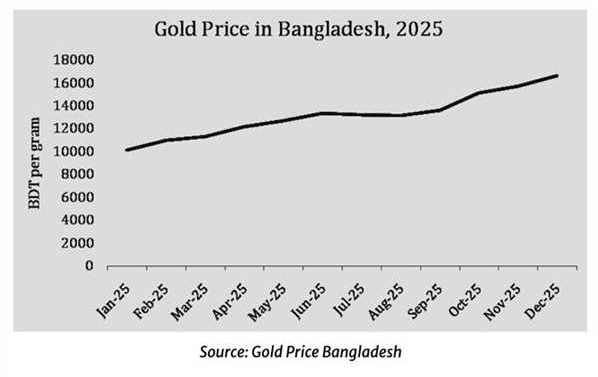
Furthermore, gold is one of the essential elements in a wedding which works as a safekeep for the women of the society. Gold is a significant part of a wedding; it does not matter whether it is a lavish wedding or not. Gold prices spike up during wedding seasons and weddings with huge portions of gold have economic consequences all over South Asia. The excessive demand for gold throughout wedding seasons can lead to high import which can weaken the currency. In Bangladesh, the extravagant wedding commonly uses kilograms of gold jewelries. It increases the import of gold and drains the country's foreign exchange when the reserves are already strained. Lavish weddings of Pakistan increase the demand of gold as well which raises the import cost and puts pressure on the currency. In this subcontinent, what is being considered as luxury and tradition in weddings in reality causes financial hardship and increase in cost.
This creates severe problems. The temporary employment opportunities disappear as soon as the event is done. These extravagant weddings create inflationary pressure on the economy as during wedding season, the prices of some specific goods spike up as the demand increases for catering, event planning, gold prices and many more which affects the households unrelated to the weddings. Due to the costly and destination wedding, the spending is more than a country earns from the export which is leading the economy to a recession and it is draining the foreign exchange. Also, the increase in household debts because of an extravagant wedding causes economic vulnerability. This kind of lavish wedding creates a social inequality and wastes resources along with covering up the money laundering and the black money. According to a 2025 article in the Financial Express, Bangladesh, journalist Mahmudul Islam argues that as the rich continue to indulge in ostentatious and extravagant spending, the middle class in Bangladesh is also facing financial pressure due to the increasing income inequality.
Lavish weddings in South Asia showcase the dynamics between social norms and economic action, producing consequences that transcend the individual realm. Even though lavish weddings can generate economic activities in the short term, they continue to be a trigger for misallocation of resources, tax evasion, inflationary pressure, and financial vulnerabilities for households. Lessons can be learned from the current scenarios, without proper regulation of the economy and a change in cultural attitudes to financial prudence, the macroeconomic consequences for such lavish weddings will only escalate. These black money might not affect the banking system directly, but indirectly, these black money could have increased the amount of liquid money of the bank, keeping them financially strong. Not to mention, the economy would be more stable.
To prevent the economy from going down, the wedding expenses need to be strictly supervised. Applying high taxes on foreign décor and services might prevent others from wasting the resources which will increase the revenue. Before having highly expensive weddings, encouraging everyone for a "simple wedding" will save the dollars they spend in the foreign country in the name of destination wedding and wedding shopping, raising awareness among everyone to be financially responsible. These policies can help the economy stabilise and increase revenue. It can lower the money laundering from happening and strengthen the economy.
Qazi Labiba Iqbal and Sadia Ruhul are economics undergraduates from BRAC University. qazi.labiba.iqbal@g.bracu.ac.bd; sadia.ruhul@g.bracu.ac.bd
© 2026 - All Rights with The Financial Express

