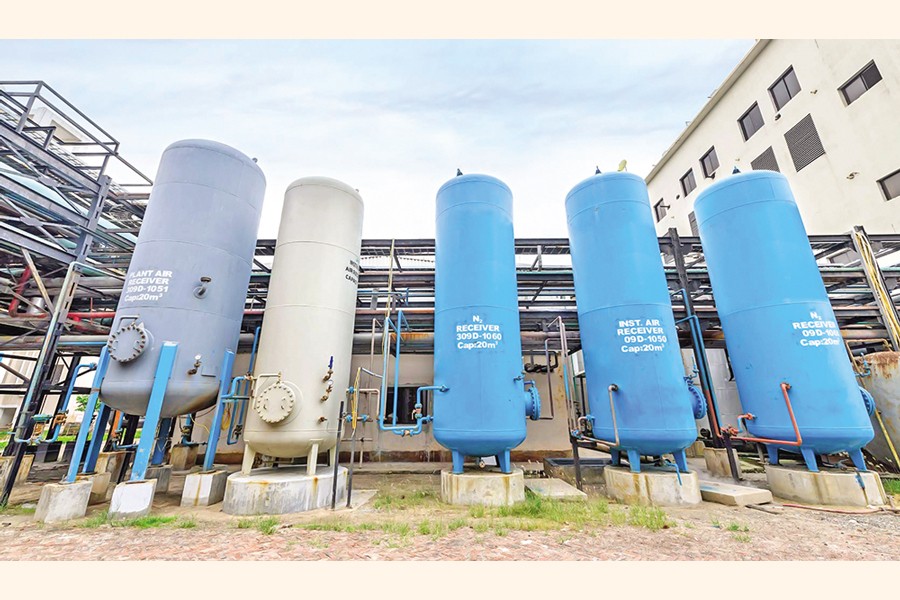
The privately-owned petrochemical and fractionation plants are eyeing to resume commercial operation after three years, as the government is planning to import diesel-rich condensate to re-initiate their commercial operation.
The state-run Bangladesh Petroleum Corporation (BPC) has selected Indonesian energy company - PT Bumi Siak Pusako (BSP) - to supply around 30,000 tonnes of diesel-rich condensate following an international tender.
"We have sent a letter to the Cabinet Committee on Government Purchase for approving the condensate purchase proposal," BPC director (operations and planning) Khalid Ahmed told the FE on Tuesday.
The Indonesian firm has offered to supply condensate at international market price plus US$ 19.5 per tonne as premium.
After importing condensate, the BPC will provide the fuel to different petrochemical and fractionation plants to refine and mainly produce diesel, said Mr Ahmed.
The privately-owned petrochemical and fractionation plants will also be able to produce lighter kerosene - mineral turpentine or turpentine oil - which is specially treated for use as thinner and solvent in paints and varnishes.
After successful trial production, the plants will import condensate on their own to produce diesel and other necessary oil-type byproducts.
"We are hopeful of resuming commercial operation soon, as all necessary work to reinitiate production has already been completed," Md Mamun Salam, president of the Petrochemical and Refiners Association of Bangladesh (PRAB), told the FE on Tuesday.
It will be a big sigh of relief for the privately-owned plants, as they are incurring loss due to non-operation of their business, and still have to continue paying bank loan interest, he added.
The government is set to purchase diesel from these plants at international market prices. The Energy Division recently issued a gazette notification for introducing an 'automated pricing formula' for internal pricing of diesel, octane, petrol, naphtha, condensate and all other crude petroleum products that are usually refined or produced locally.
The BPC will fix the prices of these petroleum products under the formula following their price movements in the international market on a monthly basis.
Under an agreed pricing formula, the BPC will purchase diesel at 1.0 per cent lower price than its international price, Mr Salam said.
"We'll be able to sell byproducts to different paint industries and other clients," he added.
In line with the latest government decision, many privately-owned refineries, including CVO Petrochemical Refinery Ltd, has moved to initiate producing diesel in their plants, said a company official.
Sources said the country's more than a dozen petrochemical and refinery plants of private sector remained shut since June 2020 - allegedly due to lack of condensate supply as per the BPC's commitment. Before the closure, these were producing petrol from condensate.
There were allegations against some private sector refiners of selling condensate to different petrol pumps and filling stations without refining to petrol, which had prompted to take step to cease their operations, they added.
More than a dozen of such plants were forced to shut operations, as the government had stopped supplying necessary raw material - condensate - to maintain their operations.
The Petrobangla and its subsidiary natural gas producing companies had been supplying condensate to the plants when those were in operation.
The PRAB president alleged that the state-run gas entities had stopped supplying condensate 'unilaterally' without prior notice, resulting in closure of their operations.
As a result, bank loans worth around Tk 20 billion - borrowed against their plants - remained stuck and about 5,000 employees rendered jobless.
The country's annual diesel requirement is now around 6.0 million tones. The BPC imports its major portion as refined products and produces a small portion at its wholly-owned subsidiary Eastern Refinery Ltd (ERL).
Azizjst@yahoo.com
© 2026 - All Rights with The Financial Express

