Fashion brands that source from Bangladesh for the UK market were paying below the production cost of clothing items in 2020 and 2021, according to a new survey finding.
Majority of local factories (76.1 per cent) that supplied to 24 big global retailers were reportedly getting the same prices of products despite the cost of raw materials increasing substantially since then.
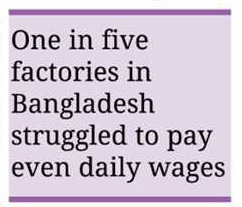
A large number of high-street fashion brands as mentioned in the study were reported to have continued buying from the factories that were facing rising costs of raw materials, and nearly one in five was struggling to pay even the minimum wage per day, said the study report.
The study titled 'Impact of Global Clothing Retailers' Unfair Practices on Bangladeshi Suppliers During COVID-19' was carried out by University of Aberdeen and Transform Trade, a trade justice charity, on 1,000 manufacturers in Bangladesh from March 2020 to December 2021. The study report was published on Sunday.
In terms of turnover, Inditex, H&M, Gap, PVH and Next were among the top 10 clothing retailers globally in 2020 and they had the largest reported impact.
In total, 90 per cent of larger high street brands buying from four or more factories were reported in the survey to have engaged in unfair purchasing practices.
More than 50 per cent of suppliers reported experiencing unfair purchasing practices, including cancellations, failure to pay, delays in payment and discount demands, with knock-on effects including forced overtime and harassment.
Larger brands that sources from many factories were engaged in unfair purchasing practices more frequently than smaller ones, according to the suppliers.
Every brand purchased from 15 or more factories was reported to have engaged at least one of these practices, it showed.
Bangladesh is the second largest garments exporter in the world. The country fetched US$4.49 billion from RMG exports to the UK in the last fiscal year (FY 2021-22), according to Export Promotion Bureau (EPB) data.
"Two years on from the start of the pandemic, Bangladeshi garment workers were not being paid enough to live on, with one in five manufacturers struggling to pay minimum wage while many fashion brands which use Bangladeshi labour increased their profits," project lead Muhammad Azizul Islam, Professor in Sustainability Accounting and Transparency at the University of Aberdeen Business School, said in a statement.
"Inflation rates soaring around the world are likely to have exacerbated this even further," he noted.
The survey also found that post-lockdown, garment factories only employed 75 per cent of the workers they had before and suggest that up to 900,000 workers could have lost their jobs.
"This research is a wake-up call," the statement quoted Fiona Gooch, a senior policy advisor at Transform Trade.
"When retailers treat suppliers badly by breaching previously arranged terms, it's the workers who suffer. If a retailer fails to pay the agreed amount, or delays payments, the supplier has to cut costs some other way, and this is frequently passed on to their workers, who have the least power in the supply chain."
Reports of being rehired on worse pay and conditions, bullying and unpaid overtime are the predictable results, Fiona Gooch said, adding they need a fashion watchdog to regulate UK garment retailers, along the same lines as the existing supermarket watchdog.
ALDI and LIDL's grocery buying practices are regulated in both the UK and European markets, but their clothing purchases aren't, which is why unethical behaviour persists.
"We need a fashion watchdog to stop unacceptable purchasing practices of the clothing retailers benefiting from large consumer markets, along the same lines as existing protections for food suppliers. Only when suppliers are able to plan ahead, with confidence that they will earn as expected, can they deliver good working conditions for their workers."
Nearly two-thirds of the factories reported receiving some financial support from the Bangladesh government or Bangladeshi banks in order to remain afloat.
Of the brands listed in the report, 12 are members of the Ethical Trading Initiative which aims to promote workers' rights around the world.
Munni_fe@yahoo.com
© 2026 - All Rights with The Financial Express

