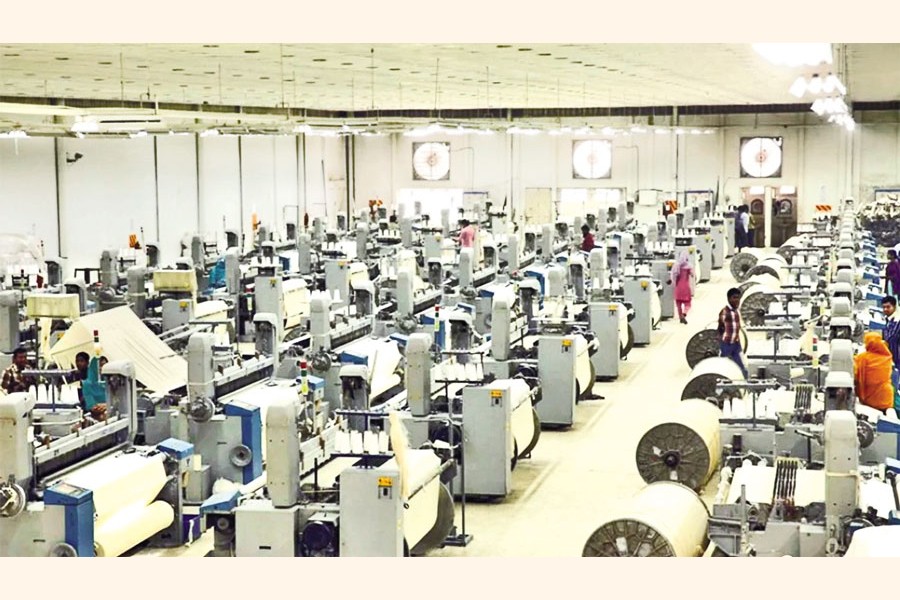
The country's large-scale manufacturing sector recorded its strongest growth in April, ramped up by a sharp rebound in clothing production after months of volatile industrial activity.
Data released by the Bangladesh Bureau of Statistics (BBS) showed the Large Scale Manufacturing Index expanded by more than 20 per cent year-on-year in April, reversing a contraction of about 5.0 per cent recorded a month earlier in March-2026.
The April performance marked the strongest expansion in the first 10 months of the fiscal year.
The large industrial sector had experienced contractions in five of the 10 months, highlighting the uneven pace of industrial recovery.
Manufacturing activity had fallen by nearly 10 per cent in February last at a time when businesses were affected by the national election, extended holidays and lingering economic uncertainty.
Before April, the strongest monthly expansion was recorded in August 2025 when output grew by 15.5 per cent.
The latest rebound was largely driven by the wearing apparel industry, the country's largest manufacturing segment.
The clothing production index rose by more than 31 per cent in April, a pace not seen in recent months.
The apparel industry carries a weight of about 61 per cent in the manufacturing index, meaning even modest changes in garment production have a significant impact on the overall index.
The textile sector having nearly 12 per cent weights on the index, also posted growth of less than 1.0 per cent during the month under review that had provided an additional support to the overall manufacturing output.
The country has 23 large-scale manufacturing industries covered by the index, representing a significant share of the country's industrial production and contributing more than 11 per cent to gross domestic product (GDP).
Business leaders attributed April's strong performance to factories raising production to fulfil export orders that had been delayed by the long holiday period earlier.
They cautioned, however, that the outlook remained uncertain as global trade faces renewed geopolitical and climate-related risks.
Manufacturers said uncertainty surrounding tensions in the Middle East, particularly the conflict involving Iran and the United States, made overseas buyers more cautious.
They also said increasingly unpredictable weather patterns in Europe and the United States complicated retailers' demand forecasts making buyers reluctant to place long-term orders.
"Buyers are becoming increasingly unsure because climate change is affecting seasonal demand in Western countries," said Md. Anwar Ul Alam Pervez, former president of the Bangladesh Garment Manufacturers and Exporters Association (BGMEA) and managing director of Evince Group.
"In the past, buyers used to place orders up to December. Now they are placing orders only two to three months in advance," he said.
Despite the improvement in manufacturing activity, garment export earnings rose by only 3.63 per cent in April.
During the July-April period, export receipts from the sector declined 1.53 per cent on an annual basis.
jasimharoon@yahoo.com
© 2026 - All Rights with The Financial Express

