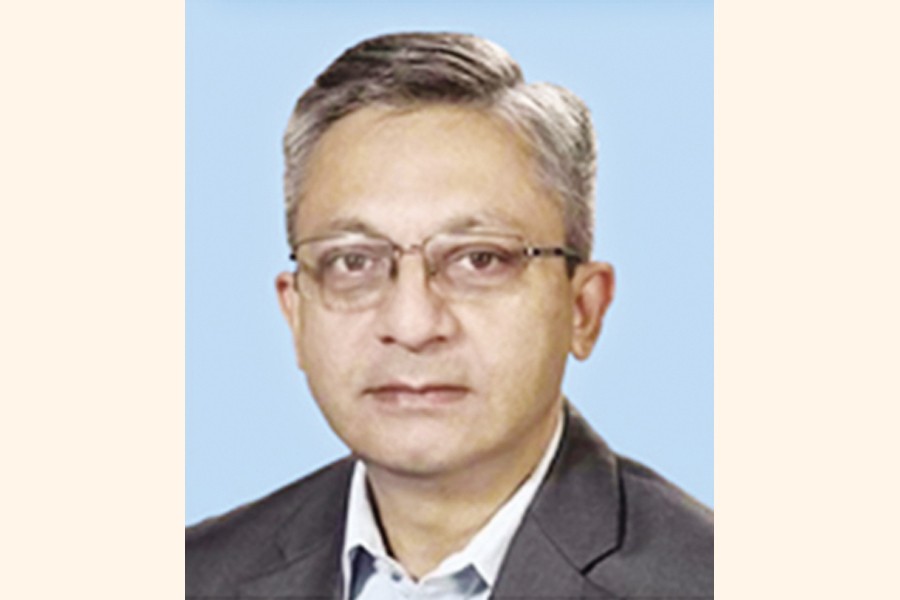
 Khandaker Abdul Muktadir
 The new government will take initiatives to defer Bangladesh's graduation from the Least Developed Country (LDC) status, says Commerce, Industries, Textiles and Jute Minister Khandaker Abdul Muktadir.
Speaking to journalists at the secretariat on Wednesday, he said the government had already started working on this.
He said the government wanted to defer LDC graduation and was taking all necessary steps towards that goal.
"The commerce ministry has started working on the matter today. It will issue a letter within a short time," he said, adding that the Economic Relations Division (ERD) would handle external coordination and do the necessary communications.
Referring to the long-standing demand from business associations to defer LDC graduation by at least three years, the minister said the government was giving the matter the highest priority.
"It is not mandatory that a formal letter must be sent in the very first week, but we have started working on the issue," he added.
Addressing the recent slowdown in exports, he said Bangladesh's export structure remained highly concentrated, with around 85 per cent of total export earnings coming from a single product.
To tackle this, the government would prioritise export diversification by adding new products, expanding into new markets, and providing appropriate support for private entrepreneurs interested in investing.
Mentioning uncertainties in global trade, Muktadir said sudden changes in the US tariff policies had created instability in international markets.
"As a poor country, Bangladesh has very limited room for error. It lacks the capacity to absorb policy mistakes or prolonged external shocks. Therefore, the government has begun working to quickly overcome the sluggish situation observed over the past few months."
Addressing concerns about market stability during Ramadan, he said it depended on normal supply conditions.
He assured that the government had sufficient stocks of essential commodities for Ramadan and the period thereafter, with adequate supply already in the pipeline.
As a result, there was no reason for panic about the market, assured Muktadir.
Responding to questions about the influence of syndicates in Ramadan, he said he did not want to just give statements but rather preferred demonstrating results through action.
Explaining the price hikes of some commodities at the beginning of Ramadan, the minister said this was mainly due to a one-time surge in demand.
"People usually shop in bulk for the entire month, leading to a sudden increase in consumption that temporarily affects retail prices."
He said local and foreign investments would not come amid uncertainties, adding the primary condition for investment was a stable environment.
"Many countries do not have what we have for attracting investments as Bangladesh has a large working-age population. In addition, 2.0-2.2 million people enter the labour market every year," he said.
Muktadir further noted that investment had remained stagnant over the past two to three years, creating significant pressure on the economy.
If this situation could not be reversed, it could pose risks to employment and overall economic stability, he warned.
Asked whether managing Ramadan would be the new government's first major test, the minister said ensuring effective market management during Ramadan was indeed a major challenge for the government.
The government must succeed in meeting public expectations, and there was no alternative, he said, adding this was not about any individual but the national interest. He called on all stakeholders, including the media, to cooperate with the government.
Requesting that mistakes be pointed out, he said collective efforts would make it possible to move the country forward.
newsmanjasi@gmail.com
© 2026 - All Rights with The Financial Express

