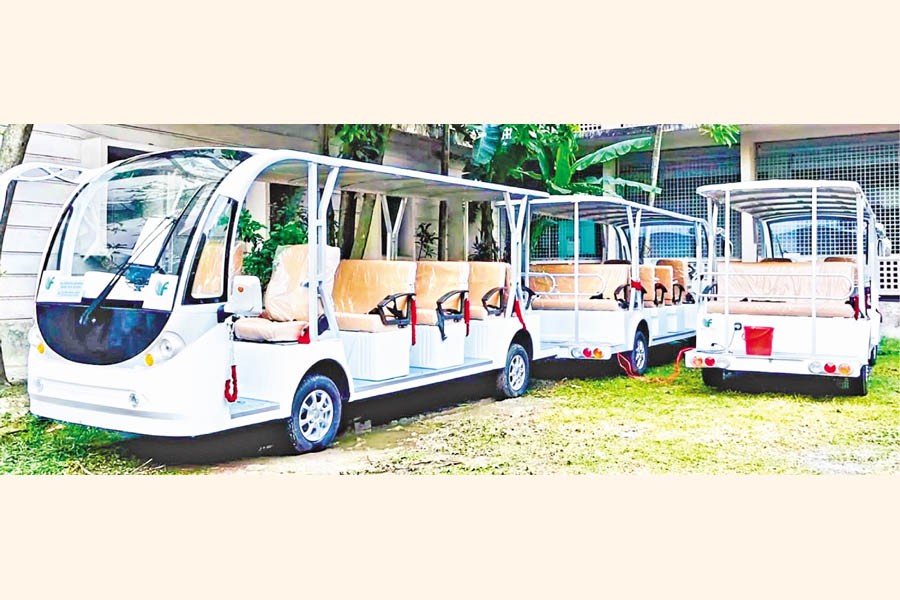
 Shuttle service at University of Dhaka
 This innovative experiment has been taking place in one of the capital's busiest residential centres. It is set to change the daily commute of thousands of commuters. Now, the concept of the electric shuttle bus in the bustling area of Bashundhara promises to become a radical attempt to alleviate a perennial annoyance, exorbitant rickshaw fares.
Tackling the costly commute
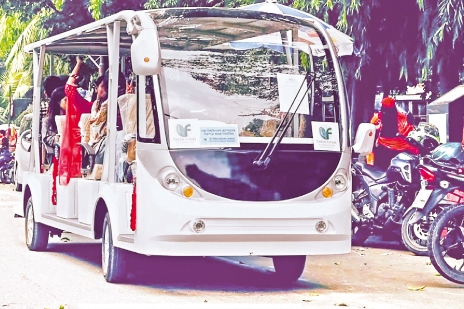 Over the years, commuters travelling through the busy streets of this city have had to witness the same problem: even a short-distance ride was being erroneously charged a premium by rickshaw and CNG drivers. The charges, especially during school hours, were significantly higher for children commuting and their chaperones. The electric shuttle offers a glimmer of hope that significant changes will become more affordable, much like the electric shuttle program, which charges a 10 Taka fare. Easy to operate and equipped with powerful batteries that work a great distance on a single charge, these shuttles combine comfort, affordability, and eco-awareness for daily commutes. The much-hyped eco-friendly vehicles are slowly getting popular among passengers, a resident of Bashundhara Atika Anan Tory says, "Shutters feel faster and more comfortable. They also charge lower fares than rickshaws, so I think shutters will be a good alternative to rickshaws."
The world behind every rickshaw wheel is the story of non-stop efforts, survival, and hope. Rickshaw pullers who supported the movement of the urban centres are now facing competition. It is not a battle over lost customers. Still, it is over the right to have dignity in a labour-intensive lifestyle that has supported whole families down through the generations. Inhabitant of Bashundhara Maisha Maliha says, "Shutters are nice but small in number. Moreover, we can avail rickshaws from anywhere, but there are specific places to get on board shutters, and that's a hassle."
Coexistence or replacement?
The introduction of electric shuttles raises a significant question about the balance between progress and tradition. Instead of sweeping rickshaws off the streets, these eco-friendly auto rickshaws are part of a transition process between the two modes of transport, each playing different and unique roles. Rickshaws can still provide unrivalled convenience, flexibility, and quality services in short-distance work, lanes, and quick drop-off, which shuttles cannot operate in. In the meantime, shuttles are more efficient for performing long-distance routes and transporting groups of people, and their costs are low. This coexistence presents policymakers and community activists with a challenge to strike a balance between offering help to rickshaw pullers by training them and finding them alternative employment, while increasing the availability of clean means of transport. This is not only an evolution but also an inclusive development, in which cultural and other practical needs are balanced with conveniences. Regarding this, Bashundhara dweller Nishat Ahmed states, "I don't think shuttles will fully replace rickshaws. From a rider's perspective, rickshaws are more flexible for short distances, narrow lanes, and door-to-door service, which shuttles cannot always provide."
Shaping a sustainable future?
This move is more than industrial growth and job creation, as the country is determined to become sustainable. With the acceptance of battery-powered shuttles, the city takes a significant step toward achieving its goal of reducing air pollution and traffic congestion. These tribulations have deeply afflicted city life here. What can this transition teach other cities and the regimes of the land to be innovative without flouting their unique social codes? The way forward looks promising, but what can we do to ensure that future development does not leave vulnerable workers behind?
Investment, revenue, and sustainability from the owner's lens
All electric shuttle buses require high initial costs of up to 420,000-580,000 Taka, primarily due to the high-tech battery and engineering configuration needed to meet urban transportation needs. On the revenue side, a full shuttle with a capacity of 10 to 12 passengers, charging a fare of 10 Taka, will generate approximately 500-600 Taka per hour, assuming five jobs are completed in an hour. Maintenance expenses are also very low compared to conventional cars, with average monthly expenditures on maintenance, battery maintenance, tire change, and minor repairs costing a few thousand Taka. Despite the high cost of replacing the battery as a long-term cost, the total reduction in operating expenses balances the high cost of purchasing it. The financial dynamics underlying this suggest that, despite the significant start-up cost, the continuous fare payment and maintenance expenditure will be limited; hence, the electric shuttle can be a tremendous and viable business venture for city transport operators.
The introduction of electric shuttle buses is not just a transportation improvement, but rather another turning point in the country's urban history, where technology, affordability, environmental friendliness, and human strength and social equality come together. With these contemporary cars picking up pace, readers are challenged to consider: What would really constitute development, when not only bread is being earned? Is it possible to live in an era of innovation and tradition at the same time and produce a future in which everyone goes in the same direction? The solution is balancing the fine line that comes with changing times and respecting the human soul, which fuels each journey through the high-paced city streets. A local from the area, Nowshin Atia, says, "The use of shuttle buses could be an effective solution to the problems of increased prices, puller malpractices, and accidents, in particular battery-operated rickshaws. In the case of rickshaws, shuttle services can effectively replace the former provided that they are operated on demand, adhere to schedules and routes, and are charged at affordable rates."
The leg of the story continues in this new phase of mobility in cities, not only on the streets, but in the hearts and minds of the individuals who live in this country. Will it be an effortless yet advantageous transition that proves profitable for everyone, or will we have to struggle to find a solution to bridge the gap between innovation and centuries-old folk customs? This is the continuing story, one to contemplate and participate in.
Samiha Mamun is an undergraduate student at Army IBA (affiliated with the Bangladesh University of Professionals), Savar, Dhaka. She can be reached at samihamamunmeem@gmail.com
© 2026 - All Rights with The Financial Express

