
 "It is usually Sundays and Thursdays that drive me crazy. However, you never know when the workload might come! And if it comes, a calm mind can get me through," said Manjurul Hassan Bandhan, a busy sales manager at Catalyst, as he realised that mindfulness was always closer to him.
"Whenever I am anxious and tire myself out, I lose my work efficiency during a hectic day and make unnecessary mistakes at work. Hence, when I heard about mindfulness, I felt like I unconsciously had been practising different activities that helped me with my me-time."
To Mr Bandhan, small things like listening to songs, eating snacks, reading books, and taking a stroll in the office mean a lot. These small moments of self-awareness help him stay true to his jolly self.
"I like to eat food but just don't get the time to hang out with my friends to go on food expeditions. Hence, having snacks or coffee breaks amidst constant office chaos helps me practice mindfulness. Yes, meditation might be an option. To me, it is like a power nap to freshen my mind," added Bandhan, smiling while talking about food.
Amid modern life's chaotic and demanding nature, finding peace and tranquillity often feels like waking up in the middle of a dream. The constant bombardment of noise, relentless expectations from teachers, peers, and bosses, and the overwhelming screams of daily stressors can weigh heavily on our minds and bodies.
"I am constantly worried about my work-academic balance. I feel like if I stop even for a second, all hell will let loose, and I will fall behind. It feels gloomy and grey. Hence, I am constantly looking for ways to stay cheerful and positive," expressed Iffatun Islam Nitu, an undergraduate engineering student looking for ways to stay mindful.
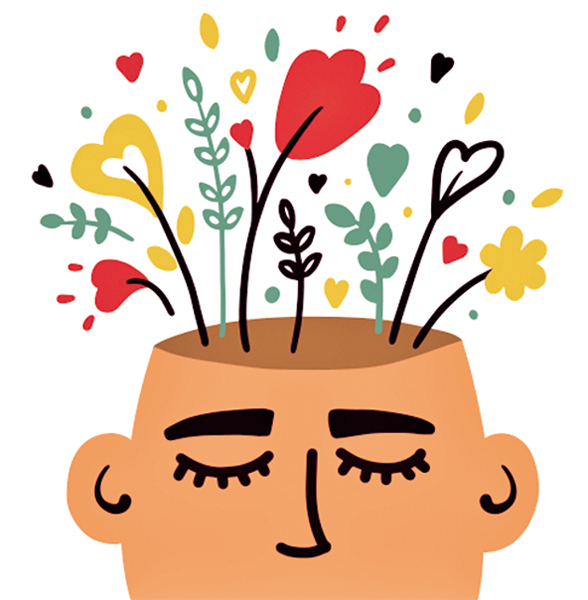
Mindfulness is the art of staying fully immersed in the moment, cultivating a non-judgmental awareness of thoughts and sensations. It invites us to observe our smallest experiences without getting caught up or overwhelmed by their intensity. By connecting with the essence of our humanity, we learn to embrace the happiness of the small activities in our lives.
"If I take a long break from work, I will lose my flow. But unexpected things happen, and you can always lose your composure. I still remember my thesis pre-defence day, where, on top of extreme academic pressure, my laptop broke that day, slipping out of my hand. It was a complete disaster for me, but I pulled through," said Tasfia Yousuf, a thriving civil engineer who has just completed her studies.
"Even in these despairing set-ups, I calm myself with music or close my eye in silence. I often pray salat to calm myself or do painting or DIY projects," added Tasfia as she explained her mindfulness practices.
In the realm of science, mindfulness has garnered significant attention and is widely known for its therapeutic benefits. Research has shown that mindfulness-based practices can reduce stress, anxiety, and depression significantly. When we engage in such activity, we activate the prefrontal cortex of our brain, which is responsible for functions such as decision-making, problem-solving, and emotional regulation. This activation helps us regain control over our thoughts and emotions, allowing us to respond to stressful and chaotic days with greater composure.
"It is common to get tired and depressed. It happens to me, especially when I fail to provide output considering the input I give. Hence, lately, I increased my awareness of my habits so that I can track them, realise my mistakes, and learn to reorganise my thoughts, and timelines and gracefully build a non-tiring lifestyle," expressed Shadman Afif, a busy service holder in Dhaka.
To practice mindfulness in all this noise, we must first create space for ourselves. It can be as simple as finding a quiet corner in our rooms or allocating a few minutes each day to sit in silence and think about life, paying attention to our breathing. The rhythmic inhales and exhales anchor us to the present moment.
This act of focusing on breathing helps us to emphasise our attention on current activities. It draws us away from storms of thoughts and worries. As we observe our breath, we begin to expand our awareness of the sensations in our body-the feeling of our feet grounded on the floor, the warmth of our hands, and the gentle rise and fall of our chest.
"Even though creating a me-space and concentrating on oneself can be mindfulness activities, it is important to be gentler and more compassionate toward ourselves. We should not strive for perfection or judge ourselves harshly if we make mistakes," advised Hosne Ara Afroz, a busy homemaker and mother of three.
For Mrs Afroz, her daily activities, from washing the dishes, cooking meals, eating one, or simply taking a walk, can be mindfulness activities. Noticing the sights, sounds, smells, and tastes with curiosity and appreciation can be simple acts of mindfulness that can transform mundane tasks into opportunities for calm and rejuvenation.
In the face of the overwhelming stress of this modern world, the practice of mindfulness offers us a refuge-a sanctuary within ourselves to find peace and regain perspective. Navigating through the noise, expectations, and screams gracefully and allowing ourselves to be more 'me' is the beauty of enjoying the non-judgmental present.
aurobasunia@gmail.com
© 2026 - All Rights with The Financial Express

