Dhaka is one of the most crowded cities in the world. Land is very scarce now. Developers are building smaller apartments to fit more people.
Most new builds have very small square footage. These tiny homes are becoming the new standard for middle-class families. Living in a small space is a necessity for many residents today. Families must adapt to these tight environments. The urban landscape is changing rapidly. High-rise buildings now dominate the city skyline. Each floor contains more units than ever before. This shift reflects the intense pressure on urban land.
Why do people choose smaller homes?
Many people choose smaller apartments because of the high cost of living. Large flats are too expensive for young professionals.
Small apartments are easier to maintain. They require less electricity for cooling. Residents also want to live near their workplaces in areas like Gulshan or Dhanmondi.
They sacrifice space to save time on travel. Commuting in the city is a major challenge. A smaller home in a central location is a smart trade-off. It allows for a better work-life balance. Akbar Ali is a resident who recently moved to a new flat in Wari. He shared his experience with the search.
"Finding the right apartment in Dhaka is very hard now. Most places feel like matchboxes. I had to choose a small flat to stay close to my office. It was the only way to avoid the terrible traffic and lower rent every day," says Akbar Ali.
The rise of Japandi-Bangla trends
Homeowners are finding creative ways to make the most of their limited space. They are looking for furniture that serves many purposes.
This trend combines Japanese minimalism with Scandinavian utility. It also incorporates local Bengali aesthetics.
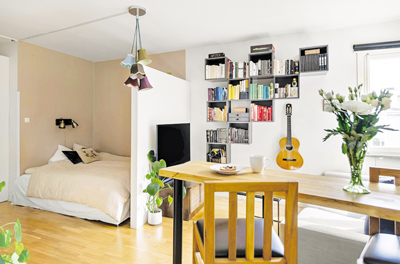
Modern homes now feature dining tables that double as workstations. These pieces keep the home organised and clean.
The style uses neutral colours to make rooms feel open. It emphasises natural light and simple lines. This fusion is perfect for the modern Dhaka lifestyle.
How furniture is being modified
People are no longer buying heavy traditional furniture. They prefer modular designs. Some beds have hidden storage drawers underneath. This replaces the need for large wardrobes.
Other sofas can turn into guest beds at night. Wall-mounted desks are also very popular. Residents fold their furniture away when not in use. This creates more floor space for children to play.
Every inch of the room must have a clear purpose. Customisation is the key to success in small flats. Samia Alam is an interior enthusiast who recently decorated her small flat.
"I spent months finding the right furniture for my living room. Standard sets were too big for my walls. I finally found a foldable table that fits perfectly. It makes my tiny home feel much larger and more modern," says Samia Alam, a homemaker.
Where to find these modern pieces
Many local workshops in Badda and Panthapath now specialise in smart furniture. Designers use light-coloured wood like Chittagong Teak.
They also use high-quality processed wood.
Online shops are also booming. Customers can order custom sizes to fit their specific corners. Big brands are also launching Smart Space collections.
These collections focus on slim profiles and light weights. High-quality hardware enables smooth folding and sliding. Local artisans are learning new techniques for these designs. The furniture market is evolving to meet urban needs.
A new way of living
Small apartments are changing the way Dhaka residents live. People are learning to live with fewer belongings.
They prioritise quality over quantity. Minimalism is becoming a way of life. Multifunctional furniture is not just a trend; it saves money and space, giving a room more breathing space.
It is a solution for a growing city. The Japandi-Bangla style proves that small homes can still be beautiful.
Dhaka residents are successfully turning tiny spaces into comfortable sanctuaries. This approach makes urban living more sustainable. It shows the resilience and creativity of the people. Small homes are the future of the city.
saimathenur2003@gmail.com