The halls of gymnasiums have been the ultimate location for fitness enthusiasts for decades. With rows of treadmills and racks of weights, the gym stood as the temple of fitness. However, fitness centres and high-energy group classes have undergone a radical transformation in recent years.
There has been a cultural pivot driven by technology. People's lifestyles and priorities shifted heavily after COVID-19. They desire a more engaging experience through their device in hand.
A confined space dedicated to physical exercise no longer attracts them. Instead, it is the interactive fitness apps and games that are gaining popularity day by day. This evolution is more than just convenience; it's like a global phenomenon.
 The definition of daily exercise is being redefined by how we engage with our bodies, our goals, and how we keep up with our expectations.
Traditional Gyms had assigned trainers for guidance, discipline, and tracking progress. This system needed a physical presence, and progress and personal milestones were tracked in notebooks.
This process was effective for most individuals, but some found these routines monotonous and struggled to maintain them in the long term. The major shift started with the introduction of wearable fitness devices and trackers.
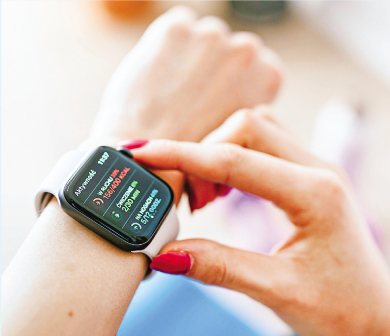
Smartwatches and fitness bands have begun to count steps, calories, heart rate, and more. This made the health data readily available and more visible.
Streaming workout sessions and online classes taken by fitness enthusiasts made the whole deal more motivating. The pandemic accelerated this trend, transforming people's living rooms into personal gyms.
Now, the fitness apps and gamified apps are taking this one step ahead. They are replacing the repetitive physical practices with daily challenges, competition between other users, and a leaderboard ranking.
What does this gamification entail?
Gamification applies game-like elements. For example, there will be points, badges, streaks, and leaderboards for everyday workouts. Where daily jogging can become monotonous and repetitive after a few days, in the gamified apps, users run to escape from zombies!
 Instead of a solo run or solo cycling ride, there is a global competition on Zwift. It is a virtual cycling and running platform. Here, users ride and run in digital worlds, completing or training with other players online.
This platform uses sensors to adjust resistance and simulate terrain, and connects the avatars. Due to its unique blend of gaming, networking, and fitness, this is one of the most prominent examples of virtual gyms.
There is a similar platform called MyWhoosh. It is also a virtual cycling platform for indoor training, offering a multiplayer experience. There are virtual routes, races, and community interactions. It is one of the 'free to play' games that gives cycling experience, and it is built with robust programming.
In 2023, this platform organised esports cycling events under the  UCI. Moreover, social apps like Strava have transformed morning jogging into a friendly competition. It is not exactly a game, but it incorporates social and competitive elements, such as leaderboards and score segments. Participants can see who earns 'Kudos' for being the fastest and follow each other. They allow the users to compare times, routes, and achievements.
Strava has become a staple for runners and cyclists who want to add a social and competitive element to their training. Some new apps reward physical activity by giving crypto tokens, NFTs, or in-app assets.
For example, Sweatcoin, Step App, or MetaGym are part of this trend. These apps aim to link real-world physical activity (such as walking, running, or exercising) to digital financial or token incentives.
Apps like Nike Training Club, Peloton, and Fitbod offer personalised workouts at home. Virtual Reality and Augmented Reality workouts add diverse layers to training. And the social media fitness tribes have replaced the locker room talks with hashtags.
Now the million-dollar question. Why does this work? This is due to simple psychological triggers of dopamine.
Earning a digital badge, completing a streak, or maintaining a position in the leaderboard triggers a dopamine rush, prompting people to stick to their routine. These apps offer the options to compete with friends, join global challenges, and interact with random users.
These activities add accountability compared to solo exercises. Traditional gyms rely on discipline, which is a finite internal resource. Gamified platforms rely on motivation loops, which are renewable.
These loops use game mechanics to keep people coming back. This is how a solitary grind is transformed into a daily, rewarding activity.
Though we are comparing traditional gyms with gamified apps, it is more of an evolution than a replacement. Because the gym hasn't disappeared, it's adapting.
Many fitness centres have started integrating apps that offer hybrid membership, and in some cases, they're also including VR equipment. Thus, they are bridging the gap between physical and digital fitness. Many fitness enthusiasts are enjoying the best of both worlds by embracing a hybrid model. They are taking live-streamed classes, on-demand workouts, and in-person sessions.
With the inclusion of artificial intelligence, online fitness systems are becoming increasingly immersive every day. AI is personalising workout plans based on individual performance. However, new opportunities are coming with new challenges.
Excessive dependence on digital rewards may lead to reduced long-term consistency and also cause screen fatigue. Many people worry about their privacy as fitness apps collect vast amounts of personal health data. We need to maintain the balance between blending the discipline and the excitement of gamified systems.
The concept of fitness has evolved from merely lifting weights or running to encompass a more holistic lifestyle and identity. The gamified apps have brought a broader cultural shift. We don't just want to be healthy; we also want to enjoy the process and connect with others along the way. There will be further changes in the way fitness is approached in the future. We'll witness it becoming more of an adventure than just a daily habit.
safrinakabir@iut-dhaka.edu
© 2026 - All Rights with The Financial Express

