An estimated 6.7-per cent households have contacted tuberculosis (TB) in Bangladesh, indicating a higher prevalence of the disease here, a latest study finds.
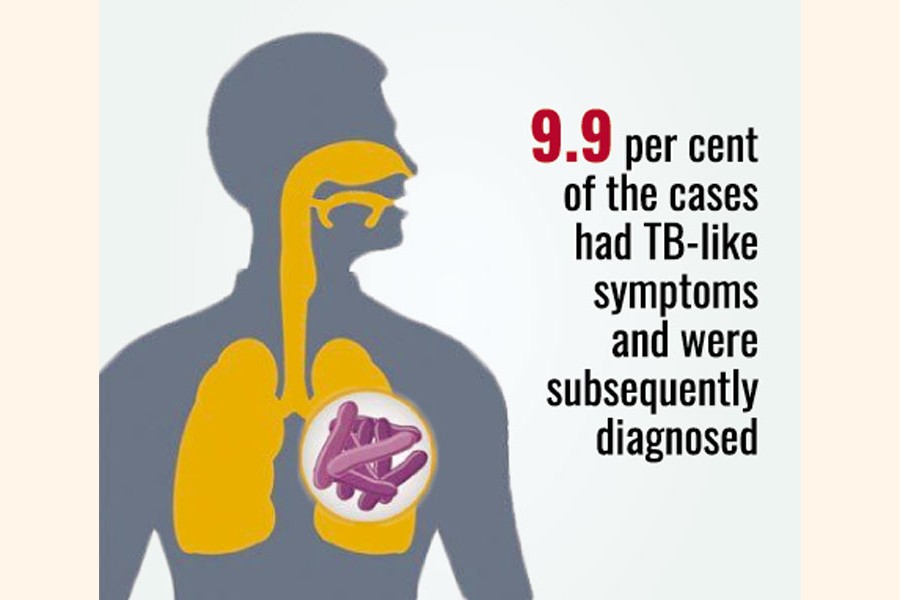
According to the research, 9.9 per cent of the cases had TB-like symptoms and were subsequently diagnosed.
Moreover, screening 178 household contacts of multidrug-resistant TB (MDR TB) suspects could result in the detection of one person with TB.
TB is an infectious illness in which swellings appear on the lungs and other parts of the body.
A total of 355 contacts of 93 MDR-TB patients were interviewed in Dhaka during a cross-sectional study done from November 2020 to October 2021.
A dissemination seminar was hosted in Dhaka on Thursday to share preliminary findings of four studies by four fellows who received fellowship on TB at the icddr,b headquarters.
The United States Agency for International Development (USAID) Alliance for Combating TB in Bangladesh (ACTB) organised the event under the auspices of icddr,b.
Health Services Division secretary Dr Md Anwar Hossain Howlader was the chief guest at the programme.
Miranda Beckman, acting office director, Office of Population, Health and Nutrition USAID/Bangladesh, icddr,b executive director Dr Tahmeed Ahmed and senior director (infectious diseases division) Dr Firdausi Qadri attended the event.
Dr Azizur Rahman Sharaque, one of the fellows, presented the above findings on the prevalence of drug-sensitive and drug-resistant TB among household contacts of MDR-TB patients in Dhaka.
Dr Fariha Alam Mihika presented her study on the impact of the Covid-19 pandemic on pulmonary TB control services in select areas of Dhaka.
In a cross-sectional study, the researcher interviewed service providers and TB cases from six upazila health complexes.
She found that TB screening was significantly affected (16-35 per cent) and service receivers reported a lack of transportation (95 per cent) amid lockdowns and fears of getting Covid-19 (77 per cent) as major challenges for screening.
There were many challenges for service providers like lack of human resources, increased workload and Covid infection, as per the study.
Dr Md Imtiaz Uddin presented his study on the barriers to the detection of childhood tuberculosis in Dhaka.
In the qualitative study, the researcher interviewed 32 children with TB, their parents and service providers.
The study revealed that major barriers to the detection of childhood TB include social stigma, misconception and lack of knowledge in the community about childhood TB, insufficient contact investigation, limited availability of testing, inadequate human resources and financial constraints.
Ms Momtaz Begum presented her study on the knowledge and attitude of caregivers and cases on MDR-TB.
sajibur@gmail.com
© 2026 - All Rights with The Financial Express

