FE REPORT
Skilled manpower shortage is among the biggest challenges to the development of the country's health sector as the government has augmented the healthcare service, according to health minister Zahid Maleque.
The health sector would need more skilled manpower, but it would take a long time to settle things, he said.
Earlier, hospitals across the country had 30,000 beds only. But the number has now been increased to 70,000, according to Mr Maleque.
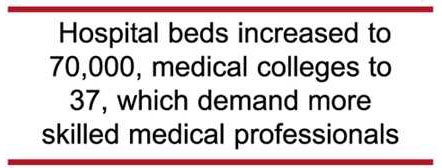
New institutions, including medical colleges, are being established. These institutions require skilled and trained manpower, which is in short supply.
The minister said this while talking to a scrum of reporters at the secretariat on Monday.
Bangladesh had been declared as the first kala-azar-free country in the world, he said, adding that the elimination of filariasis from the country was also a major achievement.
According to Mr Maleque, the district and upazila hospitals have improved a lot. Medical colleges have increased to 37 from 05.
The number of ICUs (intensive care units) has increased to 1,500 from 500. There is no shortage of medicine in Bangladesh. Local medicines are rather exported abroad.
Central oxygen lines are installed at 120 hospitals to supply gas from oxygen plants.
"As a result, we took the first place in Asia in controlling the Covid-19 pandemic," he said.
Highlighting the government's development, the minister claimed a small portion of people travel abroad on treatment grounds amid improved health services.
There has been tremendous development in the health sector of the country that dealt with the Covid-19 pandemic successfully.
"But some people couldn't see the development," Mr Maleque lamented.
"We have some limitations in the health sector. However, the government is rightly addressing those."
Meanwhile, the minister congratulated Prime Minister Sheikh Hasina's daughter Saima Wazed on being elected as the director of South East Asia Region of the World Health Organization (WHO).
nsrafsanju@gmail.com
© 2026 - All Rights with The Financial Express

