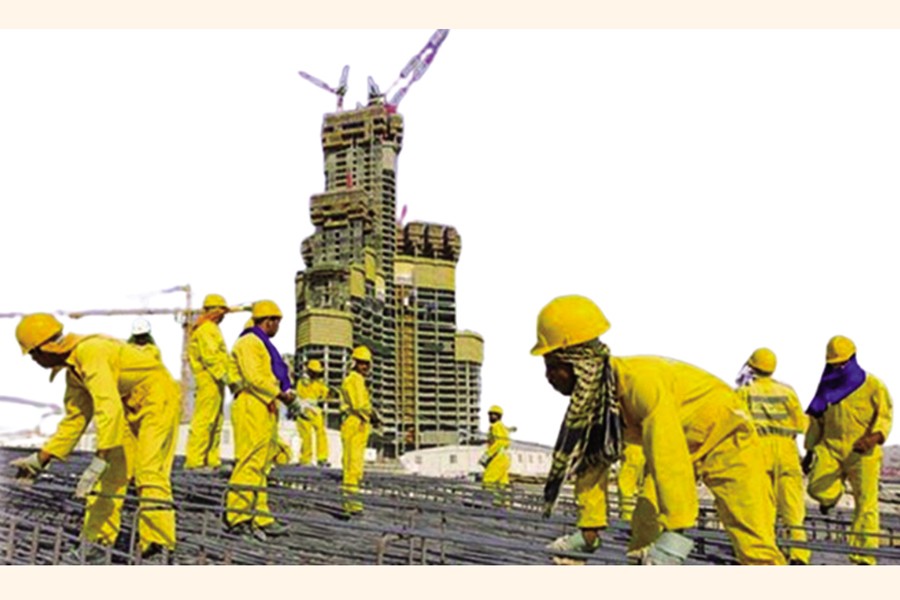
Bangladesh's economy is significantly supported by expatriates' income, or remittances. Millions of Bangladeshi workers employed across the globe enrich the country's foreign exchange reserves through their labour, skills, and sacrifice. The money they send not only supports the reserves but also plays a vital role in improving the living standards of countless families in both rural and urban areas, supporting children's education, healthcare, and small-scale investments. Even amid global economic uncertainty, the contribution of expatriates has helped maintain macroeconomic stability. For this reason, the state has rightfully recognized them as "Remittance Fighters." Beyond their economic impact, however, expatriates constitute a pillar of the nation's social and humanitarian stability. Ensuring their protection, dignity, and rights is both a moral obligation of the state and a safeguard of national economic security.
Yet a critical question remains: how effective are our institutional mechanisms in protecting the security, dignity, and rights of these fighters? When they face contract violations, unpaid wages, passport confiscation, legal complications, or humanitarian crises abroad, how promptly and competently can embassies intervene? For a newly formed government, this sector presents not only an opportunity to rebuild trust but also a substantial test of administrative capacity. Establishing an effective, humane, and accountable service framework for expatriates is now an urgent imperative.
In recent years, Bangladeshi embassies and high commissions in various countries have expanded consular services. Passport renewal, travel permits, attestation of labour contracts, birth registration, and other services have become more accessible. Hotlines have been introduced in many countries, and labour wings have been actively receiving and attempting to resolve workers' complaints. However, when assessed against on-the-ground realities, this progress remains insufficient.
Although the number of expatriates in labour-intensive destination countries has increased rapidly, the staffing, technological capacity, and scope of services of embassies have not expanded proportionately. As a result, delays often occur in complaint resolution, legal assistance, and emergency response. Language barriers, limited knowledge of local laws, and administrative complexities further restrict expatriates' access to services, thereby weakening the protection of their rights in many cases.
Many migrant workers abroad face contract violations, unpaid wages, passport confiscation, or inhumane treatment. In such circumstances, diplomatic and legal intervention by embassies is critically important. However, the complexity of host countries' labour laws and judicial systems frequently delays swift resolution. A similar reality applies to imprisoned expatriates-ensuring timely legal assistance, informing families, and safeguarding the right to a fair trial require more proactive and humane measures.
The security of female migrant workers is particularly sensitive and significant. Strengthening adequate safe homes, emergency rescue mechanisms, and psychosocial support frameworks for them is essential. At the same time, delays in passport renewal, complications related to voter ID cards, and the lack of effective support for expatriate students are creating obstacles to the exercise of their civic rights. Furthermore, insufficient oversight and weak legal enforcement against unscrupulous agencies involved in fake overseas recruitment schemes are exposing ordinary citizens to financial loss and harassment.
For the newly formed government, ensuring expatriates' welfare is now an urgent necessity. Remittances are not merely a flow of foreign currency; they constitute a foundation of economic stability, social security, and the livelihoods of millions of families. Expatriates are the silent warriors of the national economy-ensuring their protection and dignity is both a moral and constitutional obligation of the state. In this context, structural reform of the expatriate service delivery system is indispensable.
In countries with large migrant populations, a "staffing proportional to expatriate population" model should be introduced to ensure adequate human resources at embassies. Increasing the number of legal cells, labour counsellors, and language-proficient officials would enhance the effectiveness of complaint resolution and legal assistance. Simultaneously, the introduction of a 24/7 multilingual hotline and a real-time digital grievance management system would improve both efficiency and transparency in service delivery.
For imprisoned expatriates, the adoption of a specific consular action protocol-immediate embassy notification upon arrest, timely access to legal counsel, and formal notification to families-would safeguard legal rights and humanitarian protection. Stronger measures must also be taken to ensure the safety of female migrant workers. Expanding safe homes in labour-intensive destination countries, establishing emergency rescue funds, and creating dedicated psychosocial support cells are essential steps in this regard.
If passport renewal, National ID (NID), power of attorney, and grievance management services are integrated into a unified "Expatriate Service App," corruption and dependence on intermediaries could be significantly reduced. Live license tracking of recruiting agencies, a centralized blacklist database, and fast-track tribunals would play an effective role in preventing fraud. Prior to departure, updated pre-departure training, mandatory briefings on the laws and cultural norms of destination countries, and employment placement aligned with workers' skills would make expatriates more informed and self-reliant.
A comprehensive digital transformation of embassy-based services-including online appointment systems, grievance tracking, and regularly updated information databases-would substantially enhance service quality. Introducing regular training programmes and performance evaluation mechanisms for labour counsellors and consular officials would ensure accountability. Such an integrated approach to expatriate welfare would lay a strong foundation for sustainable development and long-term economic security.
Remittance fighters are a key driving force behind the country's economic advancement. Ensuring their security, dignity, and rights is not merely an administrative responsibility; it is also a moral commitment. Bangladeshi embassies have already undertaken various initiatives, yet in comparison to existing realities, a more effective, accountable, and humane service framework remains essential. For the newly formed government, the expatriate welfare sector can serve as a critical testing ground-demonstrating how firmly the state stands beside its citizens abroad. Through coordinated policies, competent administration, and sincere diplomatic engagement, a truly expatriate-friendly service system can be established-one in which every remittance warrior feels secure, respected, and meaningfully connected to the homeland.
Dr. Sohel Miah is Labour Relations Specialist, Columnist, and Researcher.
drsohelbepza@gmail.com
© 2026 - All Rights with The Financial Express