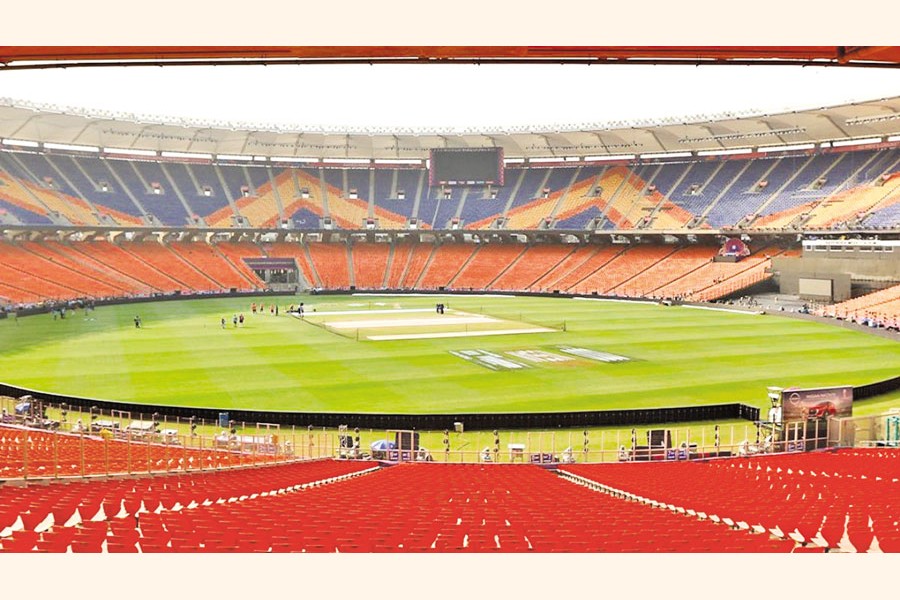
 The Narendra Modi Stadium in Ahmedabad will host the T20 World Cup final tomorrow (Sunday)
 As the cricket world gradually shifts its focus to the sprawling dry heat of Gujarat, the Narendra Modi Stadium in Ahmedabad stands ready to host the T20 World Cup 2026 final tomorrow (Sunday). But for the teams involved, including a New Zealand side already emboldened by Finn Allen's historic semi-final blitz, the challenge is far more complex than just a high-stakes match.
Meanwhile, India reached its fourth men's T20 World Cup final, the most by any team, and became the first defending champion to return to the title.
In Ahmedabad, the venue itself is an active participant in the game. Here is a tactical and psychological profile of the world's largest cricket stadium ahead of the March 8 summit clash.
A shadowless stadium in Ahmedabad
While traditional grounds use towering floodlight masts that cast long, distracting shadows, Ahmedabad features a state-of-the-art LED ring light system integrated into the roof. This creates a shadowless environment that makes the arena feel like a glowing spaceship.
For the players, the effect is a total sense of isolation. The stadium's circular design, supported by Y-shaped columns, provides an unobstructed view for 1,32,000 fans. There are no pillars to hide behind and no corner of the outfield where the Motera Roar doesn't reach. For a visiting team, New Zealand in this case, the goal is simple- replicate Pat Cummins' 2023 feat and silence the largest crowd in sporting history, if India reach the final.
For players playing their first match here, however, catching can be difficult, especially as the ball might get lost for a few seconds in the backdrop of the white light, which can be crucial when judging a catch. The height of the lights is lower than stadiums with traditional floodlight, leading to spotting problems.
Red vs black soil surfaces
The stadium is a rare beast in international cricket, housing 11 centre pitches with two distinct soil types. For the final, all eyes are on which strip the ICC curators will unveil.
The Black soil pitch- Usually a batter's paradise
Historically used for high-scoring T20Is (like India's 234/4 vs NZ), black soil retains moisture longer, offering a flatter, more reliable bounce that favours power-hitters.
The Red-Soil pitch: Often assists spinners
If the final is played on a red-soil pitch, the game changes. Red soil cracks under heat, providing significant turn for spinners like Mitchell Santner or Varun Chakravarthy as the match progresses.
© 2026 - All Rights with The Financial Express