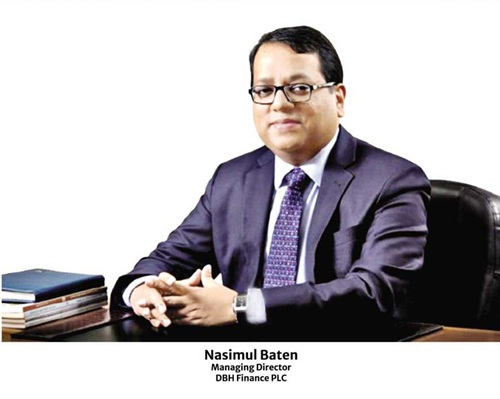
"The home loan sector in Bangladesh remains fundamentally strong, although growth has moderated in recent periods due to macroeconomic pressures including inflation, currency devaluation, geopolitical situation and interest rate."
Mr Nasimul Baten, managing director of DBH Finance PLC said that when The Financial Express sought to know from him about the state of the country's home loan situation.
The housing loan portfolio in the country is currently growing around 7-8%, compared to double-digit growth in earlier years, he said. Despite this moderation, the long-term outlook remains positive, supported by rapid urbanization, significant housing deficit and a very low Mortgage to GDP ratio, he added.
Elaborating on the role of the Non-bank financial institutions (NBFIs) playing a specialized role by focusing on structured and disciplined lending. Institutions, such as DBH Finance, which has specialized in housing finance since 1997, have provided more than BDT 170 billion in loans to over 63,000 families, contributing significantly to meeting the country's housing needs. Though in theory banks are not supposed to lend heavily in long term housing loans, but because of slow demand for business loans, many of the commercial banks have increased their focus on housing finance.
When asked about the major factors lenders consider while approving home loans, Baten said there are two ways of giving home loans. Traditional lenders used to look at the security value mainly and used to give loans based on the value of the mortgaged property. But in Bangladesh, as the legal system is not very efficient for the banks to recover their non-performing loans, lenders like DBH primarily consider borrower's repayment capacity while offering loans, which is typically measured through income stability and the ability to service monthly instalments.
"In most cases, financial institutions prefer that the equated monthly instalment (EMI) does not exceed 40% of the borrower's monthly income, ensuring affordability. Employment stability, whether in salaried service or business, and a clean credit history based on the Credit Information Bureau (CIB) report are also critical considerations', he said.
In addition, lenders evaluate the borrower's age, existing financial obligations, and savings behavior to ensure long-term repayment sustainability. The purpose and fund management are also important factors, as loans are usually financed up to 70-80% of the property value, subject to proper valuation and legal verification.
Speaking on the home loan borrowers, Baten said the demand for home loans in Bangladesh is largely comes from the middle and upper-middle income groups, who have the financial capacity to manage long-term instalment commitments. The concept of affordable home loan is gaining pace, but there remains a gap in supply side when it comes to properties that are affordable to lower middle income group families. Salaried professionals, both employed in government and private organizations, banks, and multinational companies, doctors, teachers account for a significant share of borrowers. But the largest segment is the self-employed group of people doing business in different sectors.
Recent trends indicate a growing participation of young professionals and first-time homebuyers, reflecting demographic shifts and increased financial awareness. Non-Resident Bangladeshis (NRBs) also contribute notably to the housing loan market, especially in urban areas. On average, the typical home loan size for middle-income customers ranges between BDT 40-50 lakh, which highlights the importance of affordability-focused financing solutions.
Asked about the classified loans in the home loan segment, the DBH MD said home loans are widely regarded as one of the most secure lending segments in Bangladesh, with relatively strong repayment performance. Borrowers tend to prioritize housing loan instalments due to the emotional and financial importance of owning a home. While the overall banking sector in Bangladesh is currently experiencing elevated non-performing loan (NPL) levels-reportedly exceeding 30% of loan portfolio-the housing finance segment remains significantly more stable.
In fact, many institutions maintain housing loan NPLs within 5-10%, while DBH Finance as a specialized home loan provider has consistently maintained NPL levels below 1% for nearly three decades. This exceptional performance is the result of rigorous borrower selection, disciplined credit assessment, and continuous portfolio monitoring.
Asked about the loan processing in the DBH, he said the home loan process of DBH is structured and transparent, designed to ensure both efficiency and risk control. It begins with the submission of an application along with essential documents such as proof of income, bank statements, and identification records. This is followed by a detailed assessment phase to evaluate the borrower's financial capacity, review credit history, and conduct legal and technical verification of the property.
Once the assessment is successfully completed, the loan is sanctioned with clearly defined terms, including the loan amount, tenure, and interest rate. In most cases, DBH completes the approval process within 5-7 working days, provided all documentation is in order. Disbursement is then carried out either in full for ready properties or in stages for under-construction projects, ensuring proper utilization of funds.
Repayment is made through monthly instalments over a tenure that can extend up to 20-25 years. In cases of financial difficulty, lenders may offer restructuring or rescheduling options in line with regulatory guidelines, while legal measures are considered only as a last resort.
Speaking on risks and benefits involved in home loans for a borrowers, he said from a customer's perspective, home loans make property ownership possible without requiring full upfront investment. The long tenure allows borrowers to spread payments over time, making instalments more manageable. Additionally, real estate in Bangladesh has historically shown steady long-term appreciation, making home ownership both a social and financial asset. However, customers must also consider situations such as interest rate fluctuations and the long-term financial commitment involved.
From the perspective of banks and financial institutions, home loans offer a relatively secure lending opportunity, as they are backed by tangible assets and typically demonstrate lower default rates compared to other loan categories. They also generate stable, long-term income streams. However, lenders face challenges such as asset-liability mismatch, since most funding sources are short-term while home loans are long-term. Additionally, fluctuations in the real estate market and legal complexities in recovery processes can pose risks.
Despite these challenges, institutions like DBH Finance have demonstrated that with prudent lending practices and strong risk management, housing finance can remain a sustainable and low-risk segment within the financial sector.
© 2026 - All Rights with The Financial Express

