In the bustling streets of Dhaka to the rising precincts of Chittagong, concrete blocks and steel rods are slowly but surely being turned into something much larger: interest flows and balance sheet entries, which in turn translate to a growing share of national income. What might initially appear to be a mundane transaction pertaining to home loans on a bank counter is, in fact, a steady thread in Bangladesh's ever-growing GDP fabric; however, the story of how "bricks" are becoming billions remains largely untold.
As of FY24 (2023-24), outstanding housing loans in Bangladesh reached Taka 1.283 trillion, according to Bangladesh Bank linked data reported in the national media and corroborated by sectoral outlets. This, however, marked a slump from 12.61 per cent growth in FY23, as the annual growth rate of housing loan disbursement fell to 7.51 per cent in FY24, marking a more cautious phase after years of rapid expansion. On the macro side, mortgage loans as a share of GDP stood at 1.89 per cent in 2023, down from a peak of 2.05 per cent in 2022, which had subsequently risen from a low of 0.877 per cent in 2019, reflecting a brief but modest structural upward curve in formal housing finance relative to the economy.
Over the longer run, the broader housing sector's contribution to GDP, measured in Taka at constant prices, increased from Taka 1,925.09 billion in 2015-16 to Taka 3,351.47 crore in 2021-22. Within this, average outstanding home loan portfolios illustrated a clear upward path: between 2017-18 and 2021-22, the average stock reached Taka 514.82 billion in private commercial banks, Taka 225.48 billion in state-owned banks, and substantial volumes in specialised housing finance institutions. Specialised housing finance entities, like BHBFC and other NBFIs, showed a very interesting pattern by recording the fastest growth in outstanding housing loan balances over the 2017-18 to 2021-22 period, bolstering their role as niche but dynamic contributors to the sector's expansion. Putting these figures together, the home loan sector in Bangladesh has evolved from a tiny, almost invisible share of GDP (under 1 per cent in 2019) to a small but measurable presence of around 1.9 per cent of GDP in 2023, with the total housing-related sector accounting for hundreds of billions of Taka in annual GDP. Its direct contribution via mortgage balances remains modest, but the indirect effect through construction, materials, and associated services is already incorporated in a much larger fraction of national output.
Despite this numeric expansion, the home loan sector remains structurally constrained. As of 2024, domestic credit to the private sector in Bangladesh stood at 35.8 per cent of GDP, down from 37.6 per cent in 2023. Within that context, housing-related lending still remains narrow: outstanding housing loans reached Taka 1.283 trillion in FY24, with private commercial banks holding Taka 734.2 billion, state-owned banks Taka 320.7 billion, and the rest spread across other institutions. Amongst specialised players, the Bangladesh House Building Finance Corporation (BHBFC) reported Taka 48.0 billion in outstanding housing loans as of June 2024, emphasising the sector's institutional concentration. Within the broader credit system, housing still represents a modest share: data show that outstanding housing loans exceeded Taka 1.19 trillion in 2022, equivalent to about 8 per cent of total private sector credit. In early 2026, Bangladesh Bank raised the maximum per borrower home loan cap to Taka 40 million (Taka 4 crore), tying approval levels to each bank's mortgage portfolio quality, in an effort to support larger-scale urban housing and mixed-use projects. At the same time, Bangladesh Bank's own credit flow data indicate that overall private sector credit growth has slowed to the low single-digit range in 2025-26, meaning housing loan expansion now occurs within a tighter macro credit envelope. The sector is thus growing, but it is being asked to grow more safely and more slowly than in the previous cycle.
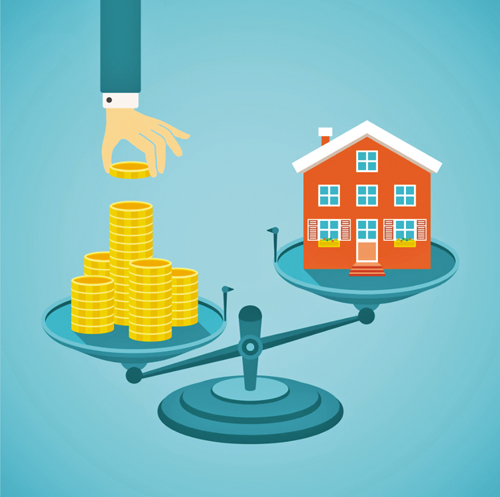
This evolving picture captures the essence of what "Bricks to Billions" is really about, because a home loan is not just another entry in a bank's balance sheet, but rather a quiet yet consequential trigger for activity across construction sites, cement and steel markets, real estate services, and even local infrastructure, with each loan pulling a small thread that gradually weaves into Bangladesh's broader GDP story; yet the sector is still far from reaching its potential, as in a country facing a large housing deficit and rapid urbanisation, formal housing finance remains limited in scale, concentrated within a handful of institutions, and unable to fully reflect the scale of real estate and construction activity taking place beyond the formal system. If Bangladesh is serious about turning this quiet contribution into a stronger engine of growth, the next phase will require more than policy tweaks or higher lending ceilings, with the real challenge lying in widening access and making the system more inclusive by extending formal housing finance beyond major cities into secondary towns and emerging rural centres, as the current settlement is designed specifically for Dhaka and to some extent Chittagong, designing products that better serve low-income households and women-led families, and aligning housing finance with the growing need for climate-resilient and sustainable housing, whilst also addressing structural issues such as the dominance of a few players by encouraging greater competition and building a more diversified ecosystem of lenders supported by stronger funding mechanisms like mortgage refinancing and securitisation; ultimately, the story of housing finance is not only about interest rates or central bank regulations but about how people live and plan their future, and whether the country can turn everyday aspirations for shelter into a broader foundation for inclusive and sustained economic growth.
The writer is an academic
and policy analyst.
rassiq.aziz@gmail.com.
© 2026 - All Rights with The Financial Express

