The economy of Bangladesh,especially the formal economy,is steadily moving towards greater digitalisation, making transparent and efficient revenue mobilization and management more important than ever. Against such backdrop, the Institute of Chartered Accountants of Bangladesh and The Financial Express organised a pre-budget roundtable discussion -- "Digital Accounting and Revenue Mobilisation" -- bringing together policymakers, business leaders, chartered accountants, economists, tax experts, and representatives from trade bodies. The discussion focused on how digital accounting systems, integrated tax administration, automation, and policy reforms can strengthen tax compliance, reduce revenue leakage, and expand the country's tax base. Speakers stressed that while Bangladesh has introduced several digital initiatives over the years, the absence of an integrated and fully coordinated system continues to limit desired outcomes. They also highlighted the need for incentives, SME-friendly policies, customs automation, e-invoicing, and greater transparency in government spending to encourage voluntary compliance.
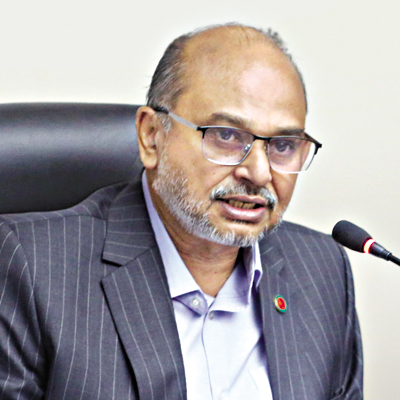
Dr Rashed Al Mahmud Titumir
Bangladesh's revenue challenge is not merely an administrative problem; it is fundamentally a question of trust between citizens and the state. People are often asked why tax collection remains low in Bangladesh. The answer lies in the absence of a meaningful social contract. Citizens are more willing to pay taxes when they can clearly see that their contributions are being transformed into quality public services such as education, healthcare, social protection, and infrastructure. Taxation cannot succeed through enforcement alone; it must be rooted in accountability, transparency, and public confidence.This is why I believe the country must move toward a new governance culture where taxpayers receive a clearer understanding of how public money is being used. Citizens should feel that their taxes are directly connected to improvements in their daily lives. A stronger relationship between the state and citizens is essential for sustainable revenue mobilisation. At the same time, Bangladesh must expand the formal economy. A large portion of our economic activities remains outside the purview of institutional structures. Digital accounting systems can play a transformative role in this transition. By integrating businesses into digital financial and tax platforms, we can reduce informality, improve compliance, and broaden the tax base without imposing excessive pressure on existing taxpayers. However, digitalisation alone is not enough to fulfil the expectation of the people. We need an inclusive economic model that promotes employment, production, and entrepreneurship. Revenue growth ultimately depends on expanding productive economic activities. If industries grow, employment rises; and when more people participate in formal economic activities, revenue collection naturally increases. I also strongly believe that Bangladesh must build a robust Digital Public Infrastructure (DPI). The concept of "one citizen, one digital identity, one digital wallet" can significantly improve efficiency, transparency, and service delivery.
Shamsul Huq Zahid
The theme of today's discussion - "Digital Accounting and Revenue Mobilisation" - is highly relevant for Bangladesh's economic future. In my view, the relationship between digital accounting and revenue mobilisation is very direct. Improved digital accounting systems strengthen compliance, while stronger compliance ultimately contributes to higher and more sustainable revenue collection.
There are benefits on both sides. Businesses that adopt digital accounting systems gain better financial discipline, transparency, efficiency and productivity in their operations. At the same time, revenue authorities benefit from improved documentation, easier verification, and less opportunities for tax evasion. A modern tax system cannot function effectively without reliable and transparent accounting practices.
One of Bangladesh's major challenges remains the low level of tax compliance. A significant portion of economic activities still operates outside proper documentation and reporting systems. This is why discussions like this are important. Through this roundtable and the supplement that will follow, we hope to contribute to a broader national conversation on reforms needed in taxation and financial governance.
However, meaningful reform is never easy. Reform often faces resistance because it affects existing practices and vested interests. Yet without comprehensive reform - both within the National Board of Revenue and among taxpayers - sustainable progress will remain difficult. Ultimately, successful reform depends on strong political commitment and policy continuity.
I remain hopeful that with collective efforts, Bangladesh will be able to move forward toward a more transparent, accountable, and digitally integrated economic system.
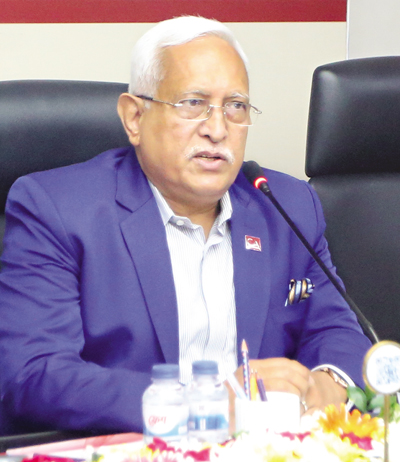
N K A Mobin, FCA
Bangladesh's transition toward a digital economy has made digital accounting systems increasingly important for ensuring transparency, improving compliance, and strengthening revenue mobilisation. In my view, chartered accountants can play a transformative role in this process by bridging businesses with the tax authorities' digital platforms and helping create a more accountable financial ecosystem.
One of the most effective policy measures would be to introduce tax incentives for businesses that maintain professionally audited financial statements and adopt digital accounting practices. When companies see tangible benefits-such as reduced tax rates, rebates, or compliance advantages-for engaging qualified chartered accountants, they naturally become more disciplined in financial reporting. This, in turn, promotes a stronger tax compliance culture and contributes to long-term revenue growth. Digital accounting can also help formalise Bangladesh's large informal economy. Many small and medium enterprises remain outside the tax net because of the complexity and cost of compliance. By offering temporary tax relief, subsidies, or vouchers for professional accounting services, the government can encourage these businesses to enter the formal economy. Chartered accountants can act as trusted advisers in guiding this transition.
Another important aspect is the integration of businesses with digital tax administration systems. Chartered accountants can assist enterprises in adapting to online filing, e-invoicing, digital VAT management, and automated financial reporting systems. This will significantly reduce tax evasion, improve efficiency, and strengthen transparency in tax administration.
The SME sector, in particular, presents enormous opportunities. Better financial reporting supported by digital accounting systems can improve SMEs' access to institutional finance, as banks and investors place greater confidence in professionally certified financial statements.
Sabbir Ahmed, FCA
Today, I would like to highlight why digital accounting is becoming essential for Bangladesh's economic future and revenue mobilisation. Our economy still contains a large informal sector where many transactions are either manually recorded or not recorded at all. This limits transparency, weakens tax compliance, and reduces the government's ability to mobilise domestic revenue effectively.
Digital accounting can become the backbone of a modern formal economy. It allows automated and real-time data capture, improves accuracy, reduces human error, and ensures better protection of financial information. Most importantly, it creates traceable records that help increase compliance and reduce opportunities for tax evasion and corruption.
At present, Bangladesh faces several challenges in revenue mobilisation. Our tax-to-GDP ratio remains low, the tax base is narrow, and a large share of revenue still comes from indirect taxes. Tax compliance and assessment processes are still largely manual, while allegations of harassment and corruption continue to affect public confidence.
Digital accounting can address many of these problems. Through e-invoicing, automated VAT compliance, faceless tax assessment, and integrated digital platforms, we can widen the tax net and simplify the tax payment process. Many countries have already achieved significant improvements in revenue collection through these systems.
However, digitalisation alone is not enough. We also need policy reform, stronger tax morale, incentives for formalisation, and greater use of digital finance. Reducing cash transactions and promoting digital payments can significantly reduce corruption and improve transparency.
The transition from manual to digital systems is not rocket science. If transactions are digitally recorded and properly integrated, revenue collection will automatically become more efficient, transparent, and accountable.
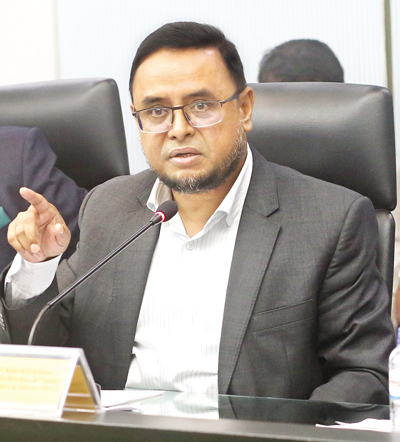
MBM Lutful Hadee, FCA
Digital accounting can become the foundation of a modern and efficient revenue system in Bangladesh, but digitalisation alone will not deliver the expected results unless it is supported by a fully integrated data ecosystem. This is where our biggest challenge lies today. We have already introduced initiatives such as EFD, SDC, and electronic invoicing systems, which were conceptually very good. The intention was to ensure that transaction data would automatically flow into the NBR system and improve transparency in tax administration. However, these systems have not achieved their desired success because proper integration and effective implementation are still lacking. For digital accounting to work effectively, integration among the different wings of NBR, banks, accounting software, document verification systems, and other government agencies is essential. Data accuracy and cross-verification are equally important. Otherwise, we will simply digitalise a manual system without achieving meaningful efficiency or compliance.
Md Farid Uddin
Everything we discussed today - digital accounting, e-invoicing, integrated automation, VAT complexities, and revenue leakage - has been addressed in the report of the two task forces formed under the chairmanship of former NBR chairman Abdul Mazid and another under the chairmanship of Dr Zaidi Sattar for tax reforms. Their reports discussed tax policy, tax administration, automation, integrated digitalisation, prudent expenditure management, and reforms in VAT, customs, and income tax systems. Unfortunately, we have not yet seen meaningful implementation. Our biggest weakness is the lack of integration. VAT, customs, and income tax wing in the NBR still function separately, while information sharing between wings remains very limited. Without an integrated system, digital accounting alone cannot ensure effective revenue mobilisation. We have also seen many fragmented digitalisation projects over the years, supported by development partners and international lenders, but many produced limited outcomes because they were not implemented holistically.
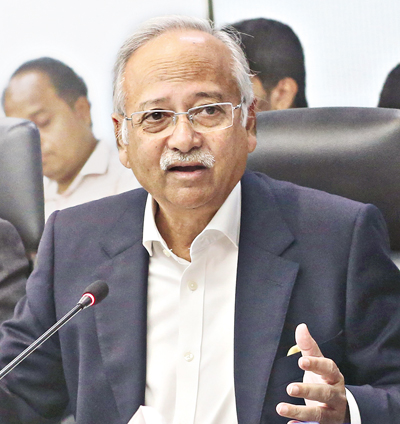
Kamran T. Rahman
Bangladesh's persistent low tax-GDP ratio remains one of the country's biggest economic challenges. Although the number of TIN holders has increased significantly over the years, only a small portion of them submit effective tax returns, and many of those are nil returns. As a result, direct tax collection remains very limited, while the country continues to rely heavily on indirect taxes. In most developed economies, the situation is the opposite, where direct taxes constitute the major share of revenue collection.
Digital accounting can play a transformative role in addressing this imbalance. It should not merely be viewed as a technological upgradation, but as the foundation for greater transparency, traceability, and accountability in financial transactions. Real-time recording and auditability through digital systems can significantly reduce under-reporting and tax evasion. However, digitisation alone will not be enough unless accounting systems are fully integrated with NBR.
Taskeen Ahmed
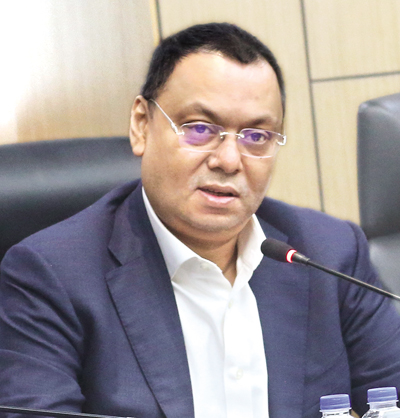
Digitalisation and formalisation of the economy are no longer optional for Bangladesh; they are essential for sustaining growth and preparing for the challenges of LDC graduation. I believe Bangladesh now stands at a critical juncture where digital accounting can significantly improve transparency, efficiency, and revenue mobilisation. Experiences from many emerging economies show that proper digitalisation of accounting and tax systems can transform an economy within a decade by broadening the tax base and improving compliance. However, technology alone will not solve the problem. The biggest challenge lies in changing our mindset-both in the private and public sectors. Many businesses still fear formal accounting because they assume it will only increase their tax burden. Practices such as maintaining multiple sets of accounts continue to discourage transparency. We need to move away from this culture and create confidence among businesses that proper accounting will ultimately benefit them through easier access to finance, improved credibility, and long-term sustainability.
Showkat Aziz Russell
Digitalisation in accounting and revenue management is not a new concept for Bangladesh. In fact, many of the necessary tools and technologies already exist. The real challenge lies in implementation, policy consistency, and creating an integrated national framework. For example, QR code-based transactions are being used by different banks and institutions, but Bangladesh still lacks a unified national QR system like those successfully implemented in countries such as Thailand. A single national digital payment and accounting ecosystem could significantly improve transparency, transaction tracking, and revenue collection. For export-oriented sectors like textiles and RMG, digital accounting is not a difficult transition because these industries already operate in globally compliant environments. At present, many industries are struggling not because business opportunities are lacking, but because policy support and operational facilities remain inadequate. Revenue policies should encourage production, investment, and business expansion.
Syed Ershad Ahmed
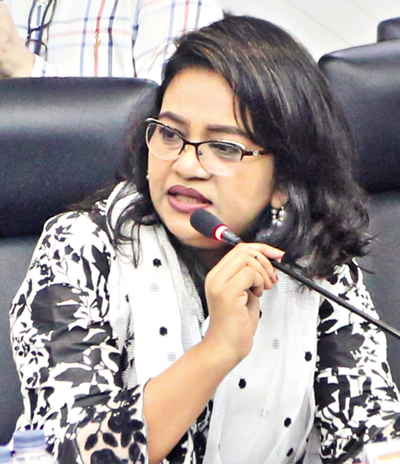
The digital economy and digital accounting are extremely important for Bangladesh. One of the biggest reasons is that there is still a perception among many foreign investors that Bangladesh lacks transparency. I believe digital accounting can help change that perception by reducing corruption, increasing accountability, and building trust among investors. When foreign investors come to Bangladesh, they assess risk first. If our systems are digitised, transparent, and traceable, the level of risk automatically decreases. Another major challenge is bureaucracy. Many foreign companies come with investment interest, but they often face delays, complex procedures, and excessive paperwork. I believe digitalised accounting, auditing, and customs systems can significantly reduce these barriers. Our customs system especially needs urgent automation. Export-oriented industries depend heavily on imported raw materials, but manual processes, HS code complications, and excessive signatures increase lead times and discourage investors.
Doulot Akter Mala
Bangladesh has been talking about digitalisation and tax compliance for more than a decade, but most of our initiatives have remained partial rather than fully integrated. Systems like the Document Verification System (DBS) were introduced with the expectation that they would reduce corporate tax evasion and improve transparency. At that time, many of us in the media believed that one financial statement would eventually be used both for bank loans and tax purposes. However, we have not yet seen the expected improvement in corporate tax compliance. One major reason is that many insiders within the system still fear digitalisation. There is concern that they are not fully prepared for digital systems and that revenue leakage or fraud may go undetected. Even though online tax return submission and digital auditing systems have been introduced, many officials are still unfamiliar with these processes. I also think our digitisation efforts are not holistic. For example, the NSW initiative has not delivered the desired results because integration remains weak.
Md Moniruzzaman
I want to admit honestly that we, the chartered accountants community, could not always play our expected role in the past. We all know there were limitations. But at the same time, I must say that auditors were probably the only group that consistently tried to support accountability over the last fifteen years, despite many obstacles. We faced the same constraints that many others in the system faced. Now we have an opportunity to work more freely and independently. I would request everyone to carefully compare the audit reports of banks before 2024 and after 2024, especially the qualification points raised by auditors. Then you will understand what auditors were trying to do earlier and why many things could not be done at that time. As far as digitalisation of the accounting system is concerned, we have already started working in many areas. We are developing ideas and initiatives that can strengthen transparency and improve revenue mobilisation. But one important question remains: whether the government truly wants to utilise our expertise and recommendations.
Shiabur Rahman (Shihab)
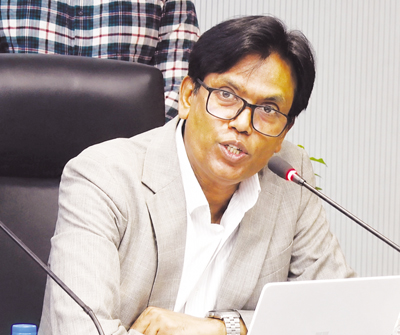
Bangladesh is rapidly moving towards a digital economy. In this context, the importance of digital accounting systems is increasing significantly to ensure transparency, accountability, and efficiency in revenue management. However, the reality is that a large part of our economy still remains informal, and many businesses continue to rely on traditional accounting methods. As a result, gaps in tax compliance persist, and the country is unable to fully utilise its revenue potential. Digital accounting can play a transformative role in addressing these challenges. Through automated recordkeeping, e-invoicing, real-time reporting, and integrated data systems, businesses can maintain accurate financial information while tax authorities can monitor compliance more effectively. At the same time, digitalisation can reduce human intervention, minimise corruption, and simplify the tax process for businesses.
Tanvir Mohammad Dipu
Sustainable revenue mobilisation in Bangladesh will not be possible without fundamental reforms in governance, taxation, and the overall business environment. One of the biggest challenges facing the country today is the persistence of systemic inefficiencies and corruption, which continue to discourage entrepreneurship and weaken confidence among businesses. Digitalisation can play an important role in reducing discretionary practices and bringing greater transparency and accountability to financial transactions and tax administration. At present, the revenue collection system often places excessive pressure on existing compliant taxpayers instead of expanding the tax net gradually and strategically. Revenue targets are increasing rapidly, but without creating enough new businesses and entrepreneurs to support that growth. As a result, many established businesses feel overburdened, while potential entrepreneurs become discouraged from entering the market.