NRBC Bank PLC moves beyond traditional lending practices and embraced a relationship-based banking model to support rapidly evolving Micro, Small and Medium Enterprises (MSMEs) sector.
In an exclusive interview with The Financial Express (FE), Dr. Md. Touhidul Alam Khan, FCMA, Managing Director & CEO of NRBC Bank PLC, shares his insights on the sector's contribution to the economy, the bank's MSME financing strategy, digital transformation initiatives, and the future prospects of Bangladesh's MSME landscape.
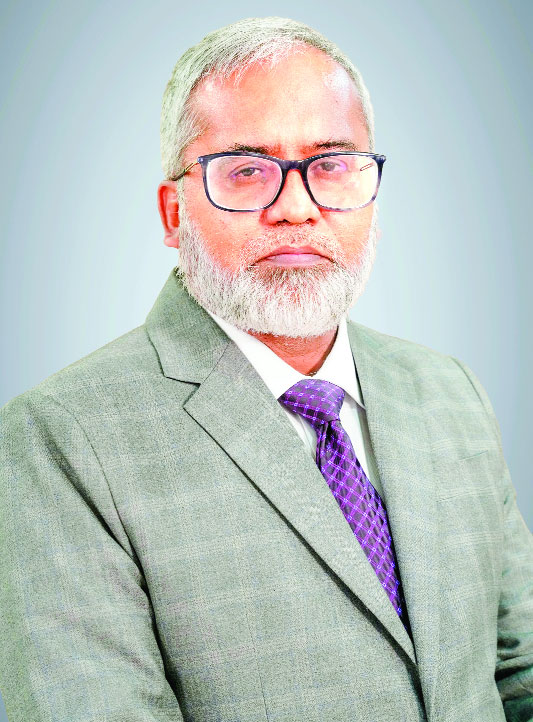 He said the sector is undoubtedly one of the strongest pillars of Bangladesh's economy. Every successful economy is built upon a vibrant entrepreneurial ecosystem. In Bangladesh, MSMEs serve as a key engine of entrepreneurship, employment generation, innovation, and inclusive economic growth.
From urban commercial centers to rural marketplaces, MSMEs transform ideas into sustainable businesses and create livelihoods for millions. They constitute the overwhelming majority of business establishments in the country and provide significant opportunities for women entrepreneurs, young innovators, and first-generation business owners, he said.
"Their (MSMEs) contribution extends beyond employment creation; they foster economic diversification, strengthen domestic supply chains, and promote balanced regional development. Therefore, the continued growth of the MSME sector is essential for achieving Bangladesh's long-term economic aspirations," he said.
About the products the bank is currently offering to MSME entrepreneurs, the experienced banker said the bank firmly believes that the sustainable growth of the banking industry is intrinsically linked to the development of the MSME sector. Today, the lender proudly serve approximately 47,790 MSME customers across the country.
To date, he informed that the bank has achieved cumulative MSME loan disbursements of Tk 85.88 billion, while maintaining an outstanding MSME portfolio of Tk 38.62 billion. The bank's financing solutions are diversified across a broad range of sectors, including manufacturing, trading, agro-processing, healthcare, transportation, education, services, and light engineering.
In recent years, Mr, Khan said, they have moved beyond traditional lending practices and embraced a relationship-based banking model. Alongside financing, they provide business advisory support, facilitate market linkage opportunities, and offer customized financial products designed to meet the unique needs of entrepreneurs.
"Our objective is not merely to finance businesses but to become a trusted growth partner throughout their entrepreneurial journey," he said.
About the risks and recovery dynamics of MSMEs financing, he said while large corporate loans often receive greater public attention regarding non-performing assets, the MSME sector generally demonstrates a strong repayment culture. Most MSME entrepreneurs have significant personal investment and commitment to their businesses, which fosters a greater sense of responsibility toward loan repayment.
Admittedly, MSMEs are more vulnerable to sudden market fluctuations, rising operating costs, and external economic shocks. However, the bank's relationship-driven approach enables them to closely monitor business performance and cash flows while providing timely guidance and support when challenges arise.
In their experience, he said, entrepreneurs who receive appropriate financial literacy, advisory services, and business support tend to exhibit stronger resilience and healthier repayment behavior. Although each segment has its own risk characteristics, MSME financing often benefits from closer engagement and faster recovery mechanisms compared to the structural complexities that may accompany large corporate recoveries.
About the challenges the entrepreneurs face and measures to reduce the barriers, the seasoned banker said despite considerable progress in financial inclusion, the lack of acceptable collateral remains one of the most significant barriers to MSME financing. Many capable entrepreneurs possess strong business potential but lack conventional assets required under traditional lending frameworks.
To address this challenge, he said greater emphasis should be placed on cash-flow-based lending models and alternative credit assessment mechanisms. Financial institutions should increasingly leverage technology, transaction history, and business performance data to evaluate creditworthiness more effectively.
In addition, expanding credit guarantee schemes can significantly improve access to finance for underserved entrepreneurs. Reducing information asymmetry, streamlining documentation requirements, and modernising credit assessment processes will further lower transaction costs and help promising businesses obtain financing without relying solely on traditional collateral, he said.
Regarding special products for women entrepreneurs, young entrepreneurs, and rural MSMEs, the bank's top executive said women and young entrepreneurs represent two of the most promising segments of Bangladesh's future economy. At NRBC Bank, they actively support women-led enterprises through dedicated financing programs, specialized customer engagement initiatives, and participation in Bangladesh Bank's refinance schemes.
"We view women's economic empowerment as a national development priority and remain committed to creating greater financial opportunities for female entrepreneurs," he said.
Similarly, the experienced banker said, the rise of technology-driven startups and innovative young entrepreneurs is creating new avenues for economic growth. They continue to support youth entrepreneurship through targeted financing solutions, business guidance, and advisory services.
Furthermore, rural enterprises remain a key focus area for us. Through their extensive network and inclusive financing strategy, they strive to ensure that deserving entrepreneurs in rural communities have access to the financial resources necessary to grow and thrive, he said.
About the initiatives the NRBC Bank undertaking to make MSME financing easier through technology-based services, Dr. Md. Touhidul Alam Khan said technology is fundamentally reshaping the delivery of financial services. Today's entrepreneurs expect speed, convenience, transparency, and accessibility, and financial institutions must evolve accordingly.
"At NRBC Bank, we continue to invest significantly in digital transformation initiatives. We are leveraging digital banking platforms, automated payment systems, online financing services, and data-driven credit assessment tools to enhance customer experience and operational efficiency," he said.
These technological advancements help reduce information asymmetry, lower transaction costs, improve turnaround times, and expand credit accessibility, he said.
In response to the question of the biggest opportunities and challenges for Bangladesh's MSME sector over the next five years, he said over the next five years, Bangladesh's MSME sector will benefit significantly from the country's favorable demographic profile, rapid technological advancement, and expanding domestic and international market opportunities.
Particularly, the growth of e-commerce, digital platforms, and emerging export-oriented industries will create new avenues for business expansion. Increased digital adoption will enable local enterprises to access broader markets and enhance their competitiveness, he said.
At the same time, according to him, the sector faces several challenges like including rising operational costs, market volatility, technological disruption, and evolving consumer preferences. Strengthening supply chain integration, improving productivity, and managing financing costs will also remain critical priorities.
To succeed in this changing environment, he opines that the MSMEs must become more agile, innovative, and technology-driven while continuously enhancing operational efficiency.
But the next phase of Bangladesh's MSME development will require stronger collaboration among policymakers, regulators, financial institutions, development partners, and private-sector stakeholders, he said.
He said Bangladesh Bank has already played a commendable role through refinance schemes, stimulus packages, and policy support. Going forward, policymakers should focus on strengthening risk-sharing mechanisms, expanding credit guarantee facilities, and promoting greater efficiency in financial intermediation to improve affordability and accessibility. In addition, stronger export facilitation programs, business development services, capacity-building initiatives, and technology adoption support will be essential for enhancing the competitiveness of MSMEs.
"By aligning our collective efforts and empowering entrepreneurs today, we can build a more prosperous, inclusive, and resilient Bangladesh for future generations. The MSME sector is not merely a component of the economy-it is one of the primary drivers of our nation's sustainable development journey," he added.
jubairfe1980@gmail.com
© 2026 - All Rights with The Financial Express

