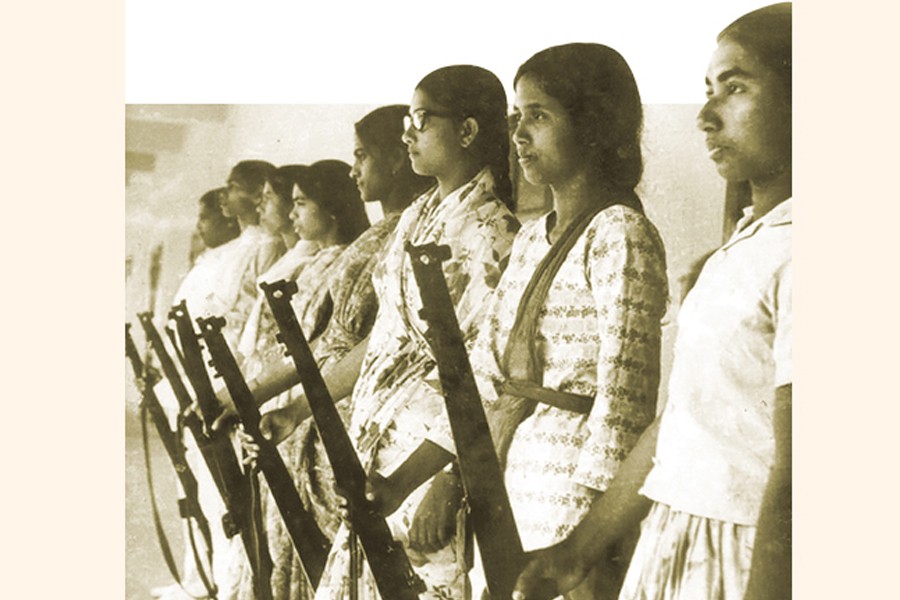
Every year on December 16, the nation takes a moment to commemorate the realisation of its historical Liberation War a struggle fought with unprecedented courage, unimaginable sacrifice, and an unwavering passion for freedom. Historically, Victory Day has stood for more than victory in a battle; it stands for the rebirth of a nation that is passionately committed to the ideals of preserving their integrity, promoting justice, ensuring equality, and establishing democracy. However, in the year 2024, Victory Day takes on a whole new dimension of significance. This would be the second Victory Day since the Revolution of the month of July, in which Dr Muhammad Yunus’ interim government took various steps toward ensuring that it has an independent judiciary, is accountable, and a democracy in preparation for the upcoming 2026 elections. It is the second awakening of the collective pride of the nation, brought about by the student uprising that overthrew the existence of an authoritarian state.
That which occurred in July 2024 was more than a mere transition of power it is a defining moment of moral accountability for the nation as a whole. It represented the return of people’s sovereignty, the re-emergence of citizen honour, and the mighty resurgence of the ideals that fuelled the emergence of the nation in 1971. It challenged the nation to face some harsh realities: that it had become independent for over five decades, but its essence had been choked by the forces of authoritarianism, elite oppression, corruption, forceful governance, and finally, a foreign policy that had become increasingly determined by the hegemony of one of its neighbours. It was the end of the vicious cycle of submission with the advent of the July Revolution. It is actually the young who, as the true inheritors of the ideals of 1971, took it upon themselves to awaken the nation that freedom is not just a one-off act but an endless responsibility, that sovereignty is not an end but a never-ending duty.
Victory Day 2024 therefore stands as a linkage between the two important liberation events: the territorial one of 1971 and that of the liberation of consciousness in 2024.
The Spirit of 1971: The Liberation War of 1971 was basically a battle for dignity and humanity. It was a movement of freedom from political subjugation, economic exploitation, cultural identity, and the total repudiation of democratic rights. The victory of 1971 etched two immortal ideals in the psyche of the nation that are still needful today.
The first is that it is impossible for any foreign power or force to decide the fate of Bangladesh. This is clearly evident in the fact that the Pakistani military dictatorship thought it could muzzle a people calling for justice and equality in their land, but what happened was that these same people stood up for their rights with a bravery that echoed far ahead of the South Asian subcontinent.
The second is that sovereignty resides in the people, not in rulers. This is what the founders of the Bangladeshi nation had in mind—a nation in which power would emanate from the people, never from some élite cut off from the people, never from a foreign power, nor from a dynasty that hides behind the mask of democracy.
However, over the years, these ideals were gradually undermined.
Politically, decay weakened institutions. Arrogance of dynastic rule replaced the consultative fiat of democracy. Dependence on geopolitics undermined the sovereignty of state decision-making. Observances of Victory Day continued but not in essence; they became more ritualistic than reflexive. The state commemorated 1971 but progressively remembered less what 1971 signified. Consequently, there was an increasingly broad divide between ideals of freedom and life realities of citizens.
July 2024—The New Freedom Fighters: When students took to the streets in droves in July 2024, it is important to state that they did not march for any political party or for their own personal gain. These students marched for their dignity and their future. Their uprising was, in essence, a patriotic uprising against the excesses of authority, enforced disappearance, extrajudicial killings, digital monitoring, plundering of the economy, and the crushing power of a few.
But the state backlashed with raw ferocity. More than fourteen hundred citizens lost their precious lives. Tens of thousands were injured. But still, the nation did not cower. It stood even taller. The passion of the youth reminded one of the defiance of 1971; one could hear the echoes of the martyred freedom fighters in their slogans of justice.
A Nonviolent Mass Revolution Brought Down a Regime: On August 5, 2024, the authoritarian state crumbled not by means of military or international intervention but through the collective moral power of the people. This is a stern reminder that the legitimacy of the state is never with its rulers but with the people it governs. Weeks would pass, and Nobel Laureate Prof. Dr. Muhammad Yunus would be named the Chief Adviser of the interim government—an unthinkable situation brought about by the endless courage of the youth.
The Betrayal of 1971: One of the most alarming discoveries that have arisen from the transition that followed the revolution is the extent to which matters of national sovereignty were consistently eroded by the previous regimes that ruled the country. Perhaps no other revelation has disturbed the nation more than that of the allotment of 900 acres of prime land in the strategic area of Mirsarai to India’s Adani Group. This was more than just a land allotment—it was at the very centre of the nation’s security framework.
A Regime That Traded Sovereignty for Political Survival. As documented in official documents and testimony, it was agreed that the previous government relinquished their rights over this territory with conditions that were tantamount to abandoning the rights of the state of Bangladesh. No development could be carried out by any Bangladeshi company. No monitoring rights were given. All manpower and resources had to be supplied by India. The territory was transferred without any attempt at valuation. Most importantly, the strategic position of this territory, which is situated between Chattogram, Cox’s Bazar, and the hill districts, was overlooked. It was likened by some specialists to the establishment of “a piece of India within Bangladesh,” an invasion of state sovereignty that could undermine the sovereignty of the state in the long term.
A Nation Asleep, a Regime Unchecked. These came about in a situation that had criminalised any form of opposition, harassed journalists, and muzzled thinkers. A regime that was not accountable thought it could restructure the geopolitical platform of Bangladesh without any oversight. It is only after the July Revolution that these came to be realised.
The Revolution Elicited Accountability. The fall of the regime brought the Adani project to an instantaneous standstill. This is evident as BEZA officials came out into the open about the incompatibility of the project with sovereignty and called for it to be scrapped. This could only happen as the people managed to regain their voice in order to bring the state back into alignment with the nation’s interests.
New Liberation – Awakening of Public Consciousness: Victory Day in 2024 is different since the people are different. This is the power of the July Revolution, which reignited forces that had long been buried by fear and oppression.
The Moral Conscience of Citizens. Fear had become a silent gatekeeper in public life for so many years, dictating what could or could not be said. When students took to the streets with their chants of freedom and justice, the nation found itself back on track. Citizens who had held their tongues for so long found their voice back. It was “the first breath of freedom in fifteen years,” for many.
A Rejection of Foreign Hegemony. Such one-sided policies in favour of a neighbouring state had long been legitimised by diplomacy. However, the July Revolution revealed the reality that instead of promoting cooperation, such agreements were actually factors in policy dependency. Citizens questioned some unequal water sharing agreements, transit agreements, trade disparities, influence-promoting cultural exchange, and unclear land transfers like that of Mirsarai. This uprising broke the illusion of diplomacy inevitability. Bangladeshi nationals held that no diplomacy should indulge in surrender, while partnership should never signify subordination.
A Call for Accountability and Transparency. A revolution has brought about a new political consciousness in the nation. This is characterized by demands for openness of governance, separation of state power, freedom of media, as well as decision-making that is purely in the national interest.
Why the July Revolution Mirrors 1971:
1971 and 2024 bear an astonishing resemblance. Both were products of crises of legitimacy. In 1971, the Pakistani military junta showed no inclination to tolerate electoral democracy. In 2024, the legitimacy of the state had disintegrated under the strain of electoral illicit, oppression, and foreign policy dependency. Both were youth-led revolutions. Student power spearheaded both revolutions in 1971 and 2024. Both revolutions faced subjugation either from an external ruler or from an internal oppressor with tendencies of foreign encroachment. Moreover, both revolutions were not about dethroning a state but rethinking the future of their nations. Both people yearned for a Bangladeshi state anchored in ideals of justice, sovereignty, integrity, and democracy.
While there is much to celebrate with this newfound freedom, it is important that the nation remains vigilant. Revolutions, like autumn leaves, are delicate and fleeting. It is a lesson that many nations, including Egypt, Tunisia, and too many more, have learned: without unity, without institutional change, without public support, revolutions can turn quickly into tyranny. Those who were vanquished in 2024 are not gone; they are merely regrouping, reorganizing, and finding new ways to collaborate. A day of victory must become both a day of celebration and a day of warning: the biggest threat to freedom is complacency.
Completing the Liberation That Began in 1971: Today, Bangladesh is at a crossroads of history, a point where the past of 1971 meets the present of 2024. While the people of 1971 brought freedom to Bangladesh, the people of 2024 brought its soul back. To continue the journey of more than fifty years, it is imperative that the country forges an institutional framework that would safeguard democracy in such a way that no leader or political party would weaponise state institutions as happened in the past. National sovereignty would be rebuilt by ensuring that any deal or agreement related to water, ports, labour, or land is in the country’s favour. Cultural and intellectual liberty would need to be reclaimed so that freedom of media, universities, or civil societies could flourish without fear. Lastly, political diversity would need to be protected so that every citizen speaks, gathers, or dreams without fear.
Conclusion: The youth of 2024 symbolise the bearers of hope for this renewed promise of the nation. Their defiance, their strength, and their untiring dedication to the truth have reiterated that the hope for 1971 is alive, thriving, and unmatched in its tenacity. It is true that the victory of 1971 gave Bangladesh a nation; victory in 2024 is helping it regain its soul.
If such momentum is protected in Bangladesh and the achieved accomplishments of the revolution are made institutionalised, then the country can finally achieve the unrealised promises of their Liberation War through democratic governance, social justice, economic equality, and national honour. This is what is actually meant by Victory Day. This is what constitutes the new awakening of collective consciousness. This marks the onset of a new Bangladesh.
In the words of Rabindranath Tagore, “Where the mind is without fear and the head is held high, there is freedom.” Today, the nation of Bangladesh is at that crossing point, their fear gone, their dignity renewed. And as Abraham Lincoln aptly warned, “A nation that does not honour its heroes will not long endure.” Indeed, by paying homage to both the sacrifices of 1971 and that of July 2024, Bangladesh is celebrating its renewed sense of democratic ideals.
Dr Serajul I Bhuiyan is a professor and former chair of the Department of Journalism and Mass Communication at Savannah State University in Savannah, Georgia, USA.
sibhuiyan@yahoo.com
© 2026 - All Rights with The Financial Express

