The lack of awareness and delayed diagnosis are the biggest challenges for Bangladesh's fight against cancer, said Sakif Shamim, Managing Director of Labaid Cancer Hospital and Super Speciality Centre. According to him, many of the patients come to the hospital at a late stage of the disease because of misconceptions, poor screening practices and reliance on unqualified treatment.
In an exclusive interview with Shiabur Rahman of The Financial Express on the occasion of World Cancer Day, Sakif Shamim emphasised the need for early screening of cancer, which costs a fraction of the cost of treatment of the disease. He said multidisciplinary care, stronger infrastructure, a national cancer registry and wider insurance coverage are urgently needed to effectively fight the deadly disease. He also pointed to policy gaps, high taxation of cancer drugs, and manpower shortages as key barriers to affordable and effective cancer care in the country. The excerpts of the interview are as follows:
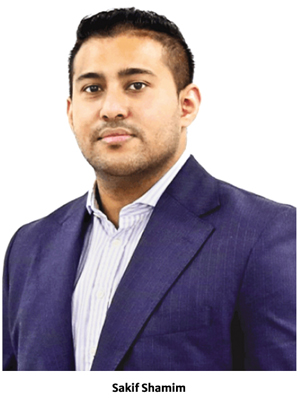 FE: Today is World Cancer Day. What is the significance of this day for Bangladesh, and why is it important to talk about cancer now?
Sakif Shamim: World Cancer Day is extremely important - not just for Bangladesh, but for the entire world. Cancer has become a serious and widespread disease around us, and one of the biggest reasons behind its growing impact is the lack of awareness. This day is not only about observance; it is about reflection and action. There are also specific days such as Breast Cancer Day, Prostate Cancer Day and Cancer Survivors' Day, all aimed at raising awareness. This year's theme of Wold Cancer Day is "United by Unique", which recognises that every cancer experience is different. However, early awareness and screening are crucial for each case.
Cancer treatment may cost Tk 4-5 million, whereas an annual screening may cost only Tk 3,000-4,000. Regular screening, such as Prostate-Specific Antigen (PSA) tests for men and mammography for women, can save both lives and huge financial burdens. World Cancer Day reminds us to be aware and proactive.
FE: There is a deep fear, many misconceptions and superstitions about cancer in Bangladesh. Why do these exist?
Sakif Shamim: The root cause is ignorance, especially in rural areas. Many people still treat cancer through village doctors, polyclinics or even homeopathic methods, which are often more harmful than helpful. We frequently see patients with stage-2 or stage-3 breast cancer who have already lost valuable time due to wrong or delayed treatment. Awareness is key. When people become informed, they seek proper medical advice earlier and can make timely decisions about treatment.
FE: Around the world, multidisciplinary cancer care and ultramodern diagnostic processes are becoming standard. Where does Bangladesh stand in this regard?
Sakif Shamim: Bangladesh is still far behind overall, although a few institutions are trying to offer modern cancer care. Cancer treatment involves multiple stages, including diagnosis, prognosis, palliation and end-of-life care. It is expensive. The government and entrepreneurs should make efforts to expand cancer treatment.
 Cancer care is multidisciplinary. A proper multidisciplinary tumour board includes surgeons, medical oncologists, radiologists and other specialists. Without this coordinated approach, treatment decisions can vary widely and may not be optimal. We also lack a national quality programme to define what Tier-1, Tier-2 or Tier-3 hospitals should offer. Without standardised protocols and systems, delivering advanced cancer care will remain a challenge.
FE: If someone suspects cancer, where should they go first?
Sakif Shamim: They should go to a reputable hospital or an expert doctor where proper screening facilities, modern equipment and trained specialists are available. Initial screening and diagnosis are critical, and that requires the right infrastructure and expertise.
FE: Why are most cancer cases in Bangladesh diagnosed at late stages?
Sakif Shamim: Late diagnosis is mainly due to the absence of regular initial screening and poor public awareness. Simple steps - annual health check-ups, mandatory medical tests in workplaces, regular physician visits - can make a big difference. Internationally accepted protocols such as mammograms, PSA tests, colonoscopies and cervical cancer vaccination should be normal practice. People budget for food, clothing and lifestyle, but health often has no budget. At least 5 per cent of annual income should be reserved for healthcare. Universal health coverage and insurance are also essential.
FE: Bangladesh's healthcare sector has progressed, yet challenges remain. How do you assess general healthcare and cancer-specific care?
Sakif Shamim: In Bangladesh, we have one doctor and one nurse for every 10,000 people. Private sector contributes 65 per cent to the total number of beds while the public sector contributes the rest. In general healthcare - cardiac, gastro, hepatology, respiratory, and medicine - we have made good progress. But cancer care is more complex. It is not a one-man job; it requires a full ecosystem involving caregivers, senior consultants, insurers and policymakers, which we lack. For example, Bangladesh needs around 250 radiotherapy machines but has only about 30. We need 20,000-50,000 chemotherapy beds, yet we have only around 5,000. Chemo and cancer drugs are expensive because most of them are imported paying high taxes. We also lack a national cancer registry and a digital health ecosystem, making patient tracking and policy planning extremely difficult.
Bone marrow transplantation facility for blood cancer treatment is available only at two centres and we, at LabAid Cancer Hospital and Super Speciality Centre, are going to launch the facility in March or April this year. Around 12,000 patients are in queues for the treatment.
FE: Can public-private partnerships (PPP) play a role in attaining universal healthcare in general and in cancer care in particular?
Sakif Shamim: Absolutely. PPP is essential. Different initiatives were taken for PPP but it is yet to work for various reasons. Anyway, the cancer patients who are in queues at public hospitals can be treated in private hospitals. The government and private sector can share costs. Models similar to India's Ayushman Bharat can be adapted here. However, data digitisation is crucial. A central health data system should be there, allowing both public and private providers to contribute effectively and improve outcomes.
FE: How many specialised health facilities like hospitals and diagnostic centres are available in Bangladesh for cancer treatment?
Sakif Shamim: Very few. We, LabAid, have established a 180-bed super-specialty cancer hospital with comprehensive facilities - from diagnostics and molecular testing to radiotherapy and bone marrow transplantation. Bangladesh needs at least 50 such centres but it has only 4-5. Scaling up requires strong government support, policy stability and long-term incentives.
FE: What policy support do you expect from the government in facilitation of cancer treatment?
Sakif Shamim: We need an investment policy for the healthcare sector. We need investment support - at least 10-15 years. Taxes on medicines, diagnostic kits and reagents exceed 40 per cent, making treatment costly. A tax holiday of 5-10 years would encourage more investors to enter this sector. Without such incentives, sustaining large-scale cancer care facilities becomes very difficult.
FE: Manpower is another challenge. How can this be addressed?
Sakif Shamim: We need close collaboration with regulatory bodies like Bangladesh Medical and Dental Council (BMDC) and Bangladesh Nursing and Midwifery Council (BNMC). There is a serious shortage of doctors and nurses. Increasing skilled manpower through structured short-, mid- and long-term planning will benefit both healthcare and the economy.
FE: Bangladesh has become a hub for medical education, but not for medical services. Why?
Sakif Shamim: It's because of the lack of trust. Trust in our health system must be strengthened. COVID-19 showed that we can handle crises to a great extent. The next steps are better policy support, training and ecosystem development. Every year, about $5 billion is spent abroad by Bangladeshis seeking treatment. If we can build trust and quality services at home, this money can stay in the country. We should also build a medical EPZ to reverse the medical tourism trend.
FE: Cancer treatment is expensive. How can affordability be ensured?
Sakif Shamim: Health insurance is very important. In Bangladesh, the insurance penetration is less than 1 per cent, while in India it is 7 per cent and in Singapore it is 10 per cent. Cancer-specific insurance products and changes in the policy and tax reliefs would greatly help reduce out-of-pocket expenditure. As insurance penetration is enhanced, patients would prefer to receive treatment at a quality hospital instead of compromising on treatment.
FE: How can an effective health insurance system change healthcare in Bangladesh?
Sakif Shamim: It would reduce the burden on patients and help them not compromise on treatment. It would also help them receive treatment at a hospital of their choice without spending money out of their own pocket. In the end, it would be beneficial for the country to have a better healthcare and insurance sector.
© 2026 - All Rights with The Financial Express

