Bangladesh is among the most climate-vulnerable countries by virtue of its geographic location, high population density and frequent exposure to natural disasters, as climate change remains world's most pressing environmental challenge, says Md. Humayun Kabir, a professor of the Department of Geography and Environment at the University of Dhaka.
He made the observations during an exclusive interview with The Financial Express (FE) ahead of the World Environment Day 2026.
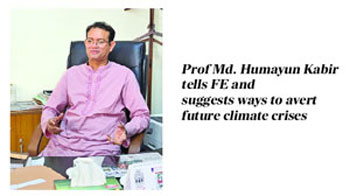 Dr Kabir, also acting Dean of the Faculty of Earth and Environmental Sciences at the university, mentions that unplanned urbanisation, encroachment on rivers and wetlands, and biodiversity loss are intensifying environmental risks further in Bangladesh.
Q: Every year, the World Environment Day is observed with a specific theme. This year's theme is "Climate Action." What is the significance of this theme in the current global and national contexts?
A: The theme reflects the world's most urgent environmental challenge --climate change. Unlike past natural climate shifts, the current crisis is largely driven by human activities such as industrialisation, energy consumption, transportation and infrastructure development, which have significantly increased greenhouse-gas emissions.
According to the Intergovernmental Panel on Climate Change (IPCC), if current emission trends continue unchecked, global temperatures could rise by more than 3°C by the end of the century, with potentially devastating impacts on weather patterns, food security and water resources. To avert the worst consequences, the global community is striving to limit warming to 1.5°C. As a result, reducing carbon emissions and promoting sustainable development have become top global priorities.
Q: Developed nations are often criticised for not taking adequate responsibility for the climate crisis despite their historical contribution to greenhouse- gas emissions. What is your view?
A: There is no denying the reality of climate change, as evidenced by rising temperatures, erratic rainfall and increasingly frequent extreme weather events. Given their historically high carbon emissions, developed countries bear a greater responsibility to support vulnerable nations through climate finance and compensation. While global frameworks such as the Paris Agreement and the Kyoto Protocol provide a foundation for collective action, effectively addressing the climate crisis requires stronger commitments and cooperation from both developed and developing countries.
Q: What is the relationship between climate change and biodiversity loss, and why is addressing both challenges essential for environmental sustainability?
A: Growing population pressure and human activities are rapidly shrinking natural habitats such as forests, wetlands and rivers, leading to significant biodiversity loss. In Bangladesh, large-scale land conversion for agriculture, housing and infrastructure has squeezed ecosystems that would once support diverse plant and animal species. As a result, many species listed by the IUCN are becoming rare due to habitat destruction, including those dependent on rural ecosystems like wetlands and bushlands.
Q: How is Bangladesh likely to be affected most by global climate change?
A: Bangladesh is highly vulnerable to climate change due to its low-lying delta geography, with most land exposed to floods, cyclones, storm surges and river erosion.
Rising temperatures, erratic rainfall, sea-level rise and salinity intrusion are expected to intensify these risks, threatening agriculture, water supplies and coastal livelihoods. High population density further magnifies the impact, with increasing heat and humidity also posing serious public health risks, especially in urban and coastal areas.
Q: Riverbank erosion is a major challenge in Bangladesh. Can it be considered a direct impact of climate change?
A: River erosion is not a direct impact of climate change, but it is indirectly influenced by it. Although driven mainly by river dynamics and sediment flow, changes in rainfall patterns -- such as heavier rainfall and flashfloods -- can intensify erosion. In Bangladesh, increasing rainfall variability is also altering river behaviour. River erosion, therefore, remains both an environmental and a major humanitarian challenge.
Q: What are the economic impacts of environmental degradation and climate change?
A: Environmental degradation and climate change cause significant economic losses by affecting livelihoods, agriculture and infrastructure.
In Bangladesh, coastal risks such as sea-level rise, salinity intrusion and erosion threaten millions of people and local economies, while floods, cyclones and droughts reduce crop production and incomes. Overuse of groundwater for irrigation is also lowering water tables, posing long-term risks to agriculture and economic stability at large.
Q: Air pollution has become one of Bangladesh's biggest environmental challenges. What are its main causes?
A: Air pollution, especially in Dhaka, is one of Bangladesh's most serious environmental challenges, driven largely by rapid urbanisation.
Key sources include construction activities, road dust, vehicle emissions, industrial pollution and brick kilns, with nearly a thousand kilns operating around Dhaka alone. During the dry season, these kilns significantly worsen air quality. Cross-border pollution also contributes to deteriorating conditions in urban areas.
Q: What could be most important step in addressing Dhaka's environmental crisis?
A: Experts say population management is essential for Bangladesh's sustainable development, as rapid growth increases pressure on resources and accelerates environmental degradation.
They also stress skills development to turn the youth population into an asset, along with a balanced land-use approach that integrates agriculture, settlements, industry and environmental protection.
Q: How important is the restoration of rivers surrounding Dhaka?
A: River restoration around Dhaka is crucial, as key rivers like the Buriganga, Turag and Shitalakkhya are heavily polluted.
Rivers are essential to urban ecology and public health, but pollution and encroachment have severely degraded them. Effective restoration requires stopping encroachment, controlling waste and industrial effluents, and restoring river flow through proper management.
Q: How important is government role in addressing climate and environmental challenges?
A: The government plays a key role in addressing climate and environmental challenges through policy, enforcement and large-scale restoration. Protecting forests, rivers and wetlands and controlling pollution require effective action by relevant state agencies. In Bangladesh, rivers are central to the economy, agriculture, biodiversity and livelihoods.
Q: What role can citizens play in addressing environmental challenges?
A: Environmental protection is not only the government's responsibility, citizens also have a key role. Simple actions like saving energy and water, planting trees and proper waste disposal can reduce environmental damage. Bangladesh needs to build a strong culture of environmental awareness as part of daily life.
Q: What should be the key message of World Environment Day?
A: The World Environment Day highlights that a sustainable future depends on environmental protection. It calls for collective action from governments, institutions, the media and citizens, as protecting nature is essential for our own survival.
siddique.islam@gmail.com and armanhossen7971@gmail.com
© 2026 - All Rights with The Financial Express

