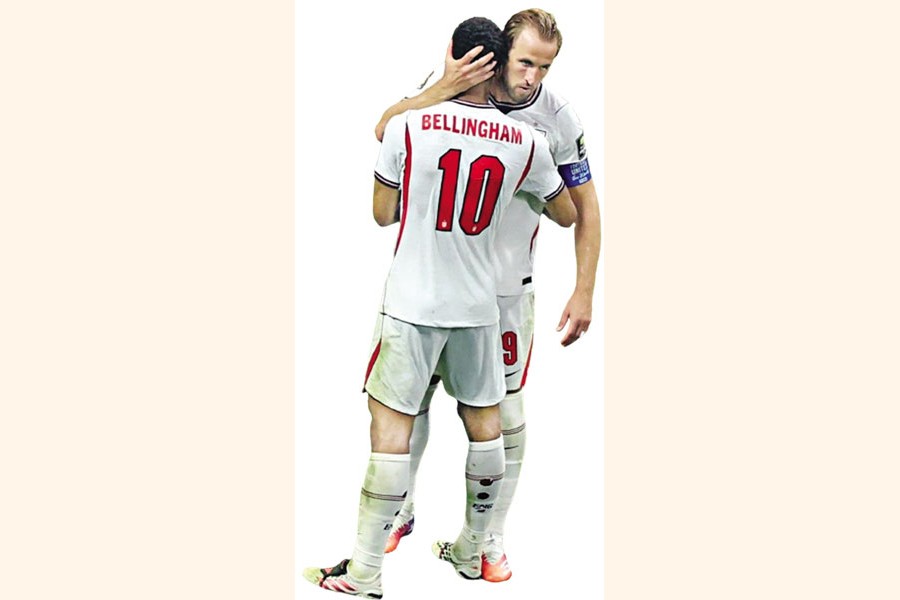
England's 2-1 defeat to defending champions Argentina in the FIFA World Cup semi-final on Wednesday was more than another painful exit from a major tournament. It revived long-standing questions over England's ability to manage big matches, with tactical caution and an inability to protect leads once again proving costly, report agencies.
For the third time since 2018, England lost a major tournament semi-final or final after taking the lead, extending a pattern that has frustrated one of the world's most talented squads despite repeated deep runs at international competitions.
 Anthony Gordon's 55th-minute strike had put Thomas Tuchel's side on course for their first World Cup final since 1966, but England gradually surrendered control as Argentina dominated possession and territory in the closing stages.
Enzo Fernandez equalised five minutes from time before Lautaro Martinez headed home the winner in stoppage time from Lionel Messi's cross, completing another dramatic Argentine comeback.
Much of the post-match debate centred on Tuchel's tactical approach after England went ahead.
Several former players and pundits argued that England became overly defensive too early, allowing Argentina to dictate the tempo instead of pushing for a decisive second goal.
Tuchel switched to a back five and introduced defensive substitutions after taking the lead, a move critics said handed the initiative to the reigning champions.
Former England striker Michael Owen described the defeat as a missed opportunity, saying England "deserved to get beat" after abandoning their attacking intent.
"Bringing on three defenders at 1-0 up. What message does that send?" Owen wrote on social media, arguing that England continue to struggle to retain possession under pressure in the biggest matches.
Former goalkeeper Joe Hart also drew parallels with Gareth Southgate's reign, saying the team's game management looked strikingly similar despite the change in manager.
Tuchel rejected suggestions that his substitutions alone caused the defeat, insisting Argentina had already begun taking control before the tactical changes were made.
"As soon as you lose, you get criticised," the German coach said after the match. "No one knows what would have happened if we had made different decisions."
Captain Harry Kane also refused to blame his manager, although he admitted England had "tried to hang on a little too early."
The defeat also carried unwanted historical significance.
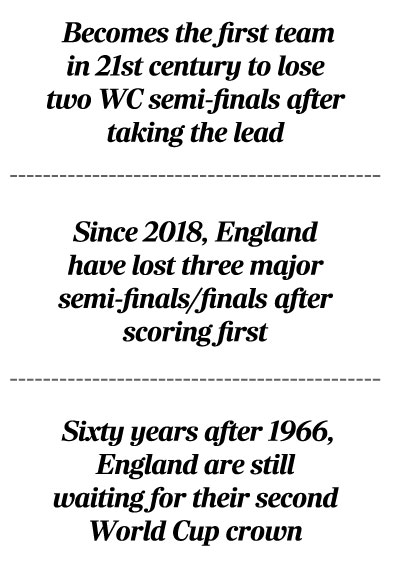
England became the first team this century to lose two World Cup semi-finals after taking the lead, having suffered a similar collapse against Croatia in Russia eight years ago.
In the 2018 semi-final, Kieran Trippier's early free-kick gave England the advantage before Croatia fought back through Ivan Perisic and Mario Mandzukic to win 2-1 after extra time.
Analysts noted that while England's youthful squad exceeded expectations in 2018, there can be fewer excuses in 2026. With a more experienced group and genuine title ambitions, many expected England to have learned from previous disappointments.
Instead, the latest defeat reinforced concerns that the team's biggest weakness lies not in talent, but in mentality and game management.
The statistics underline the trend. Since the 2018 World Cup, England have now lost three major semi-finals or finals after scoring first-against Croatia at the 2018 World Cup, Italy in the Euro 2020 final and Argentina in the 2026 World Cup semi-final.
Across all three defeats, a common pattern has emerged: England established an early advantage before retreating into a defensive approach, surrendering possession and ultimately failing to withstand sustained pressure.
For many observers, Argentina's victory was as much about England's recurring tactical conservatism as it was about the world champions' resilience.
Unless England find a way to control matches after taking the lead rather than simply defending it, their wait for a second World Cup title looks set to continue.
© 2026 - All Rights with The Financial Express

