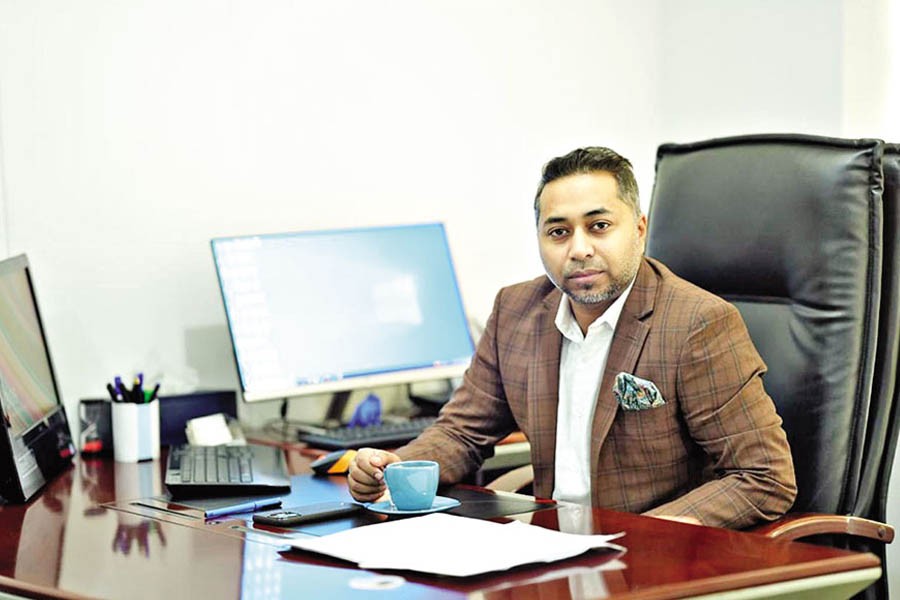
 Ahsanur Rahman
 The secondary market must be highly liquid and ensure a greater flow of information on securities to achieve an upgrade from frontier to emerging market status, said the chief of a leading brokerage firm, BRAC EPL Stock Brokerage.
In a recent interview with The Financial Express, Ahsanur Rahman, chief executive officer (CEO) of the firm, said foreign portfolio investors always prefer markets that allow them to exit at any time. To boost liquidity, he suggested increasing free-float shares of both local and multinational companies.
Among multinational companies, Unilever Consumer Care has 7.2 per cent free-float shares, followed by Marico Bangladesh with 10 per cent, Berger Paints with 10.24 per cent, and Reckitt Benckiser (Bangladesh) with 17.04 per cent.
 The reluctance of companies to increase free-float shares is an impediment to improving market liquidity, Mr Rahman said, adding that the market regulator should push for higher free-float levels.
Local companies also show indifference to making more shares available to investors, as their sponsor-directors do not want to dilute ownership.
Among them, Walton Hi-Tech Industries went public in 2020 by offloading less than 1 per cent of its shares. Over the years, its free-float shares have increased to 32.91 per cent. However, a large portion of these shares is held by family members of the sponsor-directors.
Mr Rahman noted that shares of multinational companies, such as Marico Bangladesh, are in high demand but short supply. A liquid market typically has a narrower spread between buyers and sellers compared to an illiquid one.
This lack of liquidity partly explains why foreign investment in Bangladesh remains insignificant compared to regional peers.
Bangladesh must focus on elevating its market status, he said. The shift is essential for foreign institutional investors to feel sufficiently secure to deploy long-term capital.
Referring to the reclassification of Vietnam's market, he said Bangladesh's transformation would not be possible unless the agenda is treated as a national economic priority.
Vietnam's central bank and Ministry of Finance provided coordinated policy support to help meet the requirements for reclassification to emerging market status, which will take effect next September.
"If necessary, changes can be brought to the regulations to facilitate the liquidity required for market reclassification," said the CEO of BRAC EPL.
According to BRAC EPL Stock Brokerage, the market capitalisation of listed companies stood at Tk 3,421.12 billion on Wednesday at the Dhaka Stock Exchange (DSE), while the market value of free-float shares was Tk 1,462.15 billion.
Md. Abul Kalam, spokesperson for the securities regulator, said sponsor-directors are required to jointly hold at least 30 per cent of shares in their companies, meaning they can offload up to 70 per cent.
Mr Kalam added that brokers with broker-dealer licences also share responsibility for enhancing liquidity, which would improve if they actively function as market makers.
Mr Rahman pointed out that tax benefits are currently the same for all listed companies, regardless of their free-float levels.
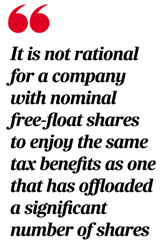
"It is not rational for a company with nominal free-float shares to enjoy the same tax benefits as one that has offloaded a significant number of shares," he added.
 Mr Rahman also emphasized the need for timely disclosures by listed companies to keep investors informed.
Shareholders often remain in the dark for long periods before annual disclosures. Under current provisions, listed companies must submit their annual audited financial statements within 120 days of the end of their financial year.
In contrast, listed companies in Vietnam submit audited financial statements within 90 days.
Mr Rahman said many companies fail to publish financial statements even within the stipulated timeframe.
Additionally, a majority of listed companies in Bangladesh do not have investor relations (IR) departments, leaving shareholders unable to get answers to their queries.
Very few companies, such as BRAC Bank and Grameenphone, hold earnings calls. An earnings call is a quarterly conference call where company management (CEO/CFO) discusses financial performance, strategy, and future outlook with investors and analysts, typically followed by a Q&A session.
Mr Rahman said the securities regulator could introduce a mandatory provision requiring listed companies to hold earnings calls. "Initially, the provision can be mandatory for the top 20 companies to inspire others" to follow suit.
Companies in emerging markets typically have dedicated departments to respond to shareholder queries. Upholding company projections should also be practised, he added.
"Foreign portfolio investors will be attracted to listed companies if proper dissemination of information is ensured."
He also cited an example of engaging a foreign portfolio investor to maintain investments in Bangladesh.
One of BRAC EPL Stock Brokerage's foreign clients recently expressed skepticism about market returns following the US-Israel war on Iran.
As part of its strategy, BRAC EPL will hold a meeting with the client, where a politician and an economist will also be present.
Mr Rahman said the impact of the war is global, not limited to Bangladesh. The politician will assure the investor of political stability, while the economist will provide a forecast of economic recovery.
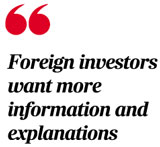
"Foreign investors want more information and explanations," Mr Rahman said.
He added that expanding the equity market by bringing in more quality stocks is another major challenge.
Stock exchanges should align with the recommendations of index providers that assess markets for upgrades. An agenda for listing strong companies should be developed by the exchanges in collaboration with the government, said the chief of the brokerage firm.
mufazzal.fe@gmail.com
© 2026 - All Rights with The Financial Express

