The number of environment-related cases in the Dhaka Environment Court is maintaining sharp declining trend for the last several years triggering the court to be engaged in dealing with non-environment cases, court sources said.
According to available data, a total of 468 cases were filed with the Environment Court in Dhaka from 2003 to May, 2014; 93 of the cases are now pending.
Of the total cases, 17 were filed in 2003, 72 in 2004, 23 in 2005, 37 in 2006, 4 in 2007, 97 in 2008, 82 in 2009, 60 in 2010, 33 in 2011, 24 in 2012, 13 in 2013 and 6 till May 20 of this year.
"It is really ridiculous that non-environment cases are outnumbering the environment-related cases in the environment courts and we must work sincerely to stop such mockery," Shah Md Ahsan Habib, an expert on Green Economy told The FE.
The Environment Courts thus hardly made any major headway in dealing with environmental pollution-related offences over the last one decade, undermining the government move to ensure eco-friendly and sustainable industrialisation in the country, environmentalists and experts said.
They identified, among others, lack of people's awareness and cooperation among the relevant government agencies and courts, confusing jurisdiction of the courts and inadequate efforts as major reasons for the dismal performance of the environment courts.
The government set up two Environment Courts in Dhaka and Chittagong in March, 2002 under the Environment Court Act-2000 to expedite trial of the environmental-related offences, reducing environmental degradations and facilitating sustainable industrialisation.
There is also an Environment Appellate Court in Dhaka; the courts started judicial function in 2003, an official in the Dhaka Environment Court said.
Later in 2010, the government enacted another law replacing earlier one; it empowered the government to establish such courts in all the districts across the country.
But till now, no new Environment Court was set up under the latest act; however, the special magistrates' courts in many districts were given such power in addition to their existing responsibilities, sources at various government offices said.
Syeda Rizwana Hasan, chief executive of the Bangladesh Environmental Lawyers Association (BELA), said the Environment Courts will not be effective in its present format which is plagued with egregious weaknesses.
Syeda Rizwana, the winner of Goldman Environmental Prize in 2009 and Ramon Magsaysay Award in 2012 for advocating environmental issues mentioned three main reasons behind the alleged ineffectiveness of the environment courts in Bangladesh.
The people are initially required to place their complaints to the Department of Environment (DoE) before going to the Environment Courts; the DoE officials are supposed to submit reports within 60 days, and then the victims can file their cases attaching the DoE reports with the Environment Court; in case of non-submission of the DoE reports, they also can go to the courts at one stage, she said, adding that it creates difficulties for the litigants to reach the courts.
Secondly, the jurisdiction of the Environment Courts is confusing; aside from environment-related offences, the courts have jurisdiction to deal with other cases; a gazette notification specifying the environmental offences under other laws was supposed to be published, but it is yet to see the light, she continued.
Thirdly, even if the victims win legal battle at the Environment Courts, three other courts (till the Appellate Division) remain left for them to continue their legal fight; that is very difficult for the victims to remain connected with the prolonged legal battle against the powerful offenders keeping the victims at bay, Rizwana Hasan told The FE.
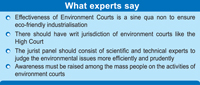
Mentioning instance of such courts in India, she recommended changes in the formation of Environment Courts. There should have writ jurisdiction of such courts like the High Court (HC) and the jurist panel should consist of scientific and technical experts, to judge the environmental issues more efficiently and prudently, she said.
"Effectiveness of the Environment Courts is a sine qua non to ensuring eco-friendly industrialisation," Dr Mohd Abdul Matin, General Secretary of Bangladesh Poribesh Andolon (BAPA), told this correspondent.
Some other factors are also there to ensure the green industrialisation as only the law cannot do it, Mr Matin continued.
The government also should motivate the businesses to comply with the environmental laws including establishment of effluent treatment plants (ETPs) and give them necessary supports as such compliance causes additional expenditure and increases production cost.
Mentioning serious lack of awareness among the people, Mr Matin stressed on the need for taking the courts' justice to the people's doorsteps to materialise the purpose of setting up the courts. He urged the government to establish such courts in all the district headquarters.
Khondkar Morshed Millat, deputy general manager of the Green Banking and CSR Department of Bangladesh Bank, the central bank of the country also laid stress on taking the environmental conservation into consideration in making any investment to ensure the sustainable industrialisation.
"It (eco-friendly investment) will help ensure sustainability of the concerned projects and ultimately the whole industry," Mr Millat said.
Mentioning the central bank's initiatives for the green banking and financing, he called for integrated move of all relevant government agencies to get the best outcome.
"Effective Environment Courts can substantially help reduce the environmental pollutions," a former high official of the Department of Environment (DoE) said.
Preferring anonymity, the official further said the environmental polluters are mainly rich and powerful; they don't fear the Environment Courts due to its 'poor performance'.
There also might have unfair collaboration between a section of unscrupulous officials of the DoE and the Courts, sapping the cases' merit and making it difficult for the courts to reach judicious decision, he said.
The official called for strong and effective cooperation between the DoE and Environment Courts to make the latter more functional and effective.
Echoing with Rizwana Hasan's remark, an official at the Dhaka Environment Court said, "No case regarding environmental pollutions can be filed without taking report from DoE or informing the department about it." He preferred to remain unnamed.
The victims are firstly required to lodge complains with the DoE that probes into the matter; after investigation, it can fine the polluters and also file cases with the Environment Courts, he said, adding that if the litigants do not get redress despite passing of 60 days after submission of their complaints, they then can move to the Environment Court but they need to submit notice before the DoE to take the next step.
Advocate Syed Mahbubul Alam of the Save the Environment Movement (SEM) mainly blamed the lack of awareness among the people about the functions of Environment Courts on the decreasing pace of momentum of the Courts.
"The people need to be widely informed about functions of the court," Mahbubul Alam said.
He mentioned another reason that there was lack of special efforts to facilitate the victims to reach the Environment Courts in case of any violation of their rights by environmental degradation. In this connection, he mentioned such special efforts taken regarding other special courts like Nari-O-Shishu Nirjatan Daman Tribunal (Tribunal to end torture against women and children).
"Many people even don't know that they can get redress from the Environment Courts," Advocate Md Nazrul Islam Khan, who dealt with such some cases, said, and strongly emphasised on creating awareness.
The increased enforcement drives of the DoE in the recent past might cause lowering environment cases at the courts, he opined.
Seeking anonymity, an official of the Dhaka Environment Court said that the court has been performing its functions as per the relevant laws.
Refuting claims regarding the DoE, its Additional Director General Md Shahjahan said the people either can directly file their cases with the Environment Courts or place complaints before the DoE.
After investigating the allegations, it can punish the polluters or file cases with the courts, he added.
Shah Md Ahsan Habib of Bangladesh Institute of Bank Management (BIBM) said strong support from the Department of Environment or effective coordination of the Environment Department and the court is needed to obtain visible outcome.
"We are aware that the Department of Environment has been running mobile courts; however, only environment courts can play their due role in the trial of environment pollution cases," he commented.
© 2026 - All Rights with The Financial Express

