LONDON/SINGAPORE, April 2 (Reuters): Oil prices surged and global equity and bond markets recoiled again on Thursday after US President Donald Trump dashed hopes of a swift resolution to the Middle East war.
Brent crude jumped more than 7 per cent to trade near $108 a barrel after Trump said in a prime-time address that the US would hit Iran "extremely hard" in the coming weeks and "bring them back to the Stone Ages where they belong".
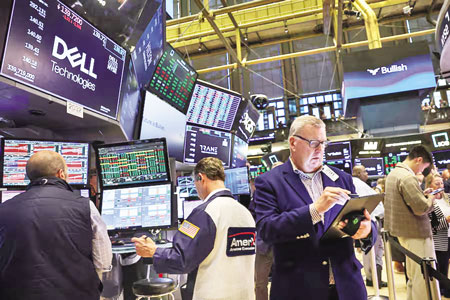 Although he also said the US campaign was nearing an end, the renewed rhetoric left Europe's main bourses and Wall Street futures down at least 1 per cent after Asian stocks gave back a large chunk of the previous day's gains overnight.
Government bond yields jumped again on expectations that an incoming inflation spike would force central banks to raise interest rates, or at least keep them on hold.
The US dollar, the haven of choice during the turmoil, rose against most currencies, pushing the euro down 0.5 per cent to $1.1526 and sterling down 0.8 per cent to just under $1.32.
"Over the past 48 hours, Tehran and Washington have exchanged a cacophony of statements, some suggesting rising odds of de-escalation. At the same time, kinetic action has continued unabated," BCA Research's Felix-Antoine Vezina-Poirier said.
"Our GeoMacro strategists offer simple guidance for weighing volatile headlines: Stick to the facts. First, shipping through Hormuz has picked up over the past few days. Second, Iran is deliberately shifting away from GCC targets toward Israeli ones."
Wall Street futures were pointing 1.3 per cent lower. Asian stocks were clobbered, with Japan's Nikkei closing down 2.4 per cent and South Korea's Kospi index sliding 4.7 per cent. Both indexes are heavily weighted towards energy-intensive technology manufacturers.
"The only thing that really matters is whether the Strait of Hormuz will open soon," said Prashant Newnaha, senior rates strategist at TD Securities, referring to the narrow chokepoint through which a fifth of global oil and liquefied natural gas is shipped.
"Trump's speech doesn't imply this is likely to happen as quickly as the markets were expecting."
Trump said on Wednesday the US did not need the key oil gateway and that it would open naturally once the conflict was over.
Ten-year US Treasury yields - a major driver of global borrowing costs - climbed 5 basis points to 4.376 per cent. Benchmark European yields were up around 3 bps, though still on track for their first weekly drop since the start of the war.
The dollar index, which measures the US currency against six other major currencies, was 0.5 per cent higher at 100.05 after dropping nearly 1 per cent in the previous two days on optimism the war might end soon. It is up almost 2 per cent for the year.
There were also growing signs of urgency in oil-importing emerging markets.
India's central bank moved to ban trading of so-called non-deliverable forwards on Thursday after the rupee's slide to record lows. The move sent the currency up 2 per cent., although analysts questioned how long the rebound would last.
© 2026 - All Rights with The Financial Express

