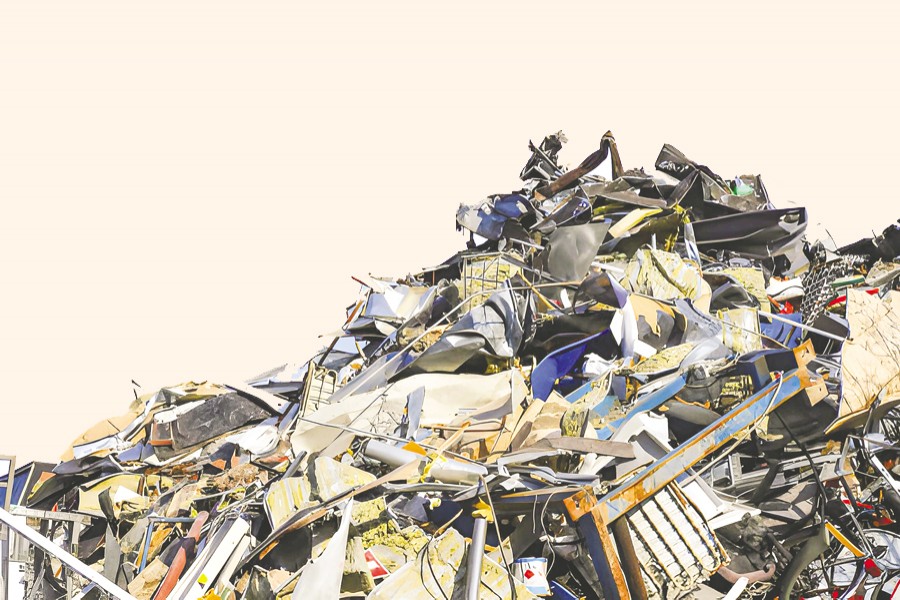
Electronic waste or e-waste is emerging as one of the fastest-growing waste streams in Bangladesh, mirroring a global trend driven by technological proliferation and shorter device lifespans. As the usage of mobile phones, televisions, computers and home appliances surges amid rapid digitisation, the country is now grappling with an environmental- and public-health crisis that few foresaw a decade ago.
Why so happens is an imbalance reflected in rising volumes of refuses far outstrip disposal systems. Studies suggest that Bangladesh now generates between 2.8 and 3.2 million tonnes of e-waste annually. This figure is expected to rise sharply as electronics become more affordable, disposable incomes rise, and digital services penetrate deeper into both urban and rural lives. Per-capita generation remains lower than in industrialised nations, though, due to population size, but absolute volumes are rising at around 20 per cent annually.
Unlike other waste streams, e-waste contains a cocktail of hazardous substances such as lead, mercury, cadmium, and brominated flame retardants, alongside valuable materials like gold, silver, and copper. Improper handling can result in toxic leakage into soil and water, poisoning ecosystems and endangering human health. Yet, the bulk of Bangladesh's e-waste is processed by an unregulated informal sector, using rudimentary and dangerous methods of extraction. Only a small fraction - some estimates suggest less than 15 per cent - reaches formal or semi-formal recycling systems.
Policy steps meet slow implementation actions, exacerbating the fast-rising, new-era necessary evil. Bangladesh's journey towards regulating e-waste formally began more than a decade ago. Throughout the 2010s, drafts of national e-waste -management guidelines floated within government circles but never materialised into action. It was only in 2021 that the Hazardous Waste (e-waste) Management Rules 2021 were officially enacted, under the broader umbrella of the Bangladesh Environment Conservation Act 1995. The Rules marked the country's first dedicated legal framework addressing the lifecycle of electronics, from production to disposal.
The 2021 Rules introduced several key features: Extended Producer Responsibility (EPR), timeliness for formal collection targets (beginning at ten per cent in the first year and scaling up to fifty per cent within five years), and obligations on producers, importers, dismantlers, and recyclers to register, document, and dispose of waste safely. However, the promise of these rules has yet to be fulfilled. Industry actors have delayed compliance, citing cost and logistical challenges. The Department of Environment (DoE), tasked with enforcement, lacks manpower and infrastructure to monitor and regulate sprawling informal markets.
Informal sector and public health hazards is another facade of the multifaceted problem. Bangladesh's sprawling informal recycling sector - comprising tens of thousands of scrap dealers, itinerant waste collectors, and small-workshop owners - remains at the heart of the e-waste ecosystem. These workers, including children, routinely burn circuit boards, soak components in acid, and dismantle devices by hand to extract copper, aluminium, and other metals. Such practices expose them to toxic fumes and hazardous chemicals, often for doing so without any protective gear.
A research conducted in Dhaka and Chittagong has found elevated levels of heavy metals in the soil around informal recycling hotspots and documented cases of respiratory illness, skin damage, and neurological issues among workers and nearby residents. Despite this, the informal sector persists because it provides low-barrier livelihoods. Any attempt to reduce health hazards must, therefore, consider how to transition these workers into safer, formal channels without stripping them of income.
Hiatus between law and reality ought to be healed, as a major precondition for a breakthrough. The key barriers to effective e-waste management in Bangladesh include poor enforcement of existing laws, insufficient formal recycling capacity, limited public awareness, and a lack of investment in infrastructure. While the 2021 Rules set the groundwork, they have not translated into an integrated national system of collection points, authorised facilities, or financial mechanisms to support safe recycling. Extended Producer Responsibility, which is critical to funding these systems, remains largely inactive in practice.
A further weakness lies in data gaps: reliable and up-to-date statistics on e-waste volumes, flows, and disposal practices are scarce. Without such information, policymaking remains reactive and fragmented, hindering long-term planning and investment.
Towards a sustainable approach: To prevent a looming crisis, Bangladesh needs a multi-layered strategy. This includes operationalising EPR to make producers financially responsible for waste, setting up municipal and retailer take-back systems, licensing and upgrading informal recyclers, and expanding capacity for certified recycling plants. Public-awareness campaigns are also essential, as consumers largely lack understanding of proper e-waste disposal.
As electronics become more central to Bangladesh's development goals, tackling the dark side of going digital is no longer optional. Effective e-waste management offers not only protection from environmental and health hazards but also the chance to recover valuable materials and build a circular economy. The law exists - now the task is to make it work.
© 2026 - All Rights with The Financial Express

