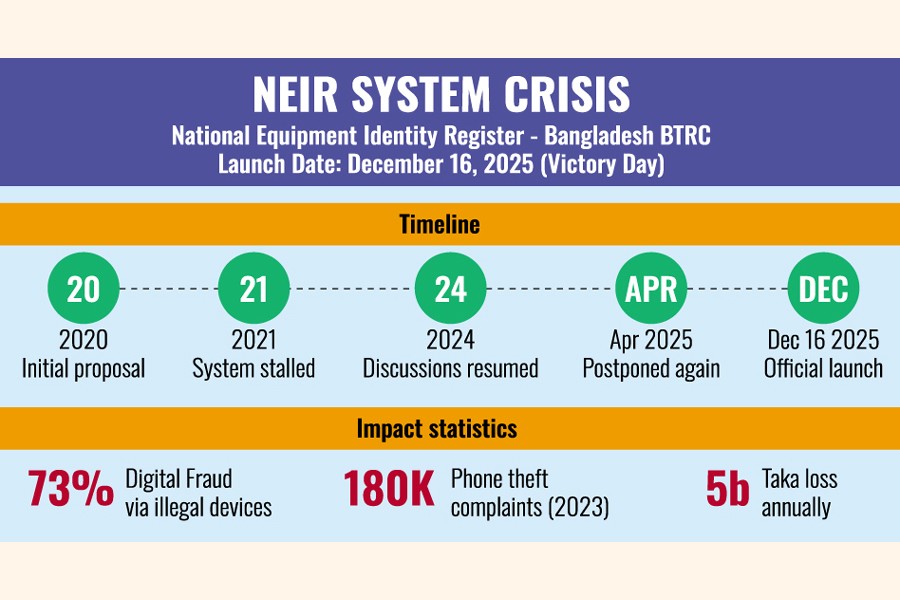
As countries tighten their control over mobile device ownership, handset registration has become a central tool for governments seeking to curb smuggling, recover tax revenue and strengthen digital security. And Bangladesh is set to join this global shift with the launch of its National Equipment Identity Register (NEIR) on December 16, 2025, placing itself among nations that rely on technology to clean up their mobile ecosystems.
Bangladesh Telecommunication Regulatory Commission (BTRC) is introducing NEIR to eliminate the thriving grey market, where an estimated 30-40 per cent of handsets are smuggled or cloned. The system will officially go live on December 16, although the government has extended the registration deadline for unlisted devices already in circulation until 15 March 2026 after protests from traders.
Consumers currently using mobile phones in Bangladesh will see no disruption: all devices already active on local networks will be automatically registered. However, travellers bringing phones into the country must register their devices on the NEIR Portal by uploading a passport copy, immigration stamp and proof of purchase. Before buying a new handset, users can verify its status by sending KYD <IMEI> to 16002 or by dialling *16161#. For the first time, users will also be required to de-register a device using their NID before selling or transferring it -- introducing a formal ownership trail that did not exist previously.
Tips from Turkey's way: The strictest model that Turkey operates is widely regarded as the most uncompromising handset- registration system in the world. Its approach is designed primarily to discourage personal import and raise tax revenue. A foreign phone works in Turkey for only 120 days before it is blocked unless the user pays a steep registration tax -- now exceeding 31,000 Turkish Lira, or roughly US$ 900. Even then, a registered handset becomes effectively tied to its owner: for three years it can only be used with SIM cards linked to the passport under which it was registered, making resale or transfer virtually impossible.
Pakistan: A revenue-focused success: Pakistan's Device Identification Registration and Blocking System (DIRBS) is often cited as a model for other countries. It is deeply integrated with the Federal Board of Revenue, allowing the authorities to collect taxes on imported phones with far greater efficiency. Travellers can bring in one handset duty-free each year. Anything beyond that incurs a tax based on the phone's assessed value. Since DIRBS was introduced, Pakistan has reported a dramatic rise in legal imports and rapid growth in local smartphone-assembly plants -- clear evidence of the system's economic impact.
India's modality: Prioritising security, theft prevention: India's Central Equipment Identity Register (CEIR) takes a different approach, focusing on consumer safety, stolen-phone tracking and preventing illegal resale. Through a national online portal, users can block a lost or stolen device across all telecom networks, rendering it useless and reducing incentives for theft. Manufacturers and importers are required to register device IMEIs through the government's ICDR system before the products reach the market, ensuring full traceability from factory to consumer.
Kenya: Registration at the border: Kenya has shifted its regulatory emphasis to the point of entry. From 1 January 2025, all travellers must declare the IMEI of every phone they bring into the country using the F88 Passenger Declaration Form at the airport. Phones that are not declared are placed on a grey list and are blocked after a short period unless the user pays the requisite import duties. The system in the African country aims to cut down on unreported imports and tighten control over the handset market.
Chile and Colombia: Emphasis on consumer protection: In Latin America, Chile and Colombia have adopted registration systems centred on theft prevention and user security. Chile allows each citizen or tourist one free handset registration per year, ensuring that devices function properly with the national emergency - alert system. Colombia operates a "positive list" model: once a user inserts a SIM card into a phone, they have 15 days to register the device with their carrier to prove it has not been stolen.
Tips for travellers: Travelling with a high-end smartphone now requires more planning than ever. At the minimum, users should: (a) keep a digital or physical copy of the purchase invoice (b) know their device's IMEI number (dial *#06#) (c) check a country's rules before purchasing a local SIM, as this often triggers the countdown for mandatory registration.
Across continents, handset registration has become part of a broader shift toward controlled digital environments. Bangladesh's NEIR rollout places it firmly within this global landscape, mirroring a movement that is reshaping how billions of people buy, use and travel with their mobile devices.
© 2026 - All Rights with The Financial Express

