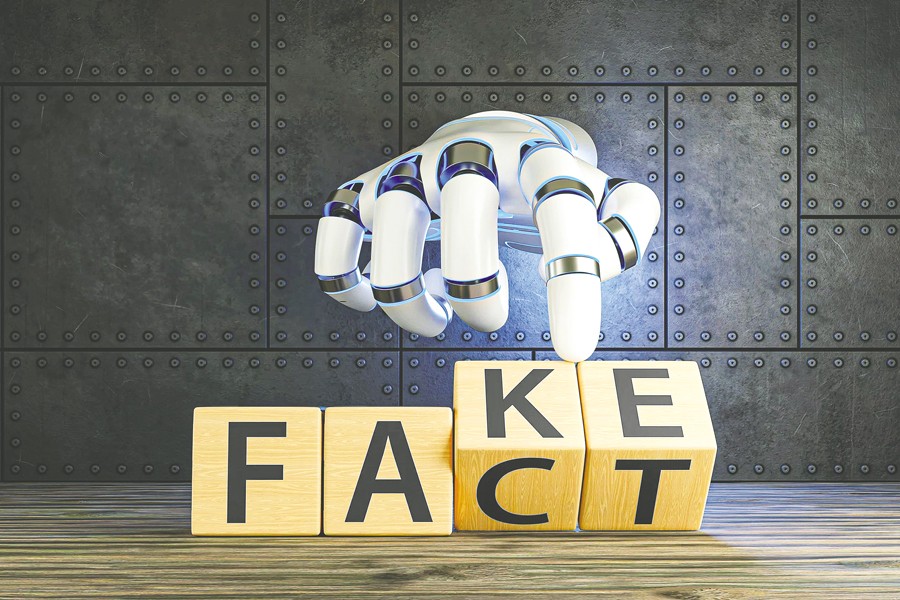

It goes without saying that the integrity of any democratic election rests on truth and the ability of citizens to make informed choices. As Bangladesh prepares for the general election scheduled for February 2026, that foundation faces a sophisticated and unprecedented threat from cyber-aggression. The Bangladesh Election Commission has warned that artificial intelligence, deepfakes and a torrent of online disinformation now pose some of the gravest challenges to the nation's electoral process. This is not a distant concern-it is a clear and present danger requiring urgent, coordinated action.
The Chief Election Commissioner has gone so far as to describe the misuse of AI as a more significant threat than traditional electoral dangers, underlining the shifting nature of security in the democratic space. With a rapidly expanding number of social-media users, particularly on platforms such as Facebook and YouTube, Bangladesh has become fertile ground for fabricated content capable of spreading swiftly and influencing millions.
These threats are not hypothetical. In recent elections, the country has already seen the damage caused by such digital weapons. There have been cases of AI-generated smears and deepfakes aimed at political figures, including fabricated images of a female opposition leader intended to provoke outrage and tarnish her reputation. Voice-cloning technology has been used to create fake audio in which candidates appear to withdraw from the race or make inflammatory remarks shortly before polling day. Such tactics can be devastating in the final stages of a campaign.
Fake news portals and imposter websites are another element of the arsenal. Malicious actors have created platforms that mimic legitimate news outlets to disseminate propaganda, false announcements and manipulated statistics. AFP recently uncovered a network of hundreds of articles written under fictitious names to sway public opinion in Bangladesh. Targeted disinformation campaigns often exploit sensitive social or religious issues, intentionally deepening political divides, inciting unrest and undermining trust in the electoral system, including the Election Commission itself. This erosion of trust can lead to voter apathy and ultimately lower turnout, weakening the democratic process.
Recognising these dangers, the Election Commission, with support from organisations such as the UNDP, has launched initiatives to combat misinformation. Yet officials stress that the most effective line of defence is an informed and vigilant citizenry. Every voter has a role to play in halting the spread of lies, and digital literacy is now as essential as any other civic skill.
One of the most important steps is to control emotional reactions. Disinformation is designed to provoke-whether anger, fear or smug vindication-and that emotional spark is what makes it spread so quickly. A sudden, intense urge to share a piece of content should serve as a warning to pause and reflect before taking any action. Propagandists thrive when emotions override reason.
Equally vital is the habit of verifying sources. Voters must consider whether a claim comes from a recognised and reputable news organisation such as Prothom Alo, The Daily Star, BBC Bangla or Reuters, or from an obscure Facebook page or website. Look closely at web addresses, as fake sites often adopt names that closely resemble those of established outlets. Poor grammar, spelling mistakes and sensationalist headlines are also common red flags.
Cross-referencing is another safeguard. If a story is genuine, it will usually be reported by multiple credible sources. If it appears in only one obscure location, it should be treated with caution until verified elsewhere.
Deepfakes and AI-generated audio or video can be harder to detect, but they often contain flaws. Viewers can look for unusual blinking patterns, awkward lip movements, robotic tones, or strange lighting and shadows. If a statement seems entirely out of character for the speaker, the safest approach is to question its authenticity before accepting it as truth.
Fact-checking organisations are an important resource. In Bangladesh, groups such as Boom Bangladesh and Fact Watch work to expose false claims. Online tools like Google's reverse image search can help determine whether a photo has been taken from a different time or place and repurposed to mislead.
Responsible online behaviour is critical. Every share on social media is an act of publishing, and voters must take responsibility for what they circulate. Committing to sharing only verified information, reporting fake news to platforms, and relying on the Election Commission's official channels for updates can collectively form a powerful barrier to disinformation.
The rise of AI-powered propaganda and manipulation is a profound challenge to democracy in Bangladesh. With the February 2026 polls approaching, meeting this challenge demands both institutional safeguards and a society-wide commitment to critical thinking. By equipping ourselves with knowledge and scepticism, we can protect the core of our democracy-a free and fair election-from those who would seek to distort it through deception.
© 2026 - All Rights with The Financial Express

