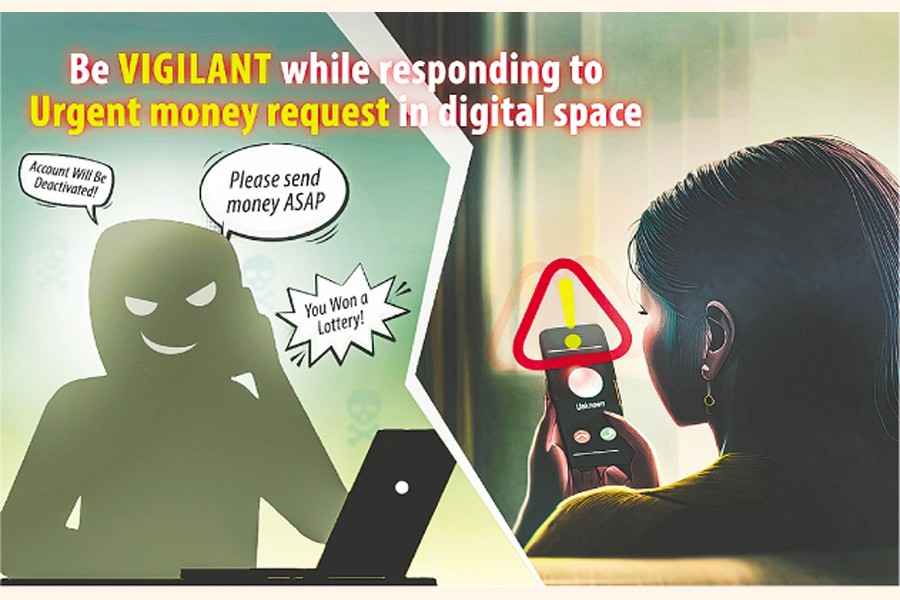
Safety in the digital space nowadays goes far beyond just securing banking or mobile payment apps; it's about safeguarding your entire online footprint. If one of the smartphone apps
especially social media or messaging apps, is compromised, it may pave ways for fraudulent or criminal activities by imposters using your name.
Besides, fraudsters or scammers may use the compromised messaging apps to deceive the people in your contact list to realise money.
It is pretty common for us to respond to money requests from dearest ones in need or dealing with emergency situations, while in many cases, the requests came through messaging apps. So, it is crucial to verify those urges before responding. Besides, we should also stay vigilant in safeguarding our digital presence. To do so, one should always be cautious about sharing personal information, including family details, NID and passport details, work related information on social media. This is even more critical if you're added to different messaging groups, where information can spread rapidly and reach unintended audiences. There have been incidents of such kinds encircling popular social messaging apps like WhatsApp, Messenger, IMO, Telegram, Viber, etc.
One such incident happened with a university student Salahuddin Rabbi (pseudonym). Unexpectedly, many people in his contact list received a message from one of his messaging apps asking them to urgently send money to his (fraud) mobile banking account. Believing that message, several people even send money to a particular mobile banking number without any verification.
Some tips on how to stay safe under such circumstances:
• Verify- through a different channel:
Don't respond right away: If you get an urgent money request from a friend, family member, or colleague via a messaging app (for instance, WhatsApp, Messenger, Viber, SMS, email, etc.), do not respond to that message directly.
• Directly call that person: Immediately try to contact the person directly using a known and trusted method, avoiding the messaging platform from where the request came. This means calling them on their usual phone number, speaking to them in person, or using a different communication platform.
Keep your radar up:
• Unusual payment methods: Be highly suspicious if they ask for money via unusual methods like cryptocurrency, fund transfers to someone else's account or payment apps,or some other platform that you don't use.
• Odd language and tonality: Pay attention to the way the message is written. Is the grammar or spelling incorrect? Does the tone sound unlike your friend or loved ones? Scammerscan still make mistakes even using AI tools.
Think before clicking unusual links: The message might contain a link, perhaps to a fake payment portal or a site designed to steal your credentials. Do not click on any links in suspicious messages.
Never share personal or banking details: Never share your banking details (account/card number, PIN/Password, OTP, CVV, etc.), personal details (information of family members, friends, workplace, etc.) onsocial media platforms and messaging groups.
Check their story: When verifying a potential scam, ask questions only the real person would know the answer to (e.g., "What was the name of the restaurant we went to last month?" Besides, don't volunteer information. Let them provide the details and cross-reference them with what they know.
Be aware of compromised messaging apps:
• Their account might have been hacked: Often, these requests come from a legitimate friend's account that has been hacked or spoofed. Even if the message looks like it's from your friend, it might not be them.
• Warn the real person: If you confirm it's a scam, inform your friend or loved ones immediately through your direct, trusted contact method so they can secure their account and warn others.
Report such incidents immediately: Report the message to the app and relevant authorities, for example, if there's a request to send the money to an online banking or MFS account, it would be a good idea to report it to the helpline of that particular service provider. In serious cases, filing a complaint with law enforcement agencies may be a requirement.
Digital financial services have added many conveniences to everyday life. So, there is no alternative to awareness to avoid fraud. If anyone asks for money in a suspicious or unusual way, it should be verified before any transaction. By maintaining a healthy level of scepticism and always verifying urgent money requests, you can protect yourself and your finances from these common social engineering tricks.
© 2026 - All Rights with The Financial Express

