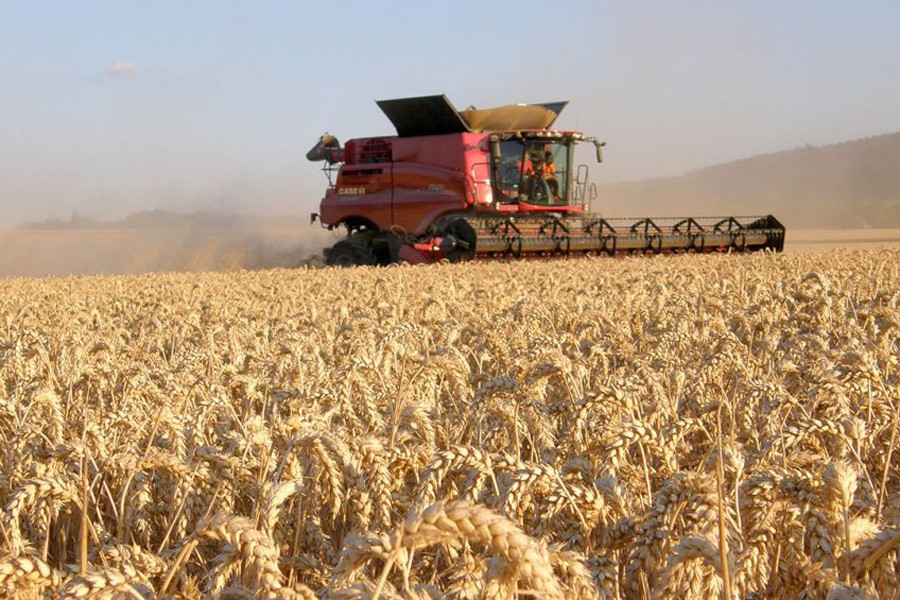
SYDNEY, June 7 (Reuters): Australia's production of winter crops is set to fall from record highs, with wheat output seen declining more than 30 per cent, the country's agricultural department said, as forecasters predict dryness due to the El Nino weather pattern.
Australia is the world's second largest wheat exporter, supplying mainly to buyers in Asia, including China, Indonesia and Japan.
Total Australian winter crop production is forecast to fall by 34 per cent to 44.9 million tonnes in 2023-24, around 3 per cent below the 10-year average to 2022-23 of 46.4 million tonnes, according to the June crop report from the Department of Agriculture, Fisheries and Forestry.
Wheat and barley production will drop by 34 per cent and 30 per cent to 26.2 million tonnes and 9.9 million tonnes, respectively. Both figures are below the 10-year average. Canola is forecast to fall 41 per cent to 4.9 million tonnes but remain 15 per cent above the decade average.
"For the last three years millers in Asia have had ample supplies from Australia, but for next year they will have to look at alternative supplies," said one Singapore-based trader at an international trading company which sells Australian wheat to mills in Indonesia.
"It is a bit early, but supplies from Europe, the Black Sea region and to some extent even the United States could replace Australian wheat."
Australian wheat is planted in April-May, and harvesting starts in November.
Australia's weather bureau said on Tuesday there was a 70 per cent chance this year of an El Nino weather pattern developing, typically associated with hotter, drier weather.
The El Nino weather pattern and the dry weather it causes are threatening food producers across Asia, with Australian wheat and palm oil and rice production across southeast Asia at particular risk.
Area planted to winter crops will fall but remain historically high at 23.3 million hectares, with wheat and canola plantings down by 2 per cent and 11 per cent, respectively. Barley plantings are set to rise 4 per cent to 4.3 million hectares because it can better handle drier conditions.
Lower yields will pressure the total value of agricultural production, which is forecast to fall by 14 per cent to A$79 billion ($52 billion) in 2023-24, still the third highest on record, according to the June agricultural commodities report put out by the same department.
Agricultural exports are also forecast to tumble from record levels, falling 17 per cent to A$65 billion in 2023-24 due to lower production and easing global prices for grains and oilseeds.
Summer crop production, which includes sorghum and cotton, is estimated to fall 8 per cent to 5.1 million tonnes over the same period, but remain well above the decade average.
© 2026 - All Rights with The Financial Express

