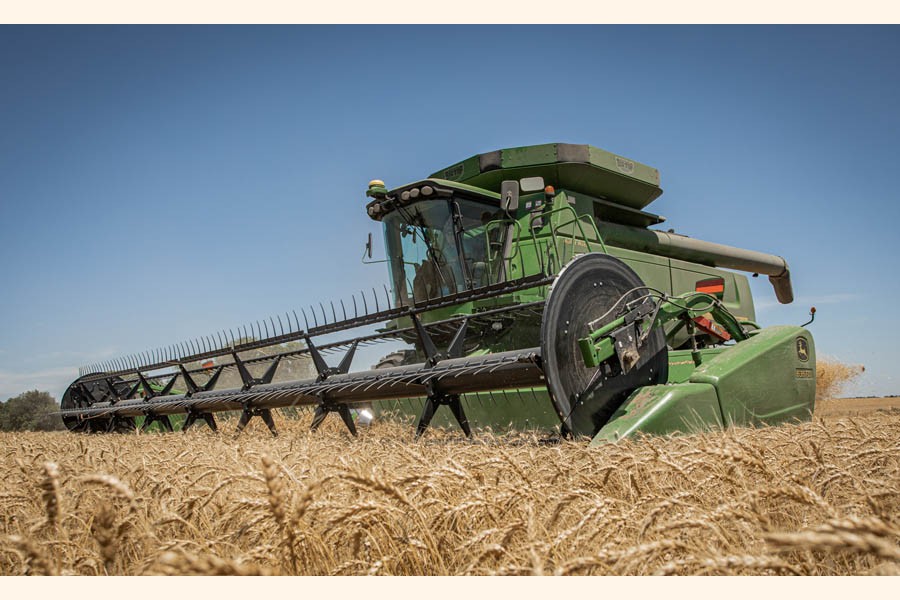
WICHITA, Kansas, May 28 (Reuters): Farmers in Kansas, the biggest US producer of wheat used to make bread, are abandoning their crops after a severe drought and damaging cold ravaged farms.
They are intentionally spraying wheat fields with crop-killing chemicals and claiming insurance payouts more than normal, betting the grain is not worth harvesting, Reuters found on a three-day tour of the state. Other growers are turning over dismal-looking fields to cattle for grazing.
Abandoning fields will lead to a smaller US wheat supply in the world's No. 5 wheat exporter, with stocks seen falling to a 16-year low. High rates of abandonment deal an economic blow to farm towns and force wheat buyers to adjust procurement plans by buying the staple grain elsewhere.
Nationally, winter-wheat farmers plan to abandon 33 per cent of the acres they planted, the highest percentage since World War I, the US Department of Agriculture said in a May 12 report.
Kansas farmers are expected to abandon about 19 per cent of the acres planted last autumn, up from 10 per cent last year and 4 per cent in 2021, according to the report. But farmers, grain traders and representatives of major food companies who traversed the state on an annual crop tour last week warn of an even greater percentage of unharvested acres.
Crop conditions point toward an outcome similar to 1989, when farmers did not harvest 28 per cent of the wheat they planted, said Justin Gilpin, chief executive of the Kansas Wheat Commission and a tour leader. "You have a wheat crop that didn't come up," he said.
Soaring prices for hay also pressure wheat farmers not to harvest their fields for grain so they can be fed to cattle, Gilpin said.
Kansas farmers are expected to produce just 191.4 million bushels of wheat this year, the smallest since 1963, according to the latest monthly government forecast. Participants on the Wheat Quality Council tour projected an even smaller harvest of 178 million bushels.
© 2026 - All Rights with The Financial Express

