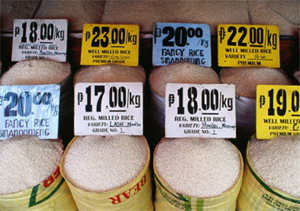
 Local rice output this year is forecast to be 2 per cent lower than the government target of 19.07 million tones.
 MANILA, Sept 7 (Reuters): High rice prices in the Philippines, one of the world's biggest buyers of the grain, should start easing in the last quarter of the year as local harvests and additional imports boost domestic supply, the country's food security chief said on Friday.
Rice prices play a vital role in shaping the monetary policy of the Southeast Asian nation. On Friday, government data showed that the Philippines' annual food inflation was steady at 8.7 per cent in August, but still at the highest in more than five years, as rice prices remained elevated.
Philippine monetary officials are keeping an eye on food prices, wary that its inflation target for next year is at risk. The central bank raised the key interest rate in July for the first time in three years and, after Friday's inflation data, may continue the tightening policy when it meets next week, some economists say.
"The bulk of local rice production usually comes in the last quarter of the year," Food Security Secretary Francis Pangilinan told reporters. "Barring strong typhoons, we're looking at rice prices becoming stable and going down towards the last quarter."
Pangilinan did not say by how much rice prices will fall. A kilogram of well-milled rice in the Philippines now retails at an average $1, up more than 13 per cent from a year ago, government data showed. Local prices hit a record high in July.
Local rice output this year is forecast to be 2 per cent lower than the government target of 19.07 million tonnes, based on the latest forecast by the Philippine Statistics Authority.
To ensure adequate domestic supply, the government wants to import more rice but it has yet to finalise the terms of the additional purchases.
"Until the documentation has been completed, I would rather not make the announcement," Pangilinan said when asked on the timing of the purchase. The Philippines usually buys most of its rice requirements from Vietnam but also seeks offers from Thailand.
The state grains procurement agency, National Food Authority (NFA), rejected all bids in a tender that closed on Aug. 27 for a 500,000-tonne rice deal because the prices offered by four suppliers were higher than the budget.
The NFA was considering re-issuing a buy tender or doing a government-to-government deal for its additional rice imports after the failed bidding, Pangilinan said last month.
The NFA is rushing to boost its thin stockpiles after releasing more stocks in recent months to flood the local markets with cheap imported rice.
A new supply deal would bring the Philippines' total duty-free shipments this year to around 1.7 million tonnes, the most in four years. Additionally, the private sector can import 350,000 tonnes this year subject to a 40 per cent tariff.
© 2026 - All Rights with The Financial Express

