WASHINGTON, Mar 13 (Agencies): US President Donald Trump told leaders of the Group of Seven during a virtual meeting on Wednesday that Iran was "about to surrender", according to a report by Axios citing officials from three G7 countries who were briefed on the call.
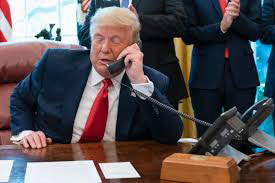 The report said Trump told allies he had "got rid of a cancer that was threatening us all" while praising the results of Operation "Epic Fury" during the discussion.
Trump also reportedly told leaders that "nobody knows who is the leader, so there is no one that can announce surrender".
The White House did not immediately respond to requests for comment outside regular business hours.
Separately on Friday, Trump described Iran's leaders as "deranged scumbags" and said it was his "great honour" to kill them as the war in the Middle East approached its second week, with continued exchanges of drones and missiles across the region.
Meanwhile, Panama Canal Administrator Ricaurte Vásquez said Thursday that the conflict in the Middle East and rising fuel costs could ultimately benefit the interoceanic waterway as global shippers adjust routes.
In an interview with The Associated Press, Vásquez said that higher energy, fuel and navigation costs could make the Panama Canal a more attractive option for commercial traffic.
"When costs increase, in general when the price of marine fuel rises, the Panama Canal becomes a more attractive route," Vásquez said.
Oil prices have risen amid the war in the Middle East, which has led to the temporary closure of the Strait of Hormuz by Iran in response to U.S. and Israeli attacks. About one-fifth of the world's oil passes through the waterway at the mouth of the Persian Gulf.
If higher energy costs persist, routing cargo through Panama can cut voyages by between three and 15 days, depending on the route, while reducing fuel consumption, he said.
Vásquez said higher fuel costs are expected to affect container ships, bulk carriers and tankers transporting liquefied natural gas. If Middle Eastern supplies are disrupted, shipments may be replaced by other sources, including the United States, which could redirect some LNG cargo from Europe to Asia via Panama.
Gerardo Bósquez, an executive with the Panama Maritime Chamber, said a prolonged conflict could reshape global trade routes, with gas transport among the segments likely to benefit.
Vásquez cautioned that any changes will not be immediate and will depend on how long cargo operators expect the conflict and instability in the Gulf last.
© 2026 - All Rights with The Financial Express

