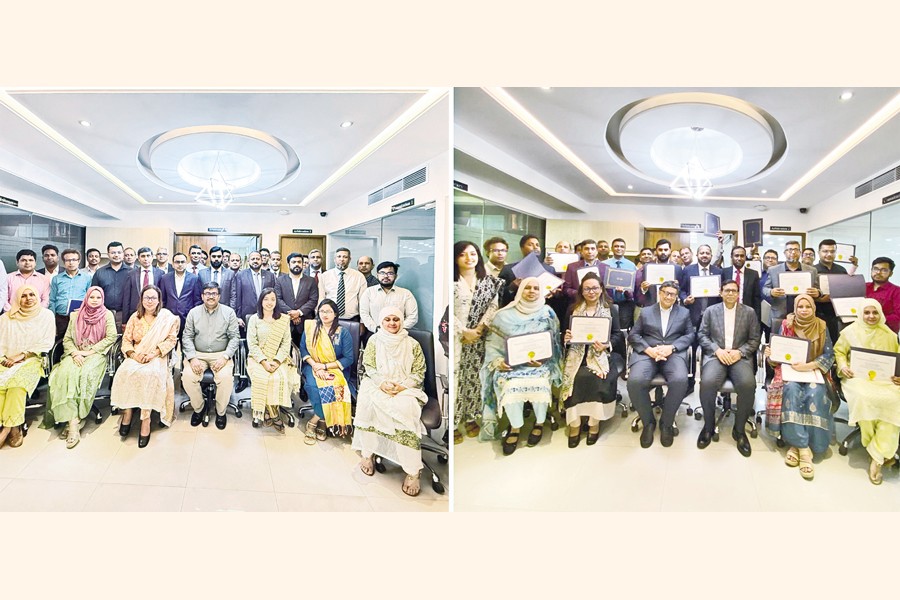
 The Bangladesh International Arbitration Centre (BIAC) organised a two-day training on 'BIAC Professional Development Program, Part I: Foundation on Alternative Dispute Resolution' at the BIAC Auditorium in Dhaka on Monday and Tuesday.
 The Bangladesh International Arbitration Centre (BIAC) organised a two-day training on 'BIAC Professional Development Program, Part I: Foundation on Alternative Dispute Resolution' that ended on Tuesday.
Held at the BIAC Auditorium in Dhaka, this specialised training was designed to build foundational knowledge in mediation and arbitration, enabling professionals to resolve disputes efficiently while ensuring legal compliance and procedural integrity, says a statement.
A total of 32 participants from diverse professional backgrounds, including legal practitioners, corporate executives, academics, and government officials, took part in the training.
The programme aimed to deepen their understanding of alternative dispute resolution (ADR) mechanisms to reduce reliance on litigation, foster a culture of peaceful conflict resolution, and enhance organisational resilience.
Shahariar Sadat, Deputy Executive Director at the Centre for Peace and Justice, BRAC University, and a certified mediator with international recognition, conducted the first day's session.
He guided participants through the core principles and stages of mediation, including confidentiality, neutrality, and interest-based negotiation.
Interactive exercises and case discussions allowed participants to explore mediation's effectiveness in addressing workplace, commercial, and civil disputes.
Dr. Khaled Hamid Chowdhury, Senior Advocate of the Appellate Division, Supreme Court of Bangladesh, conducted the second day's session.
With extensive expertise in arbitration and international law, he introduced participants to the legal framework, procedures, and enforceability of arbitration.
The session emphasized arbitration as a flexible, time-saving, and enforceable approach to resolving complex commercial conflicts.
The programme concluded with a certificate distribution ceremony, where BIAC Chief Executive Officer K A M Majedur Rahman commended the participants for their commitment to professional growth.
In his closing remarks, he encouraged the application of ADR tools in day-to-day practice to create legally sound, efficient, and cooperative working environments.
Participants expressed strong interest in applying their learning to support institutional development and effective dispute resolution across sectors.
© 2026 - All Rights with The Financial Express

