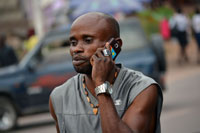
 A local resident seen using a mobile phone in Kinshasa recently. Small contractors have seen there profits decrease since authorities blocked 3G mobile telecommunications, text messaging and social media after clashes broke out two weeks ago. — AFP
 KINSHASA, Feb 8 (AFP): Sales are down and business is slow -- small entrepreneurs in the Democratic Republic of Congo are bearing the brunt of an official clampdown on mobile Internet services and text messages.
On a normal day, between 20 and 30 clients grace Danny's small Internet cafe in Ngaliema, north of the capital Kinshasa.
Now he gets around 10 a day if he's lucky because the connection is either blocked or sluggish. "Since this started, we can't earn," says the computer specialist.
"Before I was making 30,000 francs (28 euros, $32) a day. Now I make less than 10,000 francs. And I (still) pay $180 (157 euros) for my Internet connection."
Between 19 and 22 January, violence engulfed DR Congo during protests against legislation that could have enabled President Joseph Kabila, who has been in power in the troubled country for 14 years, to extend his term beyond 2016 when his second mandate ends.
Rights groups said 42 people were killed with official sources putting the number at 27.
To hamper communications and curb further protests, the government ordered a block on phone messaging and the Internet. Main Internet services were re-established two days later but mobile Internet, used by many small companies and individuals, remained cut off.
Phone messaging, the cheapest way to communicate in the vast central African country, and social networks have remained inaccessible.
On January 25, the election bill, stripped of its most disputed provision, was passed by parliament and calm returned, although the new legislation does little to ease the fears of Kabila's detractors.
The United Nations' chief of mission in the country, Martin Kobler, called on authorities on Wednesday to "restore Internet immediately".
Some services like mobile banking, used widely by people to send funds using their mobile phones, were functioning in Kinshasa.
In Bukavu, however, located more than 1,000 kilometres (620 miles) away at the other end of the country, the services work only intermittently.
© 2026 - All Rights with The Financial Express

