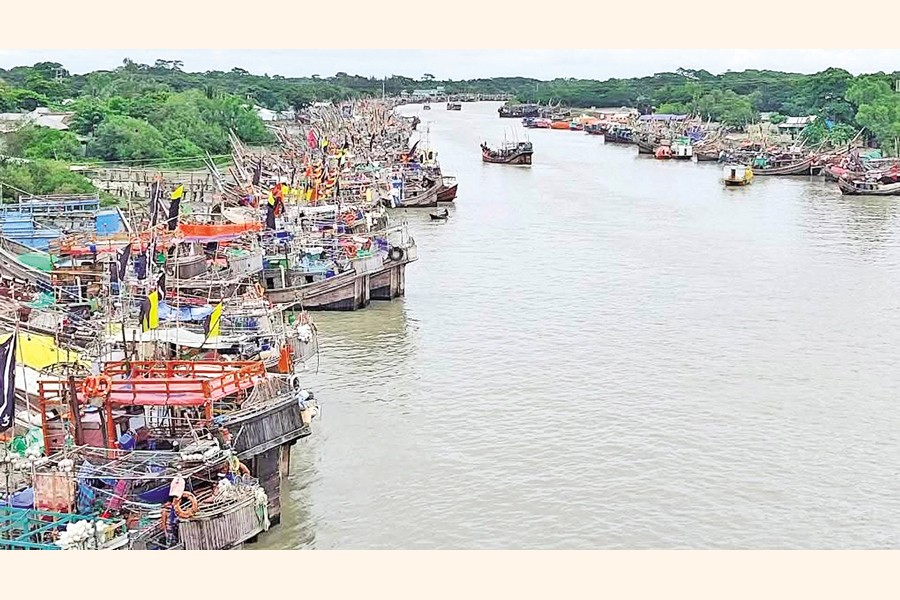
 Dozens of fishing trawlers lie idle along the riverbanks in Kalapara upazila of Patuakhali as fishing activities remain suspended amid a fuel oil shortage. The photo was taken on Friday. — Focus Bangla
 CHATTOGRAM, Apr 3: A fuel supply crunch is crippling marine fishing across Bangladesh's coastal belt, leaving hundreds of boats idle and pushing up fish prices in local markets, industry insiders said.
Fishermen and traders in Chattogram and adjoining coastal areas said diesel is not being supplied to engine boats and small fishing vessels, with petrol pumps citing government directives restricting open sales in drums and bottles. As a result, many boats have been unable to go to sea in recent weeks despite no reported nationwide shortage of diesel.
 A fuel supply crunch is crippling marine fishing in the coastal belt area, leaving hundreds of boats idle at ghats, disrupting fish supplies and sending market prices soaring, according to fishermen and traders.
Despite no reported national diesel shortage, petrol pumps across Chattogram and other coastal regions have stopped supplying fuel in drums and bottles to engine boats and small trawlers, citing 'government decisions'.
The disruption follows the outbreak of war in the Middle East in early March, which has strained fuel distribution and affected thousands of boats and trawlers engaged in the sector.
"Earlier we used to take fuel to the boats in drums or bottles. Now we are not getting any fuel as the petrol pumps are not supplying fuel in bottles and drums," said Sidharta Jaldas, a fisherman from Patenga.
"As a result, the boats are being inoperative. Not a single fisherman is able to go to sea in this area."
Along the banks of the River Karnaphuli and at fishing hubs including Fishery Ghat, Patenga, Sitakunda, and Sandwip, hundreds of small trawlers and traditional boats sit anchored. Fishermen spend their days repairing nets or waiting idly, unable to venture into the Bay of Bengal.
"More than 1,500 boats operate along the Sitakunda coast. As they do not get diesel supply, they are not able to go to sea to fish," said Mutasim Billah, Sitakunda Upazila Fisheries Officer.
The sharp fall in fishing activity has begun to affect supply chains, with traders reporting rising prices in local markets.
Exporters warned that prolonged disruption could hurt foreign earnings and employment in the fisheries sector, urging authorities to ensure uninterrupted fuel supply and consider subsidies or support packages for affected fishermen.
While small-scale operators struggle, owners of large deep-sea fishing vessels report receiving fuel as demanded. However, even these industrial fleets face mounting challenges unrelated to fuel.
"We are getting fuel as per demand. But we are not getting fish when we go to sea," said one ship owner.
"The sea has started to be flooded with jellyfish. As soon as they cast their nets, nets are filled with jellyfish-- which have no market value."
Compounding the problem, reduced rainfall has increased seawater salinity in the Bay of Bengal, further disrupting fish migration and breeding patterns. Several large vessels have returned to port in recent days with minimal catches.
Bangladesh's territorial waters span approximately 166,000 square kilometres -- stretching 710 kilometres from Teknaf to Satkhira and extending 200 nautical miles offshore. The area comprises four major fishing zones: South of No Ground, South of South Passage, South Passage, and Middle Ground.
With the government-imposed 58-day fishing ban set to begin on April 15 -- typically during peak season -- stakeholders fear compounded losses. Industry representatives warned that unless fuel supplies normalise soon, the crisis could deepen, affecting exports, livelihoods and food security.
nazimuddinshyamol@gmail.com
© 2026 - All Rights with The Financial Express

