The signing of the Bangladesh-Japan Economic Partnership Agreement (EPA) represents a "defining moment" in the nation's trade diplomacy and a strategic blueprint for economic transformation, according to the International Chamber of Commerce-Bangladesh (ICCB).
In its editorial of the latest News Bulletin for the January-March 2026 quarter, the ICCB highlighted the agreement-- signed on 6 February 2026--as the country's first comprehensive partnership with a developed economy.
The pact marks a pivot from the preferential access enjoyed as a Least Developed Country (LDC) toward a competitive, rules-based global trade framework, according to it.
As Bangladesh prepares for its graduation from LDC status, the EPA serves as a critical buffer against potential tariff hikes.
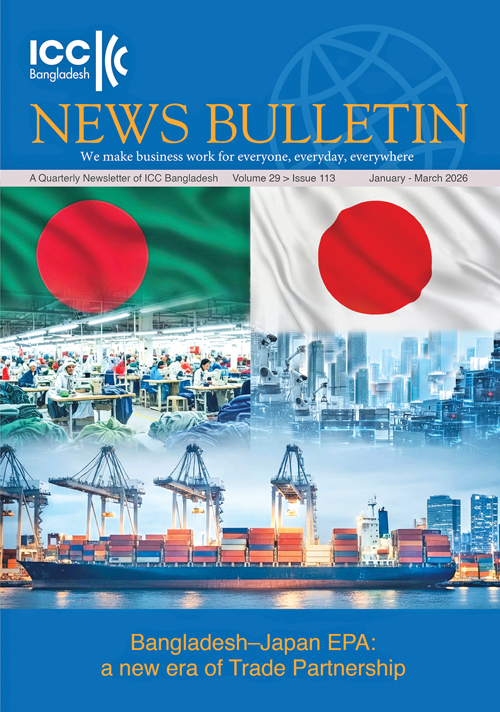
Japan has granted duty-free access to 7,379 Bangladeshi products, covering approximately 97 per cent of the country's export basket, ensuring continued protection for the dominant ready-made garment (RMG) sector while opening doors for broader market penetration in the world's fourth-largest economy.
The ICCB underscores that the agreement's scope extends far beyond simple tariff reductions.
The ICCB hailed the initiative, under which Japan is opening 120 service sub-sectors to Bangladeshi professionals, creating opportunities in IT, engineering, and caregiving. Bangladesh has reciprocated by opening 97 sub-sectors.
The chamber also commended EPA's encouragement of Japanese investment in high-value manufacturing, such as electronics and automotive components, helping Bangladesh move beyond its heavy reliance on apparel.
Provisions on intellectual property, digital trade, and customs facilitation aim to enhance Bangladesh's credibility as a transparent and reliable investment destination," said ICC in its press release.
The Japan EPA sets a high bar, contrasting it with the more conditional Bangladesh-USA Reciprocal Trade Agreement, the editorial noted.
While the US deal offers targeted market access, the ICCB said its "limited framework" and specific sourcing requirements--such as the use of US cotton--may restrict flexibility and lack the long-term certainty provided by the comprehensive Japanese model.
The ICCB views the Japan EPA as a "template" for future negotiations with the European Union, ASEAN, and the United Kingdom.
"The Bangladesh-Japan EPA is more than a milestone-it is a message that Bangladesh is ready to move beyond its LDC identity and assert itself as a dynamic, rules-based trading nation," said the ICCB in the editorial.
The chamber concluded that the ultimate success of the agreement would depend on "domestic preparedness," urging the government to strengthen national quality infrastructure, improve logistics, and develop skilled human capital to translate these trade opportunities into sustained industrial growth.
bdsmile@gmail.com
© 2026 - All Rights with The Financial Express

