The government's proposal for sharply hiking import duties on mobile phones has triggered growing concern among industry leaders.
According to them, the move could produce the opposite of its intended outcome by shrinking official sales, strengthening the grey market and ultimately reducing tax collection.
Under the proposed budget for fiscal year 2026-27, the cumulative tax burden on imported mobile phones is set to be 64.25 per cent from July 1 from the existing 43.43 per cent, according to them.
The increase stems largely from a rise in customs duty from 10 per cent to 25 per cent, along with higher regulatory duties.
 While the measure is aimed at contributing to the government's ambitious revenue collection target of nearly Tk 6 trillion, industry executives argue that the tax increase may instead push consumers towards unofficial channels, creating significant revenue leakages.
The proposed duty structure would make Bangladesh one of the most heavily taxed smartphone markets in South Asia, they observed.
Industry data show that Bangladesh's effective import tax would stand at 64.25 per cent, compared with 22-24 per cent in India, 15-25 per cent in Pakistan, 18-25 per cent in Nepal and 15-20 per cent in Sri Lanka. The Maldives, which relies almost entirely on imports, maintains import taxes of between zero and 5 per cent.
Such a big gap has raised concerns that Bangladesh could become increasingly uncompetitive as global smartphone brands assess their investment and market expansion plans.
According to industry estimates, the proposed tax structure could increase retail prices of officially imported smartphones by around 20-25 per cent, particularly in the mid-range and premium segments.
These segments remain heavily dependent on imports despite the growth of local assembly operations.
Although Bangladesh has successfully developed a domestic handset manufacturing ecosystem over the past decade, local companies now assemble most entry-level and low-to-mid-range smartphones locally, insiders said. However, the government earlier this year reduced duties on imported components to encourage further localization, they mentioned.
Industry executives note that many premium devices from Apple, Google, Huawei, Motorola, Samsung and Xiaomi cannot be produced locally at commercially viable volumes due to complex supply chains, specialised components and limited market demand.
As a result, imported devices continue to play a critical role in meeting consumer demand for advanced smartphones.
Ziauddin Chowdhury, Country Manager of Xiaomi Bangladesh, said the higher tax burden could significantly affect affordability and consumer behaviour.
"Increasing the tax burden on imported high-end premium mobile phones may raise prices by around 20-25 per cent. As a result, more consumers may shift toward the parallel market to avoid higher prices," he told The Financial Express.
He also warned that the measure could discourage brands from importing premium models and affect official sales volumes, with possible implications for long-term tax collection.
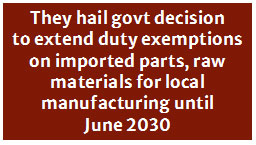
Mr Chowdhury, however, welcomed the government's decision to extend tax and duty exemptions on imported parts and raw materials for local manufacturing until June 2030, describing it as a positive step toward sustaining domestic production and keeping locally assembled smartphones affordable.
Similar concerns have been echoed by Dewan Kanon, Chief Executive Officer of DX Group, the national distributor of Huawei consumer smart devices in Bangladesh.
He argued that the proposed increase to a 64.25 per cent cumulative tax burden would widen the price gap between official and unofficial devices to a level that the formal market would struggle to compete with.
"A sudden 20-25 per cent rise in smartphone prices will inevitably push a large portion of consumers toward the grey market," he said.
According to him, the smartphone industry had been experiencing a positive turnaround following the government's earlier decision to reduce import duties. Official imports had increased, he said, adding that more models had entered the market, thus creating a positive impact on tax collections.
That momentum, he warned, could be reversed if the new duty structure is implemented.
The grey market has long been a challenge for Bangladesh's smartphone industry. Devices imported through unofficial channels often avoid customs duties, value-added tax, advance income tax and other levies, the industry insiders have said.
According to them, the proposed tax increase could create a price differential of 30-40 per cent between officially imported devices and those entering through unofficial routes.
Such a disparity creates strong incentives for consumers to purchase phones through hand-carry imports, unauthorised courier channels and informal trading networks.
Consumers purchasing unofficial devices often receive no official warranty, limited software support and reduced access to after-sales services. Industry participants also warn of increased risks from counterfeit or refurbished devices being sold as new products.
Several industry executives estimate that as much as 80-90 per cent of premium smartphone sales could migrate to the grey market if the proposed duties take effect.
Smartphones have become the primary gateway to digital financial services, online education, e-commerce platforms and government services, they said, adding that higher device prices could disproportionately affect students, low-income households and rural users, slowing the adoption of digital technologies.
Industry stakeholders point to experiences in neighbouring markets where excessively high taxation has sometimes encouraged tax avoidance and reduced compliance.
Many industry operators believe that Bangladesh has recently begun to strike a workable balance between encouraging local manufacturing and maintaining a competitive import regime.
The current tariff structure still provides significant protection for locally assembled devices while allowing consumers access to imported mid-range and premium smartphones through official channels.
Mr Kanon argued that maintaining the existing duty framework would allow local manufacturing and official imports to grow simultaneously, creating sustainable revenue streams for the government while ensuring wider access to technology.
bdsmile@gmail.com
© 2026 - All Rights with The Financial Express

