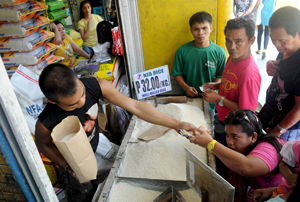
 MANILA, Philippines: Customers buy rice at a market in Manila Thursday. The World Bank trimmed its economic growth forecast for the Philippines this year to 6.4 per cent from 6.6 per cent but said it remains on track to rapidly eradicate widespread povert
 MANILA, Aug 7 (Reuters): The World Bank lowered its growth forecasts for the Philippines this year and the next after weak state spending in the second quarter and a tightening of monetary policy, but the bank said strong domestic demand would still fuel economic expansion.
The development lender said in a statement on Thursday that it now expects growth this year to reach 6.4 per cent, Having previously forecast 6.6 per cent growth.
The forecast for growth in 2015 was revised down to 6.7 per cent from a forecast of 6.9 per cent issued in April.
The downward revision follows a similar move by the International Monetary Fund, which last month cut its 2014 growth forecast for the Philippines to 6.2 per cent from 6.5 per cent previously.
The government has set a GDP growth target of 6.5 to 7.5 per cent this year, after 7.2 per cent growth last year, the strongest in Southeast Asia.
Philippine inflation could reach 5 per cent this year, higher than its previous forecast of 4 per cent and at the top end of the government target, mainly due to increases in prices of food such as the national staple rice, said Rogier van den Brink, lead economist at the World Bank's Philippine office.
The central bank expects inflation to average 4.33 per cent this year, based on latest data, within a government target of 3 to 5 per cent.
The Philippines must "quickly increase" rice imports to dampen rising food prices, said van den Brink.
The government has authorised the purchase of an additional 500,000 tonnes rice, bringing to more than 2 million tonnes the country's imports of the grain this year - the highest in four years - following strong typhoons that hurt domestic output and led to thinning stockpiles.
Private consumption is expected to remain robust, making up more than half of GDP growth, supported by strong inflows of remittances from Filipinos overseas, the World Bank said, adding infrastructure projects awarded under the public-private partnership scheme are new sources of growth.
External risks to the country's growth remain, and could come from a disorderly policy normalisation in developed countries, uncertainties related to adjustments in China's property market, and political tensions in the Middle East and Eastern Europe, as well as territorial tensions with China, the bank said.
The lender noted poverty incidence in the country declined by 3 per centage points to 24.9 per cent in 2013 from the previous year, which meant that 2.5 million Filipinos were lifted out of poverty after years of slow progress towards more inclusive economic growth.
© 2026 - All Rights with The Financial Express

