Mohammad Kabir Hassan and Zobayer Ahmed | April 04, 2026 00:00:00
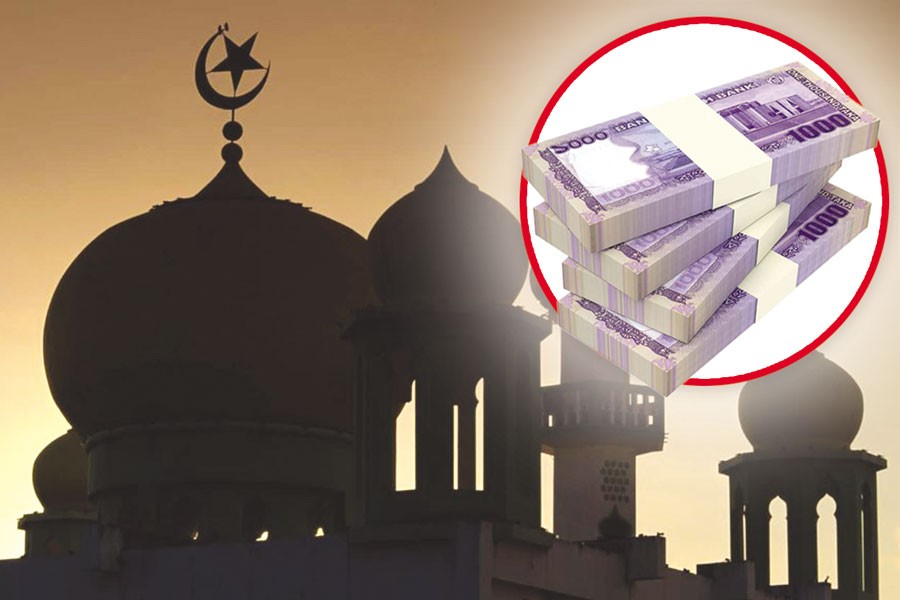
The economic future of any developing nation depends on broadening its financial base beyond bank-dominated, debt-driven growth. In a welcome signal of strategic intent, Professor Dr Rashed Al Mahmud Titumir, Adviser to the Prime Minister on Economic Affairs and Planning, recently called for the establishment of an Islamic stock exchange in Bangladesh — designed to attract capital from Malaysia, Indonesia, and the Gulf, and to create an investment gateway for non-resident Bangladeshis (NRBs). The proposal is timely and ambitious, and it deserves a rigorous answer to a question that policymakers have not yet fully confronted: should Bangladesh integrate Islamic financial instruments into its existing exchanges, or build a separate Islamic capital market from the ground up?
Our answer, grounded in Bangladesh’s own data, international precedent, and academic research, is clear: integrate first and, over a five-to-ten-year horizon, and evaluate the case for a dedicated Islamic exchange. Attempting to build a standalone institution before the necessary instruments, regulations, and investor base are in place would risk repeating the fragmentation and governance failures that have already hurt the country’s banking sector.
A Shallow Market in Need of Depth: Bangladesh’s capital market remains conspicuously underdeveloped relative to its economic size and ambition. As of 2024, the market capitalisation of the Dhaka Stock Exchange (DSE) stood at approximately Tk 6.62 trillion — down from Tk 7.70 trillion in 2023 — equivalent to roughly 19.5 per cent of gross domestic product (GDP), compared with a global average exceeding 69 per cent. No new companies were approved for IPOs on the DSE in 2024, an indicator of regulatory paralysis and weak listing incentives. The Chittagong Stock Exchange (CSE) remains marginal in terms of volume. The two exchanges together host around 625 listed companies, a figure modest for an economy of Bangladesh’s scale.
The market’s structural problems are well-documented. Well-performing family-owned enterprises resist listing, fearing governance scrutiny. Retail investor behaviour is often speculative rather than fundamental, a pattern captured in research by Hassan, Basher and Islam (2007), which found persistent serial correlation and negative risk-return dynamics in DSE equity returns — consistent with market inefficiency and thin trading. Circuit breakers, introduced to manage volatility, were found to increase realized volatility rather than reduce it. Decades later, many of these structural weaknesses persist.
Against this backdrop, the Islamic capital market segment is essentially absent. There is no dedicated Shariah-compliant equity index on exchange, no regular corporate sukuk market, and only a nascent government sukuk program through the Bangladesh Government Islamic Investment Bond (BGIIB). The country’s BGIIB sukuk issuance, launched in 2020 to raise Tk 80 billion for water infrastructure, demonstrated proof of concept — but the pipeline of subsequent issuances remains thin.
A Strong Banking Base, a Missing Capital Market: The irony is that Bangladesh has quietly built one of the world’s most significant Islamic banking sectors, yet its capital market has not followed suit. As of early 2024, ten full-fledged Islamic banks, alongside 23 Islamic banking branches and over 500 Islamic banking windows of conventional banks, collectively held approximately 23.65 per cent of total banking assets, 26.23 percent of deposits, and 28.24 per cent of investments in the national banking system — figures that place Bangladesh among the leading Islamic banking jurisdictions in South and Southeast Asia.
This is a crucial foundation. A large Islamic banking sector means there is domestic institutional demand for Shariah-compliant capital market instruments — sukuk for liquidity management, Islamic equities for portfolio diversification, and Islamic mutual funds for retail investors. Bangladesh Bank has itself acknowledged the urgent need to deepen the Islamic capital market and scale up sukuk issuance to reduce Islamic banks’ reliance on debt-like instruments. The capital market gap is not a demand problem. It is a supply-and-regulatory problem.
What Malaysia, Indonesia, and the Gulf Did Right: Malaysia is the global benchmark. The Kuala Lumpur Stock Exchange did not build a parallel Islamic bourse — it integrated Shariah-compliant indices and instruments into the existing exchange, supported by a dedicated Securities Commission Shariah Advisory Council, robust disclosure standards, and a pipeline of corporate and sovereign sukuk. Today, Malaysia accounts for a disproportionate share of global sukuk issuance and consistently tops the Islamic Finance Country Index.
Indonesia followed a similar path. The Jakarta Islamic Index (JII), launched in 2000, operates as a Shariah-compliant sub-index of the Indonesia Stock Exchange — not a separate institution. Supported by a national Shariah board and progressive regulation, it has grown into a credible benchmark for domestic and foreign Islamic investors.
The Gulf states, where Islamic finance is embedded in the financial culture, offer a different lesson: even in their most mature markets — Dubai Financial Market, Saudi Arabia’s Tadawul — Islamic and conventional instruments coexist on the same exchange infrastructure. A bifurcated architecture did not require two separate exchange buildings; it required dual-window compliance frameworks within a unified market structure.
Academic research reinforces these lessons. Hassan and Yu (2007), examining stock exchange alliances across OIC countries, found that despite a shared Islamic culture, local capital market conditions were too heterogeneous in terms of legal frameworks, income levels, and market maturity to support a single unified Islamic exchange. Their recommendation was a bifurcated, or two-tier, system: small, locally operating firms listed on domestic exchanges, while larger, more established companies access regional Islamic financial centres in Asia, Europe, or MENA — eventually linking into a pan-OIC exchange architecture. Bangladesh’s current market development places it firmly in the first tier of that framework: it needs to build domestic Islamic capital market capacity before aspiring to regional integration.
The Policy Prescription: The policy case for integrating Islamic instruments into the DSE and CSE first — rather than creating a standalone exchange — rests on five arguments.
Cost and institutional capacity. Building a separate exchange from scratch requires regulatory infrastructure, a Shariah board, trading technology, clearing systems, investor education, and a critical mass of listings. Bangladesh’s capital market regulator, the Bangladesh Securities and Exchange Commission (BSEC), already struggles to govern two existing exchanges. A premature third institution risks becoming a shell — credential in name but thin in activity, as has occurred in several OIC countries that established Islamic markets before their investor bases were ready.
Market liquidity. Liquidity is the lifeblood of any exchange. Splitting an already thin market between a conventional exchange and a new Islamic exchange would reduce liquidity on both, widening bid-ask spreads and increasing price volatility — the very conditions that have historically undermined DSE efficiency. Shariah-compliant indices embedded within the DSE, by contrast, share the existing order book and liquidity pool.
Derivative and hedging gap. While a group of Shariah scholars supports instruments such as Islamic Forex forwards under the concept of wa’d, the majority remain cautious, reflecting heterogeneous jurisprudential positions. Without an agreed-upon framework for Islamic hedging instruments, a standalone Islamic exchange would lack the risk-management tools that institutional investors — particularly those from the Gulf and Malaysia — require before committing capital. Developing these instruments requires gradual Shariah consensus-building, which is more feasible in an integrated regulatory environment than in a parallel institution operating under separate oversight.
Investor confidence and governance. Bangladesh’s Islamic banking sector is currently navigating a governance and non-performing-loan crisis so severe that Bangladesh Bank has proposed merging five Islamic banks into a single entity to prevent systemic failure. Launching a standalone Islamic stock exchange in this environment, before trust in Islamic financial institutions has been restored, risks contaminating the new institution with reputational spillover. Integration into the existing exchange — which has its own credibility and Nasdaq technology partnership — offers a lower-risk launch pad.
The NRB opportunity is reachable through integration. Non-resident Bangladeshis remit billions of dollars annually. Making Shariah-compliant equities, sukuk, and Islamic mutual funds accessible on the DSE — with digital platforms and clear foreign investment rules — can capture NRB capital without requiring a new exchange. Malaysia and Indonesia attracted faith-based foreign investment through their existing exchanges’ Islamic windows, not through separate institutions.
A Five-Point Action Plan: An integration-first strategy requires the following concrete steps, which BSEC, Bangladesh Bank, and the Ministry of Finance should pursue in parallel.
Launch a DSE Shariah Index. BSEC should establish a formal Shariah Supervisory Board for the capital market, distinct from the banking sector’s boards, to screen listed equities and publish a DSE Islamic Index. This would provide the benchmark that Islamic mutual funds, pension funds, and foreign investors need. [Currently, investors and stakeholders have no free access to the DSE Shariah index (DSES) as the Dhaka bourse has been managing it for the purpose of business.]
Scale up sukuk issuance. The government should deepen and regularize sovereign sukuk through the BGIIB program and actively encourage corporate sukuk for infrastructure financing. Sukuk can reduce reliance on budgetary allocations and bank loans — directly addressing Adviser Titumir’s vision of a bond-based economy.
Build Shariah-compliant mutual fund regulation. Islamic mutual funds are the most accessible on-ramp for retail investors. BSEC should fast-track a regulatory framework for Islamic unit trusts, modelled on the Securities Commission of Malaysia’s guidelines.
Develop Islamic derivatives prudently. Bangladesh Bank and BSEC should convene a joint working group with Shariah scholars to develop a national standard for Islamic hedging instruments. The wa’d-based FX forward structure, as identified in the academic literature on Bangladesh, offers a viable starting point.
Plan for a dedicated Islamic exchange. A separate Islamic capital market — whether as a dedicated board within DSE/CSE or eventually as a standalone exchange — should be the five-to-ten-year horizon goal, contingent on achieving sufficient market depth, Shariah product diversity, and regulatory maturity. The two-tier OIC framework offers a useful architectural template: domestic Islamic listings on a Shariah board of DSE, with larger Bangladeshi companies eventually accessing regional Islamic financial centers in Kuala Lumpur, Dubai, or Riyadh.
Conclusion: Bangladesh has the foundational conditions for a genuinely transformative Islamic capital market: a Muslim-majority population of 170 million, a proven Islamic banking sector holding nearly a quarter of national banking assets, a large diaspora eager for faith-based investment options, and growing government recognition of the opportunity. What it currently lacks is the sequenced institutional architecture to make it real.
The establishment of an Islamic stock exchange should not be dismissed — it should be pursued on the right timeline. That means integrating Shariah-compliant instruments into the DSE and CSE first, building liquidity, regulatory credibility, and investor trust over the next five years, and then evaluating the conditions for a dedicated Islamic exchange or board. Moving from a debt-dependent society to an ownership-based society requires foundations built carefully — not institutions launched prematurely and subsequently hollowed out.
The global experience is unambiguous: the countries that lead in Islamic capital markets today built depth before they built separation. Bangladesh should do the same.
Dr Mohammad Kabir Hassan, Professor of Finance, University of New Orleans; mhassan@uno.edu; and Dr Zobayer Ahmed, Associate Professor, Bangladesh Institute of Governance and Management (BIGM)
© 2026 - All Rights with The Financial Express

