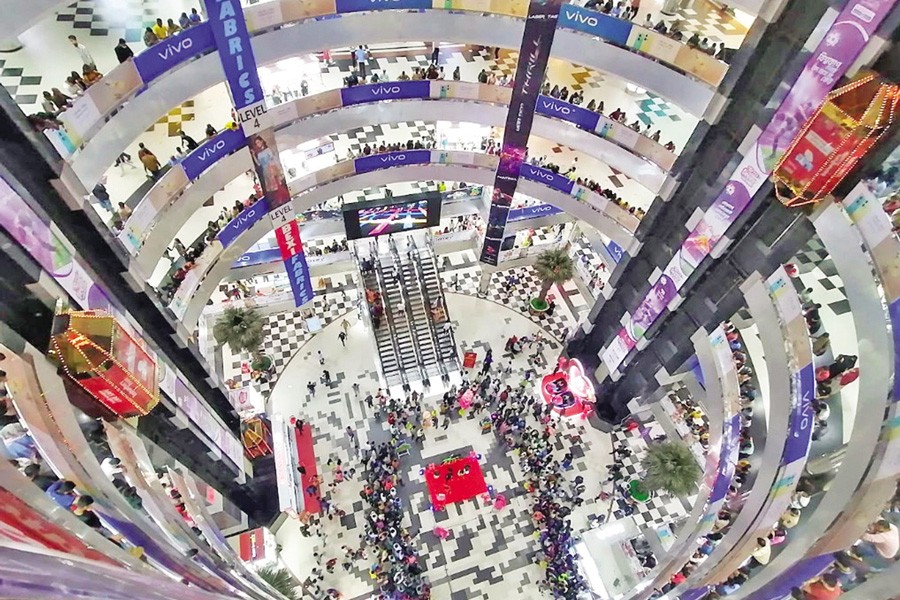
 An inside view of Bashundhara City, a luxurious shopping mall in Dhaka —Collected Photo
 Walking through the streets of Gulshan, Banani, or Dhanmondi in Dhaka, it is easy to imagine that the city has joined the ranks of global metropolises. Sleek shopping malls, international brands, trendy cafes, and luxury boutiques give the impression of a cosmopolitan urban life. Shoppers with designer bags, smartphones in hand, and expensive cars parked outside suggest a lifestyle that seems aspirational and modern. Yet, for the majority of Dhaka's residents, this image of modernity is distant and largely inaccessible. Only a tiny elite participates in these consumption spaces, while the rest of the city navigates daily life shaped by affordability, necessity, and traditional markets.
Arjun Appadurai's concept of 'scapes,' from his book "Modernity at Large", offers a helpful lens to understand this phenomenon. Appadurai argues that global flows of culture, money, media, and technology shape local experiences of modernity in uneven ways. In Dhaka, malls and branded stores represent one such "consumptionscape." They are spaces where wealth, taste, and social identity converge, yet they remain confined to upper-middle and upper-class households. For most residents, modern consumption is visible through advertisements, social media, or glimpses of city life, but it is rarely experienced directly.
The contrast between these elite consumption spaces and the daily realities of ordinary residents is stark. Most households in Dhaka shop in traditional markets or small shops, buying what they need to survive: rice, vegetables, lentils, and basic clothing. Visits to malls or branded stores are occasional and aspirational rather than routine. Social media and advertising intensify this gap by circulating images of lifestyles that are largely unattainable for most people. The glossy lifestyle photos on Instagram or Facebook feed into a sense of aspiration while highlighting social inequalities. This creates what Appadurai calls a "modernity illusion"-an idea of global modernity that is widely visible but only selectively experienced.
Globalisation has intensified these inequalities. International brands, foreign food chains, and luxury goods arrive in Dhaka not only through domestic demand but also via global supply chains, foreign investment, and the purchasing power of the elite. Algorithms on social media ensure that these images reach far wider audiences than the products themselves. Young people, especially, see these lifestyles as aspirational. Shopping in a mall or wearing a branded product becomes a marker of status, education, or cosmopolitan identity. Yet for most residents, these symbols remain out of reach, reinforcing social hierarchies rather than bridging them.
Luxury malls like Bashundhara City, Jamuna Future Park, and the newly opened City Centre in Gulshan cater mostly to Dhaka's wealthy elite. International brands such as Nike, Zara, Louis Vuitton, and Starbucks occupy spaces alongside high-end local boutiques. For an average middle-class family, a casual trip to such a mall is a rare occasion, often requiring careful budgeting and planning. Even dining at a branded restaurant or buying imported products is beyond the reach of most households, making these consumption spaces symbolic markers of privilege rather than inclusive urban amenities.
Consumption in Dhaka is also spatially segregated. Luxury malls and high-end stores are concentrated in a few neighborhoods, while most parts of the city-including residential areas for middle- and lower-income households, industrial zones, and informal settlements-remain disconnected from these spaces. Travel costs, traffic congestion, and limited public transport make access even more difficult. Modern consumption, therefore, is not only a matter of income but also geography. The city's social and cultural divisions are reflected in the very spaces where shopping and leisure occur.
Social media has amplified these divisions by creating visibility of lifestyles that are far removed from the realities of most people. Instagram stories showing shopping hauls, luxury dining experiences, and weekend trips to resorts feed the imagination of many urban youth. The popularity of lifestyle influencers, fashion bloggers, and social media celebrities highlights a small, globalised elite while emphasising the gap between aspiration and reality. Appadurai's "mediascapes" explain this circulation: images of modernity flow freely, yet their access is tightly restricted, creating both desire and frustration among those who cannot participate directly.
This aspiration has social consequences. Middle- and lower-income residents, especially young people, often equate modernity with consumption patterns they cannot afford. Branded clothing, smartphones, or weekend trips are no longer mere consumer choices; they are symbols of social recognition and status. Peer pressure, social comparison, and social media visibility amplify the sense of exclusion. In a way, modernity in Dhaka is as much about what people see as what they experience. The city appears cosmopolitan, but for most residents, it remains only an imagined space of global modernity.
Even among the elite, consumption is performative. Shopping in a mall, dining in a high-end restaurant, or buying luxury goods signals membership in a globalised cultural elite. These acts are as much about identity and status as they are about actual consumption. Appadurai's ideas of "financescapes" and "technoscapes" help explain this: capital, technology, and cultural knowledge combine to create exclusive spaces of modernity. These spaces are aspirational, performative, and socially significant, reinforcing social boundaries even as they appear neutral or ordinary.
The symbolic dimension of consumption is equally important. For those excluded, these elite spaces highlight inequality and remind them of the limits of their access. Luxury malls, international brands, and high-end lifestyle imagery are daily reminders of social stratification. Even as the city celebrates modernisation, the benefits are sharply uneven. Consumptionscape makes modernity visible but concentrate its experience among a small fraction of the population.
Globalisation intersects with local economic realities in a very unequal way. While foreign brands and modern shopping environments create aspirational visions, the majority of households remain constrained by low wages, high living costs, and informal employment. Modern consumption becomes both a privilege and a social marker. Appadurai's "scapes" framework captures this duality: global flows produce highly localised experiences of wealth and culture, leaving most residents outside the reach of these modern spaces.
At the same time, this consumptionscape reveals the complexity of aspiration and social mobility. Middle-class residents still participate in some aspects of modernity: eating at mid-range restaurants, buying branded electronics, or attending cultural events. Yet these experiences are episodic and constrained. The elite, by contrast, enjoy consistent access to globalised lifestyles, reinforcing the perception of a divided urban society. Modernity, therefore, is not universal; it is stratified, negotiated, and unevenly distributed.
Social media plays a central role in shaping these perceptions among youth. Facebook groups, Instagram reels, and TikTok trends constantly circulate images of modern lifestyles that are aspirational but rarely attainable. Young people from middle-income families often imitate these lifestyles-buying a trendy phone, attending a branded café, or sharing images of weekend trips-to signal social belonging. Algorithms ensure that these posts gain visibility, creating a cycle of aspiration, imitation, and sometimes disappointment. Social media, in this way, magnifies the consumption gap and reinforces the symbolic exclusivity of modern spaces.
For policymakers and urban planners, these patterns raise important questions. How can urban development be more inclusive? How can access to cultural and commercial spaces be broadened without erasing diversity? How can aspirations inspired by global modernity align with the realities of most residents? These are not just economic questions-they are social and cultural challenges that touch on identity, mobility, and inequality.
Dhaka's consumptionscape demonstrates that modernity is highly visible but narrowly experienced. Malls, cafes, and luxury stores are more than places to buy goods; they are symbols of aspiration, privilege, and social hierarchy. They highlight both the possibilities and constraints of urban life in a globalising city.
The shopping culture of Dhaka reminds us that modernity is experienced differently across social classes. Appadurai's insights on "scapes" illuminate the tensions between visibility and access, aspiration and reality. The city's elite live within a globalised consumption world, while the majority navigate a daily life shaped by necessity, affordability, and limited access. Social media amplifies this divide, creating desires, shaping identities, and reinforcing social boundaries. Consumptionscape is both aspirational and exclusive, a mirror reflecting inequality and social stratification. Understanding these dynamics is crucial for building a more inclusive, socially aware, and culturally responsive urban society in Bangladesh.
Dhaka may appear modern on the surface, but modernity is for the few. Recognising this gap is the first step toward a city where aspiration can meet opportunity, and where modern spaces are experienced not just by the elite but by the broader society as well.
Dr. Matiur Rahman is a researcher and development professional.
matiurrahman588@gmail.com
© 2026 - All Rights with The Financial Express

